Gujarat CM Bhupendra Patel sets deadlines for drainage, pollution, road grievances
Synopsis
Gujarat CM Bhupendra Patel used the September State SWAGAT to issue time-bound orders on five high-visibility public complaints — from sealing scrap businesses in Rajkot within a week to laying a 900-metre sewage pipeline in Morbi within 20 days — while 5,057 citizen applications were processed statewide in a single session.
Key Takeaways
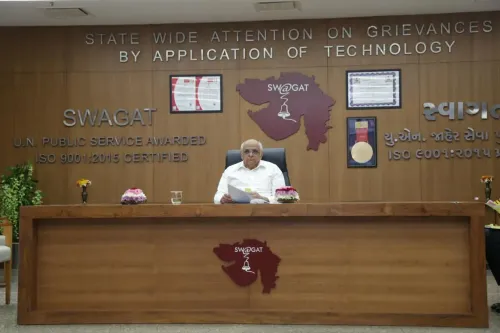
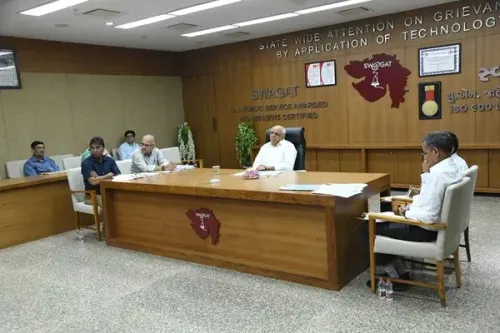
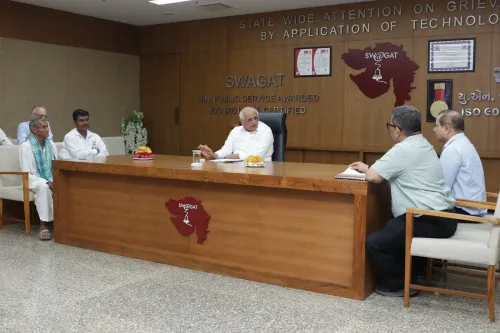
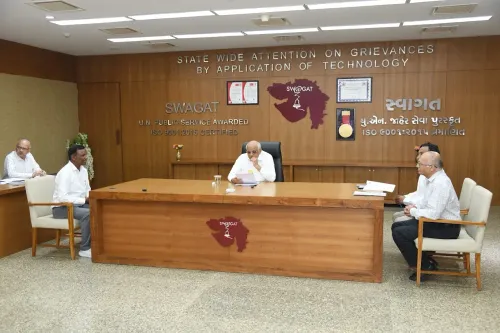
Gujarat CM Bhupendra Patel chaired the September State SWAGAT on 24 September 2026 in Gandhinagar .
The government processed representations from 5,057 applicants across Gujarat, including 2,277 via District SWAGAT and 2,780 via Taluka SWAGAT.
Patel ordered the Rajkot Municipal Commissioner to resolve traffic obstruction by scrap businesses within one week , with sealing powers if needed.
A 900-metre pipeline must be laid in Morbi within 20 days to stop sewage discharge onto a farmer's field.
The Labarkuva-Menej village road in Junagadh must be completed before Diwali , ending years of delay.
SWAGAT — launched during PM Modi's tenure as Gujarat CM — underpins the ongoing 'Seva Sankalp Abhiyan' marking 25 years of Modi's public service.
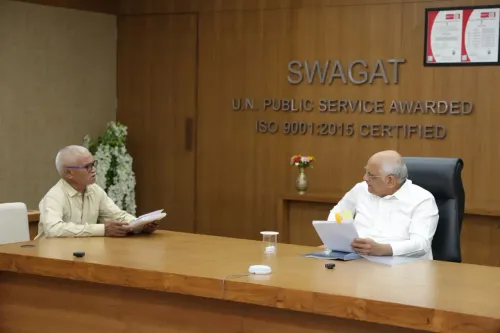
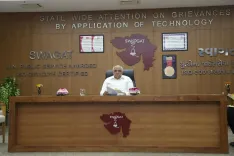
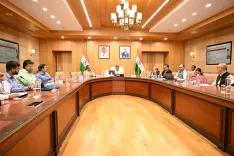
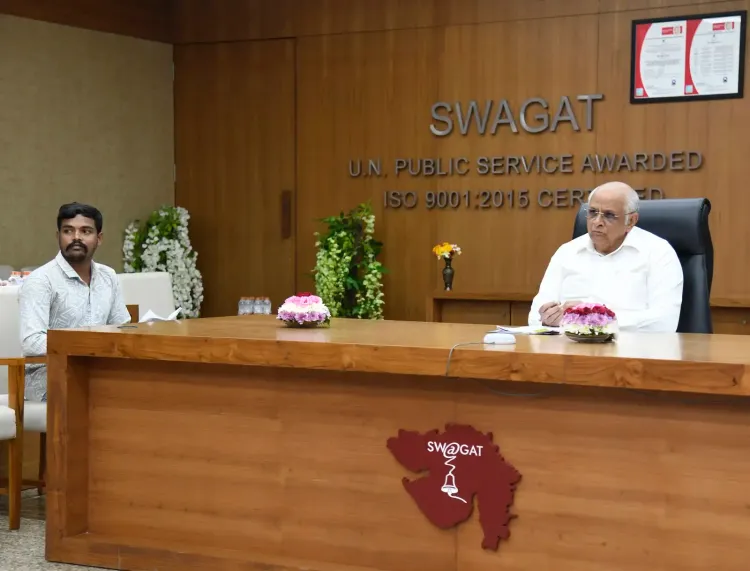
Gujarat Chief Minister Bhupendra Patel on Thursday, 24 September 2026, directed state officials to resolve a clutch of long-standing public complaints within fixed timelines, covering drainage failures, industrial pollution, a pending village road, traffic obstruction from scrap businesses, and sewage discharge onto a farmer's field. The directions came during the September State SWAGAT programme held at the Chief Minister's Office in Gandhinagar.
Scale of the Programme
More than 200 applicants were physically present at the Chief Minister's Office, while the government acted on representations from 5,057 applicants across Gujarat. Of these, 2,277 applications came through District SWAGAT and 2,780 through Taluka SWAGAT. The programme addressed grievances from residents of Bhavnagar, Mehsana, Junagadh, Morbi, and Rajkot.
Key Directions Issued
In Thalsar village, Bhavnagar, Patel directed the local administration to make immediate temporary arrangements for an underground drainage failure, inspect the site, and lay a proper drainage line after a feasibility assessment. On an industrial pollution complaint from Kadi taluka in Mehsana, he directed the Principal Secretary of the Forest and Environment Department to take strict action against the offending units.
Residents of Mangrol taluka in Junagadh district had flagged that the Labarkuva-Menej village road had remained incomplete for years due to local opposition. Patel directed the District Collector to ensure construction is completed before Diwali. In Rajkot, scrap businesses operating within the Rajkot Municipal Corporation limits were obstructing traffic; Patel instructed the Municipal Commissioner to take prompt action, seal premises if necessary, and resolve the matter within one week.
A farmer from the Morbi Municipal Corporation area raised the issue of dirty water from a sewage treatment plant being discharged into his agricultural field. Patel directed the Municipal Commissioner to lay a 900-metre pipeline and resolve the matter within 20 days. Separately, an industry in the Becharaji Area Development Authority that had not received construction permission for three years was directed to be cleared within one month by the Principal Secretary of Urban Development and the Chief Town Planner.
About the SWAGAT Programme
SWAGAT — State Wide Attention on Grievances by Application of Technology — was introduced during Prime Minister Narendra Modi's tenure as Gujarat Chief Minister as a technology-driven public grievance mechanism. The September session also provided momentum to the ongoing 'Seva Sankalp Abhiyan', being organised to mark 25 years of Modi's public service. Senior secretaries of all concerned departments were present during Thursday's programme.
Broader Issues Addressed
Beyond the highlighted cases, the September State SWAGAT also took up representations relating to rainwater drainage from agricultural fields, cleanliness concerns, encroachments, and issues concerning Urban Development Authorities across the state. The Chief Minister's Office said all representations were recorded and assigned to relevant departments for time-bound action.
The next State SWAGAT is expected to review compliance with the deadlines set on Thursday, putting officials on notice to deliver visible outcomes.
Point of View
But time-bound directives issued in a single session are only as good as the follow-up mechanism. Ordering a 900-metre pipeline in 20 days and sealing premises within a week are the kind of precise, auditable targets that build or break public trust. What Thursday's session does not reveal is the compliance rate from previous SWAGAT orders — a metric the government has not routinely made public. The framing around the 'Seva Sankalp Abhiyan' also ties governance delivery to a political narrative around PM Modi's tenure, blurring the line between administrative accountability and commemorative branding.
NationPress
24 Sept 2026
Frequently Asked Questions
What is the Gujarat SWAGAT programme?
SWAGAT stands for State Wide Attention on Grievances by Application of Technology — a technology-based public grievance redressal mechanism introduced during Prime Minister Narendra Modi's tenure as Gujarat Chief Minister. It is held at the state, district, and taluka levels, allowing citizens to bring complaints directly before senior officials.
How many applications were addressed at the September 2024 State SWAGAT?
The government acted on representations from 5,057 applicants across Gujarat during the September State SWAGAT, of which 2,277 came through District SWAGAT and 2,780 through Taluka SWAGAT. More than 200 applicants were physically present at the Chief Minister's Office in Gandhinagar.
What deadlines did Gujarat CM Bhupendra Patel set at the September SWAGAT?
Patel ordered the Rajkot Municipal Commissioner to address traffic obstruction by scrap businesses within one week, directed the Morbi Municipal Commissioner to lay a 900-metre pipeline within 20 days, and instructed the District Collector in Junagadh to complete the Labarkuva-Menej village road before Diwali. A pending construction permission in the Becharaji Area Development Authority was to be cleared within one month.
What action was ordered on industrial pollution in Mehsana?
On a complaint from Kadi taluka in Mehsana about industrial units discharging polluted water, CM Patel directed the Principal Secretary of the Forest and Environment Department to take strict action against the offending units.
What is the 'Seva Sankalp Abhiyan' mentioned in connection with SWAGAT?
'Seva Sankalp Abhiyan' is an ongoing campaign being organised to mark 25 years of PM Narendra Modi's public service. The state government said the September SWAGAT session contributed to the momentum of this initiative, linking the grievance programme to the broader commemoration.