Gujarat clears ₹3,903 crore incentives for 25 industrial units, 8,178 jobs expected

Synopsis
Gujarat has cleared ₹3,903.30 crore in investment incentives for 25 industrial units in a single high-level meeting chaired by Deputy CM Harsh Sanghavi — spanning automobiles, textiles, ceramics, and chemicals across eight districts. With 8,178 jobs on the line and two distinct policy frameworks at play, the approvals reflect the state's continued bet on incentive-linked industrial expansion.
Key Takeaways
Gujarat approved final eligibility certificates for 25 industrial units on 12 October 2026 in Gandhinagar .
Total proposed investment covered: ₹3,903.30 crore , expected to generate over 8,178 jobs .
22 units approved under Industrial Policy-2015 for ₹1,631.90 crore ; 3 large units approved under Aatmanirbhar Gujarat Scheme-2022 for ₹2,271.40 crore .
Units span Ahmedabad, Morbi, Bharuch, Kutch, Vadodara, Mehsana, Kheda and Surendranagar districts.
Incentives include SGST-linked assistance , interest subsidies , and EPF contribution reimbursement .
Meeting was chaired by Deputy Chief Minister Harsh Sanghavi .
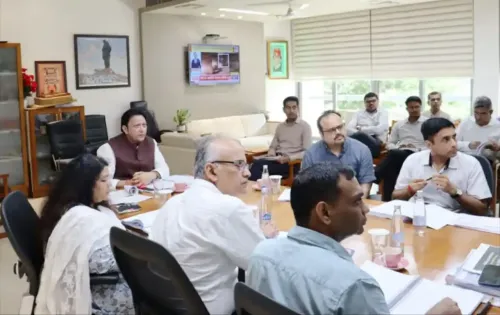
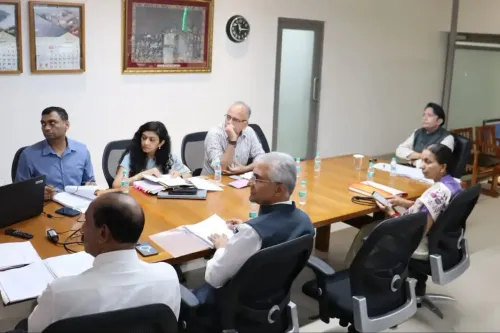
The Gujarat government has approved final eligibility certificates for 25 industrial units seeking incentives under two state industrial policies, covering proposed investments of ₹3,903.30 crore and projected to generate more than 8,178 employment opportunities across multiple districts. The approvals were granted at a high-level committee meeting held on Monday, 12 October 2026, in Gandhinagar.
Key Approvals and Policy Breakdown
Of the 25 units cleared, 22 units have been approved for investments worth ₹1,631.90 crore under the Industrial Policy-2015. The remaining three large industrial units received final approval for investments totalling ₹2,271.40 crore under the Aatmanirbhar Gujarat Scheme-2022, the state's flagship self-reliance-oriented industrial framework.
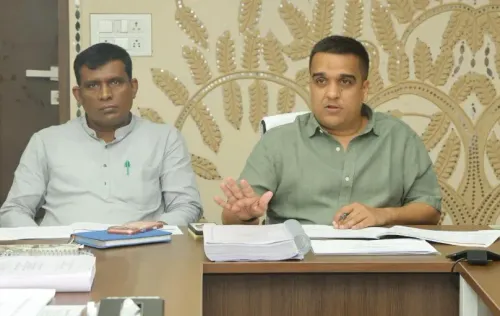
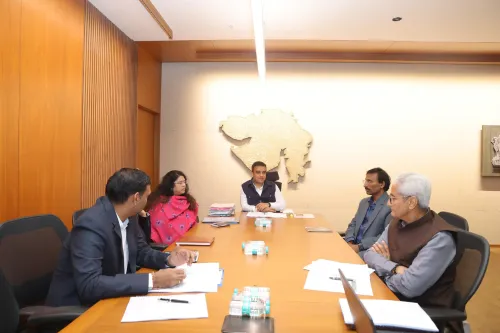
The meeting was chaired by Deputy Chief Minister Harsh Sanghavi, according to a statement issued by the state Industries and Mines Department.
Sectors and Districts Covered
The approved units are spread across Ahmedabad, Morbi, Bharuch, Kutch, Vadodara, Mehsana, Kheda, and Surendranagar districts. They operate across a diverse range of sectors including automobiles, textiles, plastics, paper, chemicals, ceramics, and metals.
Notably, the approvals span both large industrial projects and smaller enterprises, signalling the government's intent to support investment across different tiers of the industrial ecosystem.
Incentive Framework
Under both policies, eligible industrial units receive financial support in the form of assistance linked to net state goods and services tax (SGST), interest subsidies, and reimbursement of employees' provident fund (EPF) contributions. The department stated that the incentive framework is designed to promote industrial development, encourage fresh investment, and support the growth of micro, small and medium enterprises (MSMEs) alongside larger industries.
Broader Industrial Strategy
This comes amid Gujarat's continued use of policy-linked financial assistance to attract industrial capital across its districts and manufacturing sectors. The state has long positioned itself as one of India's most investment-friendly destinations, with successive industrial policies aimed at sustaining that reputation. The latest round of approvals reinforces an approach that channels incentives toward measurable outcomes — investment commitments and job creation targets — rather than blanket subsidies.
With the projects expected to collectively create approximately 8,178 jobs, the approvals also carry significance for districts outside the traditional industrial belt, potentially broadening the geographic spread of Gujarat's manufacturing base.
Point of View
Self-reliance-branded schemes pull in larger capital. The real question is whether the 8,178 jobs figure reflects actual hiring projections or eligible unit capacity, since incentive-linked job estimates in Indian industrial policy have historically outpaced verified outcomes. The geographic spread across Morbi, Kutch, and Kheda — beyond the Ahmedabad-Bharuch corridor — suggests a deliberate effort to regionalise industrial growth, but follow-through on EPF and SGST reimbursements has been uneven in past cycles.
NationPress
12 Oct 2026
Frequently Asked Questions
What did the Gujarat government approve on 12 October 2026?
The Gujarat government approved final eligibility certificates for 25 industrial units seeking incentives under two state industrial policies, covering proposed investments of ₹3,903.30 crore and projecting over 8,178 jobs. The decision was taken at a high-level committee meeting chaired by Deputy Chief Minister Harsh Sanghavi.
Which policies cover the approved industrial units?
22 of the 25 units fall under the Industrial Policy-2015, covering investments of ₹1,631.90 crore. The remaining three large industrial units were approved under the Aatmanirbhar Gujarat Scheme-2022, covering investments totalling ₹2,271.40 crore.
Which districts and sectors are covered by the approved units?
The units are located across Ahmedabad, Morbi, Bharuch, Kutch, Vadodara, Mehsana, Kheda, and Surendranagar. They operate in automobiles, textiles, plastics, paper, chemicals, ceramics, and metals.
What financial incentives do these industrial units receive?
Eligible units receive assistance linked to net state SGST, interest subsidies, and reimbursement of EPF contributions paid by employers. The framework applies to both large projects and MSMEs.
How many jobs are the approved projects expected to create?
The approved projects are collectively expected to generate approximately 8,178 employment opportunities, according to the state Industries and Mines Department.