Gujarat's Reservoirs at 72.49% Capacity: Adequate Drinking Water Supply for Summer
Synopsis
Gujarat's reservoirs are currently filled to 72.49% capacity, ensuring a steady supply of drinking water for the upcoming summer months. This achievement follows a remarkable monsoon season, with rainfall surpassing the average by 128%. Effective management strategies are in place to maintain this water availability.
Key Takeaways
Gujarat's reservoirs are at 72.49% capacity.
Recent monsoon brought 128% of average rainfall.
Water storage is 6.46 lakh MCFT .
Effective management ensures water availability for summer.
Gujarat has 207 reservoirs across the state.
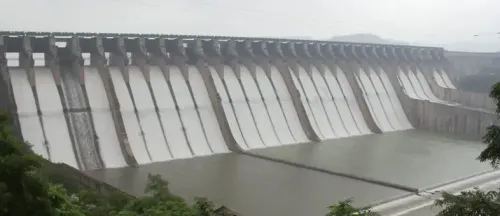
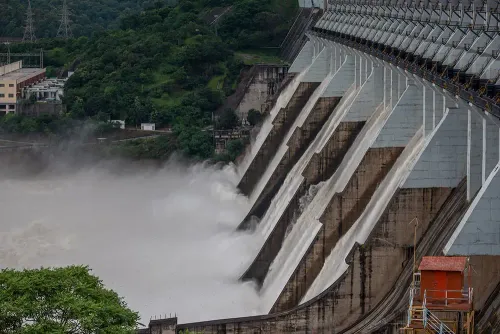
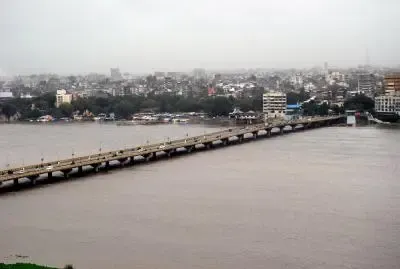
Gandhinagar, March 7 (NationPress) The principal reservoirs of Gujarat are currently at 72.49% of their full capacity, which guarantees a sufficient supply of drinking water for the approaching summer months, as reported by the Water Resources Department of the state.
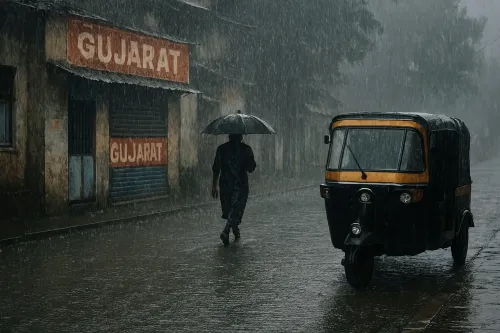
This increase is attributed to the abundant and consistent rainfall recorded during this monsoon season, which exceeded the state's average rainfall by over 128%.
As of March 5, the total water storage across Gujarat's main reservoirs is approximately 6.46 lakh million cubic feet (MCFT), reflecting an increase of 4.15% compared to the same period last year.
Officials stated, "Effective water management, guided by Chief Minister Bhupendra Patel and led by Water Resources and Water Supply Minister Ishwarsinh Patel, has ensured stable water availability for essential drinking and irrigation purposes."
The Sardar Sarovar Reservoir, a crucial asset for the state, is currently filled to more than 74%, equating to 2.47 lakh MCFT of water.
Reservoirs in South Gujarat are holding a total of over 2.34 lakh MCFT, the highest among all regions, while Central Gujarat retains 65,179 MCFT, North Gujarat has 41,842 MCFT, Saurashtra holds 53,621 MCFT, and Kutch has 4,392 MCFT. In total, the state has 6,46,556 MCFT of water stored, equating to 72.49% of total capacity.
In comparison, last year's storage levels were notably lower: North Gujarat had 27,847 MCFT, Central Gujarat 57,882 MCFT, South Gujarat 2,24,182 MCFT, Saurashtra 52,264 MCFT, Kutch 5,332 MCFT, and Sardar Sarovar 2,41,952 MCFT, representing 68.34% of total capacity.
Gujarat boasts a network of 207 reservoirs and dams, among which 141 are located in Saurashtra, 15 in North Gujarat, 17 in Central Gujarat, 13 in South Gujarat, and 20 in Kutch.
The stable water levels are anticipated to secure an adequate drinking water supply throughout the forthcoming summer months.
The department emphasized that ongoing monitoring and management efforts are in place to ensure water availability for both urban and rural communities across the state.
Point of View
It's crucial to highlight Gujarat's proactive water management strategies, especially in the face of climate challenges. The state's preparedness for summer water supply needs demonstrates effective governance and an understanding of environmental demands.
NationPress
7 Oct 2026
Frequently Asked Questions
What is the current capacity of Gujarat's reservoirs?
Gujarat's reservoirs are currently at 72.49% of their total capacity.
How much rainfall did Gujarat receive this monsoon?
Gujarat recorded over 128% of its average rainfall during this monsoon.
Who is responsible for water management in Gujarat?
Water management in Gujarat is overseen by Chief Minister Bhupendra Patel and Water Resources Minister Ishwarsinh Patel.
What is the total water storage in Gujarat's reservoirs?
As of March 5, the total water storage is approximately 6.46 lakh million cubic feet (MCFT).
How many reservoirs does Gujarat have?
Gujarat has a total of 207 reservoirs and dams.