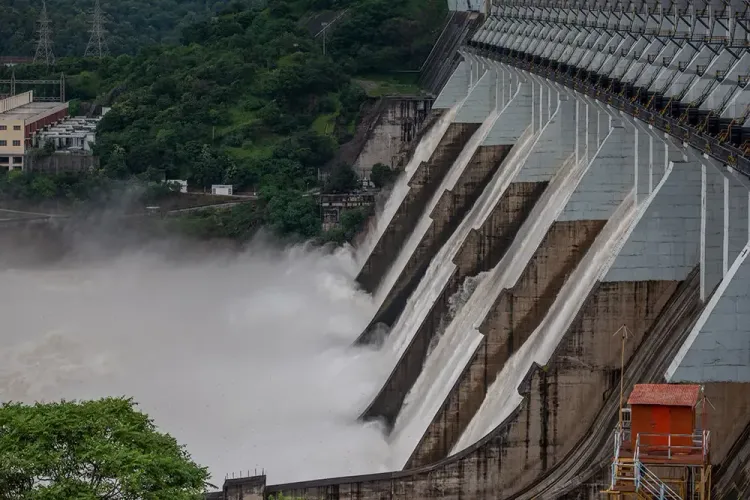
Gujarat reservoir storage hits 59.75% as Sardar Sarovar holds 72% capacity
Synopsis
Gujarat's reservoirs are at their healthiest in at least two years, with total storage crossing 59.75% and the Sardar Sarovar dam holding 72.33% capacity — 12.18% more than last year. An above-average monsoon delivering 128% rainfall has transformed water availability for drinking and irrigation across all five regions of the state.
Key Takeaways
Gujarat's total reservoir storage stands at 59.75 per cent as of 4 May 2025 , up 9.04 per cent from 50.71 per cent on 3 May 2024 .
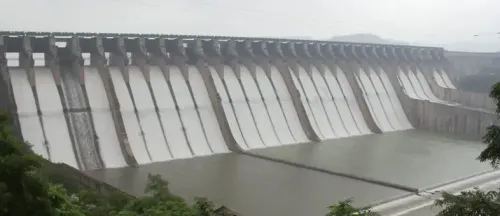
Sardar Sarovar reservoir holds 72.33 per cent capacity ( 2.41 lakh MCFT ), up 12.18 per cent year-on-year.
Central Gujarat leads regional storage at 59.52 per cent ( 49,338 MCFT ), followed by South Gujarat at 54.13 per cent and North Gujarat at 49.11 per cent .
Saurashtra and Kutch remain comparatively lower at 43.45 per cent and 37.12 per cent respectively.
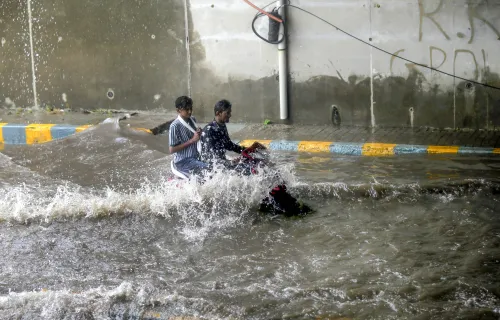
The state recorded over 128 per cent of normal monsoon rainfall, directly driving the improvement in water availability.
Gujarat's major reservoirs are holding significantly more water this year, with total storage reaching 59.75 per cent as of Sunday, 4 May 2025 — an increase of over nine percentage points compared to the same period last year, according to the state's Water Resources Department. The improvement follows an above-average monsoon season in which Gujarat recorded more than 128 per cent of its normal rainfall.
Current Storage Levels
Official data shows that 5.32 lakh million cubic feet (MCFT) of water is currently stored across Gujarat's key reservoirs. The Sardar Sarovar reservoir, widely regarded as the lifeline of the state, is holding 72.33 per cent of its total capacity, amounting to 2.41 lakh MCFT — a rise of 12.18 per cent over last year's corresponding figure.
Point of View
But Gujarat's water story has always had a regional fault line. While Central Gujarat and Sardar Sarovar bask in surplus, Saurashtra at 43.45% and Kutch at 37.12% remain structurally vulnerable — a reminder that above-average rainfall does not distribute itself equitably across a geographically diverse state. The department's attribution of improved storage to 'administrative measures' alongside natural rainfall warrants scrutiny: how much of this gain is monsoon luck versus durable conservation infrastructure? With climate variability increasing, Gujarat needs a water security framework that holds even in a below-average rainfall year.
NationPress
27 Sept 2026
Frequently Asked Questions
What is the current total reservoir storage level in Gujarat?
As of 4 May 2025, Gujarat's major reservoirs hold 59.75 per cent of their total capacity, equivalent to 5.32 lakh MCFT of water. This is an increase of 9.04 percentage points compared to 50.71 per cent recorded on 3 May 2024.
How much water is stored in the Sardar Sarovar reservoir right now?
The Sardar Sarovar reservoir currently holds 72.33 per cent of its capacity, amounting to 2.41 lakh MCFT of water. This represents a 12.18 per cent increase compared to the same period last year, when it held 60.15 per cent.
Which region in Gujarat has the highest water storage?
Central Gujarat leads all regions with 59.52 per cent storage, equivalent to 49,338 MCFT. South Gujarat follows at 54.13 per cent, while North Gujarat stands at 49.11 per cent. Saurashtra and Kutch remain lower at 43.45 per cent and 37.12 per cent respectively.
Why are Gujarat's reservoir levels higher this year?
The improvement is attributed to an above-average monsoon in which Gujarat recorded more than 128 per cent of its normal rainfall. The state's Water Resources Department also cited ongoing water conservation management measures as a contributing factor.
How does 2025 reservoir storage compare to last year across regions?
Every region has seen year-on-year improvement. North Gujarat rose from 32.35 per cent to 49.11 per cent, Central Gujarat from 49.09 per cent to 59.52 per cent, South Gujarat from 51.05 per cent to 54.13 per cent, Saurashtra from 32.45 per cent to 43.45 per cent, and Kutch from 33.61 per cent to 37.12 per cent.