Gujarat Vidyapith trains students in natural farming, bio-inputs
Synopsis
Gujarat Vidyapith is making natural farming a classroom subject — with students preparing Jeevamrit, Beejamrit, and Agniastra on a live campus farm. With 20 hours of monthly training built into the BRS curriculum, the university is betting that institutionalising chemical-free methods in higher education is the fastest route to scaling natural farming across Gujarat.
Key Takeaways
Gujarat Vidyapith in Ahmedabad runs monthly 20-hour natural farming training sessions for students on campus.
Natural farming has been formally included as a subject in the BRS curriculum , confirmed by Vice-Chancellor Harshad Patel .
Students learn to prepare Beejamrit , Jeevamrit , and Ghan Jeevamrit (cow-dung-based bio-inputs) and pest-control formulations Agniastra and Neemastra .
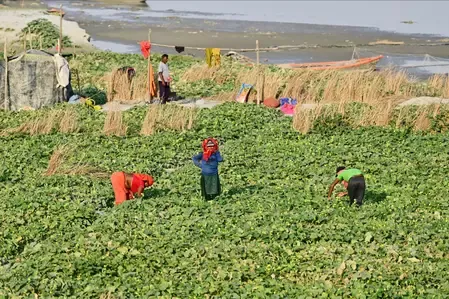
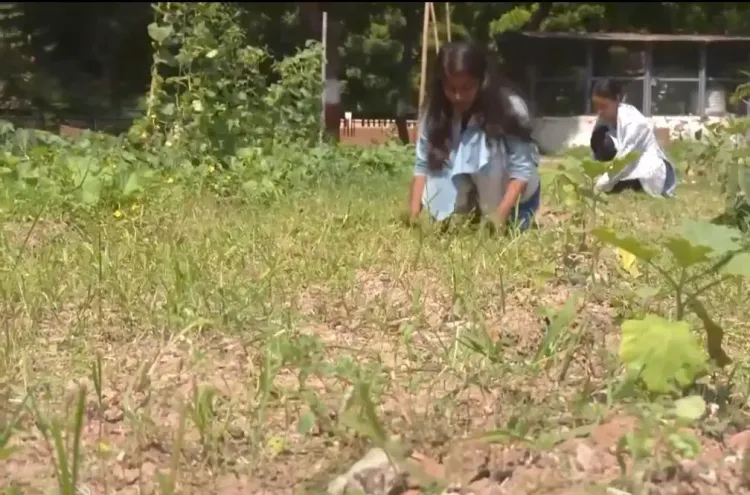
Campus vegetable plots provide hands-on cultivation experience alongside classroom instruction.
The programme is conducted under the motto of 'health, prosperity and conservation of resources' .
Students aim to extend natural farming practices across Gujarat after completing the course.
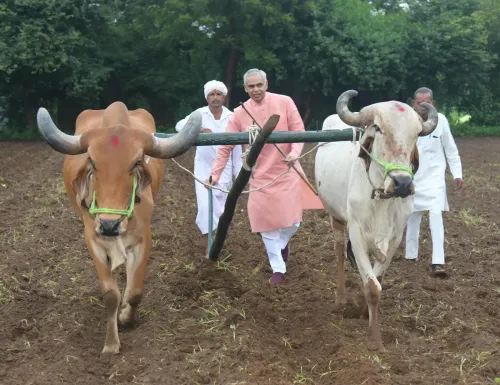
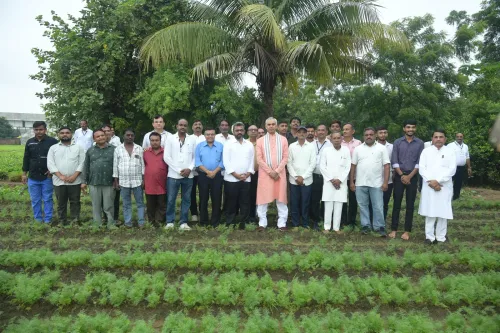
Gujarat Vidyapith in Ahmedabad is conducting structured natural farming training for students through monthly practical sessions on its campus, equipping them to prepare bio-inputs such as Beejamrit, Jeevamrit, and Ghan Jeevamrit as part of a broader push for chemical-free agriculture and environmental conservation.
How the Programme Works
Students receive 20 hours of training every month, blending classroom instruction with hands-on cultivation. The curriculum covers natural farming theory, vegetable cultivation using natural methods, and the potential benefits of reducing chemical fertiliser dependence. Campus plots serve as live laboratories where students apply what they learn directly to growing crops.
Under the university's guiding motto of 'health, prosperity and conservation of resources', the administration has integrated natural farming as a formal subject within the BRS curriculum. Vice-Chancellor Harshad Patel confirmed the decision, noting that campus vegetable beds were set up specifically to give students practical exposure alongside theoretical knowledge.
What Students Are Learning
The training introduces students to cow-dung-based bio-formulations — Beejamrit (a seed treatment), Jeevamrit (a liquid soil inoculant), and Ghan Jeevamrit (a solid variant) — which are staples of India's natural farming movement. For pest and disease management, Agniastra and Neemastra, both plant-derived formulations, are taught as chemical-free alternatives to synthetic pesticides.
Assistant Professor Shailesh Chaudhary said students prepare these inputs themselves for use on crops. 'Once the entire crop has grown, if there is any problem related to disease or pests, we use Agniastra and Neemastra to control the pests,' he said.
Student Voices
Binesh Kothiwar, a student at the university, said the programme had broadened his understanding of farming's impact beyond yields. 'We have learnt that natural farming can bring significant improvements to our lives, including improvements in crop yields, soil, food and health. Therefore, our effort is to implement natural farming across Gujarat,' he said.
Fellow student Janvi Jadav linked the shift to public health concerns. 'At present, chemical fertilisers are being used extensively, and this is leading to the spread of several diseases. Therefore, it would be good if we give importance to natural farming and work towards it,' she said, adding that the training had given her both the knowledge and practical skills to do so.
Broader Context
The initiative aligns with national-level efforts to expand natural farming across India, including the government-backed Pradhan Mantri Prakritik Kheti Khushhal Kisan Yojana. Gujarat has been among the states at the forefront of this movement, and embedding the practice within university education marks a step toward institutionalising chemical-free agriculture for the next generation of farmers and agronomists. As student cohorts complete the programme and return to rural communities, their influence on ground-level farming practices could gradually widen the reach of natural methods beyond the campus.
Point of View
But the leap from campus vegetable beds to large-scale farmer adoption remains wide. The bio-inputs taught — Jeevamrit, Beejamrit, Agniastra — are proven in low-input smallholder contexts, yet their scalability in water-stressed or commercially intensive Gujarat farming has rarely been independently measured. The real test of this programme is whether graduates carry these practices back to farming communities, or whether the training remains an academic credential disconnected from field economics. University-level mainstreaming is necessary but not sufficient without extension services, market linkages, and credible yield-comparison data to persuade risk-averse farmers.
NationPress
19 Oct 2026
Frequently Asked Questions
What natural farming training does Gujarat Vidyapith offer students?
Gujarat Vidyapith provides students with 20 hours of monthly training covering both theory and practice of natural farming, including preparation of bio-inputs like Beejamrit, Jeevamrit, Ghan Jeevamrit, Agniastra, and Neemastra. The training also involves hands-on cultivation in campus vegetable plots.
What are Beejamrit, Jeevamrit, and Ghan Jeevamrit?
These are cow-dung-based natural farming inputs used to enrich soil and support crop growth without chemical fertilisers. Beejamrit is a seed treatment, Jeevamrit is a liquid soil inoculant, and Ghan Jeevamrit is its solid form — all central to India's natural farming movement.
Has natural farming been made a formal subject at Gujarat Vidyapith?
Yes. Vice-Chancellor Harshad Patel confirmed that natural farming has been included as a subject in the BRS curriculum at Gujarat Vidyapith. Campus vegetable plots have been set up to provide students with practical experience alongside classroom learning.
Why are students at Gujarat Vidyapith concerned about chemical fertilisers?
Student Janvi Jadav cited the extensive use of chemical fertilisers as a driver of disease spread, reflecting broader public health concerns around synthetic agricultural inputs. The training aims to equip students with chemical-free alternatives they can promote in Gujarat's farming communities.
How does this initiative connect to India's larger natural farming movement?
The programme aligns with national efforts to expand natural farming, including the Centre's Pradhan Mantri Prakritik Kheti Khushhal Kisan Yojana. Gujarat has been among the leading states in promoting chemical-free agriculture, and Gujarat Vidyapith's curriculum integration represents an institutional step toward mainstreaming these practices.