Haryana launches Parali Protection Force to curb stubble burning ahead of harvest
Synopsis
Haryana is deploying a dedicated Parali Protection Force — backed by drones, night patrols, FIRs, and red entries in land records — to end paddy stubble burning this harvest season. With over 6.2 lakh registered paddy farmers and ₹1,200-per-acre incentives on offer, it is the state's most operationally detailed anti-burning push yet, and one with direct consequences for Delhi-NCR air quality.
Key Takeaways
Haryana will deploy a Parali Protection Force at district and block levels comprising police, Agriculture Department, and administrative officials.
Farmers are offered an incentive of ₹1,200 per acre plus machinery subsidies as alternatives to burning.
Every verified stubble-burning case will attract an FIR , a challan, and a 'red entry' in the farmer's land record.
Late-evening patrolling has been intensified to counter farmers burning residue after dark to evade satellite detection.
8,134 village-level nodal officers have been appointed, covering 6,04,314 of the state's 6,21,285 registered paddy farmers.
Drone surveillance is being deployed in association with DRIISHYA in compliance with CAQM directions.
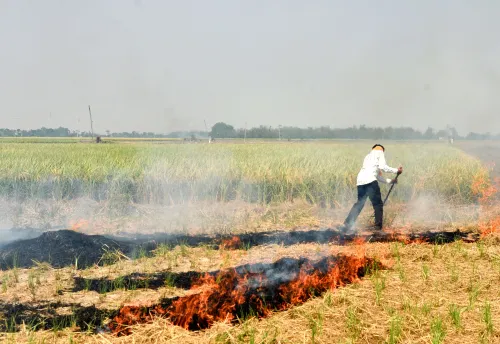
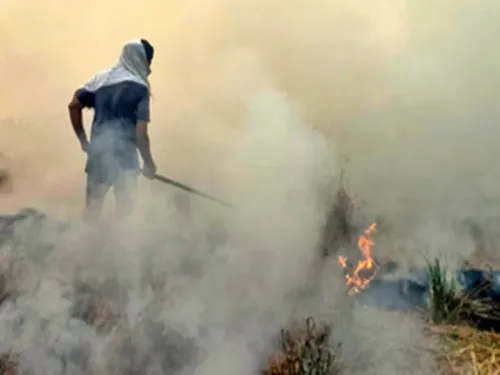
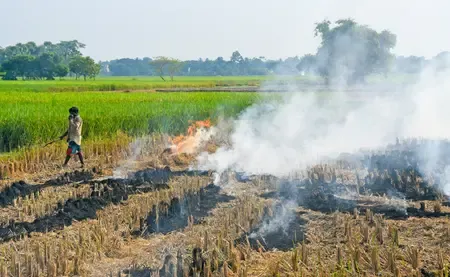
Haryana is set to deploy a dedicated Parali Protection Force at district and block levels to stamp out paddy stubble burning across the state, as authorities intensify enforcement ahead of the 2024 harvesting season. The force will operate alongside drone surveillance and late-evening patrolling, while farmers are being offered an incentive of ₹1,200 per acre to adopt crop-residue management alternatives.
Action Plan Reviewed at Senior Level
Chief Secretary Anurag Rastogi on Thursday chaired a review of the state's action plan for eliminating stubble burning and ensuring compliance with directions issued by the Commission for Air Quality Management (CAQM). The meeting reinforced the government's intent to treat this harvesting season as a zero-tolerance window on farm fires.
The Parali Protection Force will comprise police personnel, Agriculture Department officials, administrative officers, nodal and cluster officers, and representatives from other stakeholder departments. It will closely monitor farm-fire incidents and initiate action against violators in real time.
Targeting Night-Time Burning and Satellite Evasion
Additional Chief Secretary (Agriculture) Vijayendra Kumar flagged a specific enforcement gap: some farmers have reportedly been burning paddy residue after dark to evade satellite-based detection of farm fires. To counter this, the action plan calls for intensified patrolling during late evening hours.
Every verified case of stubble burning will attract a three-pronged response — registration of a First Information Report (FIR), a challan, and a 'red entry' in the farmer's land record. Environmental compensation charges will also be imposed and recovered from violators, according to officials.
Incentives and Machinery Deployment
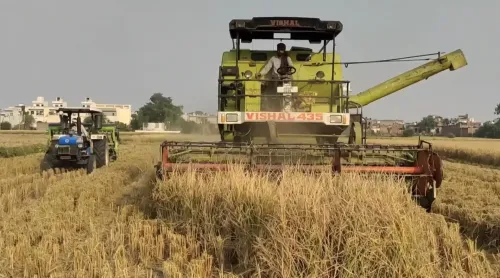
Alongside enforcement, the government is rolling out farmer-facing incentives. In addition to the ₹1,200 per acre payment for optimal use of crop-residue management machinery, the state is offering subsidies on the purchase of balers, rakers, and related equipment.
Machines will be moved between districts in alignment with paddy harvesting schedules. Harvesting begins in Yamunanagar, Ambala, Karnal and Kurukshetra from September and advances to Sirsa, Fatehabad, Hisar and Jind during the last week of October. Officials have been asked to coordinate with baler owners in neighbouring states and adjoining Haryana districts to ensure seamless machinery movement.
Field Monitoring: 8,134 Nodal Officers Appointed
Director (Agriculture) Amit Khatri confirmed that 8,134 village-level nodal officers have been appointed for ground-level monitoring. Haryana has approximately 6,21,285 registered paddy farmers spread across 5,600 villages, covering around 34.1 lakh acres. Of these, 6,04,314 farmers have already been covered by nodal officers.
Each nodal officer can be tagged to a maximum of 100 farmers, with the limit reduced to 50 in designated hotspot villages. Officers are required to use a mobile application to report active fire locations and log whether farmers are managing crop residue through in-situ, ex-situ, or fodder-based methods.
Drone Surveillance via DRIISHYA
In line with CAQM directives, Haryana is in the process of deploying drones in association with DRIISHYA for aerial monitoring of stubble-burning incidents. Deputy Commissioners will finalise in advance the specific villages and locations earmarked for drone coverage, ensuring systematic aerial oversight across the most fire-prone zones.
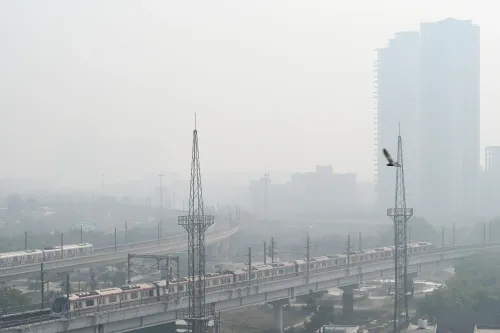
With harvesting already beginning in parts of the state, the next few weeks will test whether the multi-layered enforcement and incentive framework translates into a measurable reduction in farm-fire counts — numbers that directly bear on air quality across the Delhi-NCR region and beyond.
Point of View
Challan, red entry) and night-patrol mandate signal that the state has absorbed the lesson that satellite-only monitoring is gameable. The real accountability test, however, is whether the 8,134 nodal officers actually log violations rather than shield local farmers from penalties. The ₹1,200-per-acre incentive is meaningful but falls short of what several agricultural economists have flagged as the minimum required to make in-situ management financially competitive with burning. Delhi's winter air quality will be the most visible audit of whether this framework holds.
NationPress
24 Sept 2026
Frequently Asked Questions
What is Haryana's Parali Protection Force?
The Parali Protection Force is a multi-agency enforcement unit deployed at district and block levels in Haryana to prevent paddy stubble burning. It comprises police personnel, Agriculture Department officials, administrative officers, and nodal officers who monitor farm fires and take action against violators.
What penalties does Haryana impose for stubble burning?
Every verified case of paddy stubble burning in Haryana triggers three actions: registration of an FIR, a challan, and a 'red entry' in the farmer's land record. Environmental compensation charges are also imposed and recovered from the violator.
What incentive is Haryana offering farmers to avoid stubble burning?
Haryana is offering a direct incentive of ₹1,200 per acre for optimal utilisation of crop-residue management machinery, in addition to subsidies on the purchase of balers, rakers, and other equipment. The aim is to make in-situ and ex-situ residue management financially viable for farmers.
How many farmers and villages does the plan cover?
Haryana has approximately 6,21,285 registered paddy farmers across 5,600 villages covering around 34.1 lakh acres. Of these, 6,04,314 farmers have already been covered by 8,134 village-level nodal officers appointed for field monitoring.
Why is late-evening patrolling being intensified?
According to Additional Chief Secretary (Agriculture) Vijayendra Kumar, some farmers have reportedly been burning paddy residue after dark specifically to avoid satellite-based detection of farm fires. The state has therefore mandated intensified patrolling during late evening hours to close this enforcement gap.