IIT Kharagpur workshop targets tribal livelihoods in Odisha's Mayurbhanj
Synopsis
IIT Kharagpur has taken its applied-science mission deep into one of India's most ecologically sensitive tribal belts — Mayurbhanj's Simlipal zone, where 100% of residents in certain ranges are tribal. The DST-backed workshop is an attempt to turn biodiversity conservation and indigenous knowledge into economic opportunity, for communities where vulnerability is compounded by geography, wildlife law, and historical marginalisation.
Key Takeaways
IIT Kharagpur held a stakeholder workshop on 15 October 2026 focused on sustainable livelihoods for tribal communities in Mayurbhanj, Odisha .
The project is a collaboration with the Department of Science and Technology (DST) under its SEED division .
Tribal communities account for 58.58% of Mayurbhanj's population, with 97.3% living in rural areas.
In deep wildlife ranges of Simlipal South Division , the resident population is 100% tribal .
Particularly Vulnerable Tribal Groups include the semi-nomadic Hill Khadias and the Mankirdias , known for Siali fibre rope-making and NTFP collection.
Workshop themes spanned mushroom cultivation, integrated farming, renewable energy, indigenous knowledge, and rural entrepreneurship.
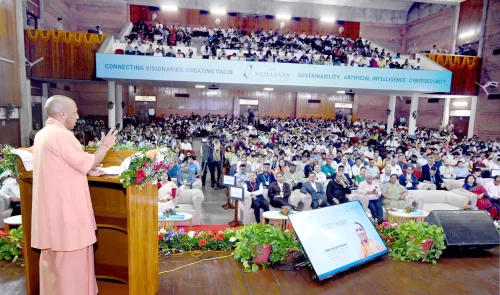
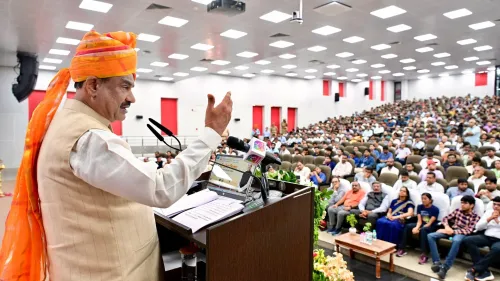
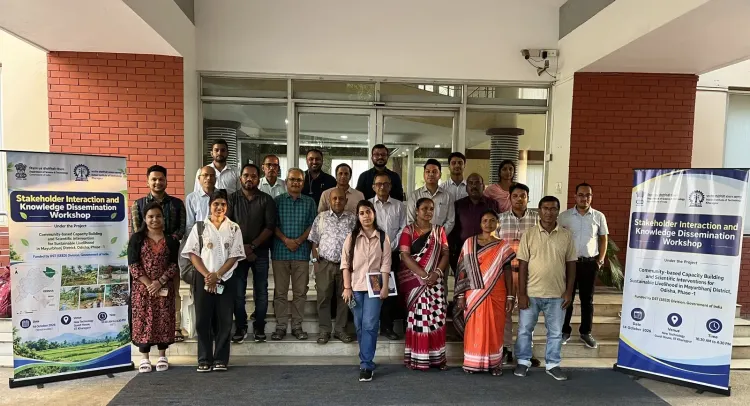
IIT Kharagpur on Thursday, 15 October 2026, convened a stakeholder interaction and knowledge dissemination workshop aimed at strengthening sustainable livelihoods among tribal communities in Mayurbhanj, Odisha. The initiative is part of a collaborative project with the Department of Science and Technology (DST) through its Science for Equity Empowerment and Development (SEED) division, designed to translate academic research into tangible social impact for some of India's most vulnerable rural communities.
Background and Institutional Framework
The workshop is embedded within a broader IIT Kharagpur mandate to build resilient, self-reliant rural communities through applied science. The institute has previously carried out field-scale technology demonstrations, including fluoride removal filter pilots in Bankura, West Bengal, signalling a track record of translating laboratory research into ground-level interventions. The day's proceedings were inaugurated by Prof Jayanta Mukhopadhyay, Dean (Strategy and Analytics), and organised by an interdisciplinary team comprising Dr Sayak Roychowdhury, Prof Bhagirath Behera, Prof Soumya Kanti Ghosh, Prof Pulak Mishra, and Dr Pritha Datta.
Who Was in the Room
The deliberations brought together Shri Sumit Kar, Deputy Director of the Simlipal South Wildlife Division, alongside district officials, scientists, NGO representatives, grassroots entrepreneurs, and community stakeholders. The breadth of participation underscores the multi-agency nature of the challenge: improving livelihoods in a biodiversity-sensitive zone requires alignment between conservation authorities, local government, and the communities themselves.
The Tribal Landscape of Mayurbhanj
Tribal communities constitute nearly 58.58% of Mayurbhanj district's population, with approximately 97.3% of them living in rural areas. The Simlipal South Wildlife Division — encompassing ranges such as Pithabata North, Pithabata South, Nawana, Jenabil, Upper Barahkamuda, and Bhanjabasa — has a resident population that is 100% tribal. Major tribes in the area include the Kolhas, Santhals, Bhumijas, Bathudis, Gondas, Mundas, Hos, and Mahalis.
Among the most vulnerable are the Particularly Vulnerable Tribal Groups (PVTGs): the Hill Khadias, who are semi-nomadic and inhabit several forest villages, and the Mankirdias, traditionally known for rope-making using Siali fibre and the gathering of non-timber forest products (NTFPs) such as honey, arrowroot, and wild roots. The Simlipal South Division also falls within the Simlipal Tiger Reserve and Simlipal Biosphere Reserve, adding a layer of conservation complexity to livelihood planning.
What the Workshop Covered
Participants explored a wide spectrum of interventions — from indigenous knowledge preservation and biodiversity conservation to mushroom cultivation, integrated farming, renewable energy, and rural entrepreneurship. The sessions examined how science-backed solutions can generate sustainable economic opportunities without disrupting fragile local ecosystems. Notably, the format — combining knowledge dissemination with stakeholder dialogue — is designed to ensure that community voices shape the design of any interventions, rather than having top-down solutions imposed.
The Conservation-Livelihood Balancing Act
Managing the Simlipal South Division involves navigating a delicate tension: tiger conservation and anti-poaching operations on one side, and the forest rights, relocation processes, and livelihood needs of tribal residents on the other. This workshop represents an attempt to address that tension through inclusive, science-led planning. As IIT Kharagpur scales this model, the outcomes in Mayurbhanj could offer a replicable template for other biodiversity-rich, tribally populated districts across India.
Point of View
Scientists, NGOs, and community members in one room, it acknowledges that the Simlipal tribal belt's challenges are as much institutional as they are technical. The harder question, however, is scale and continuity — DST-SEED projects are time-bound, and the risk is that workshops produce recommendations that outlast the funding. Whether IIT Kharagpur can embed these interventions into durable local institutions, rather than leaving behind a report, will determine whether this becomes a model or a memory.
NationPress
15 Oct 2026
Frequently Asked Questions
What is the IIT Kharagpur tribal livelihood project in Odisha?
It is a collaborative initiative between IIT Kharagpur and the Department of Science and Technology's SEED division, aimed at building sustainable livelihoods for tribal communities in Mayurbhanj, Odisha. The project translates scientific research into practical interventions across areas such as integrated farming, renewable energy, and indigenous knowledge preservation.
Why is Mayurbhanj significant for tribal development?
Tribal communities make up nearly 58.58% of Mayurbhanj's population, with 97.3% living in rural areas. The district encompasses the Simlipal Tiger Reserve and Biosphere Reserve, where some ranges have a 100% tribal resident population, making livelihood support especially complex given overlapping conservation laws.
Who are the Particularly Vulnerable Tribal Groups in Simlipal South?
The two PVTGs in the Simlipal South Wildlife Division are the Hill Khadias, a semi-nomadic group inhabiting forest villages, and the Mankirdias, who are known for traditional Siali fibre rope-making and the collection of non-timber forest products such as honey, arrowroot, and wild roots.
What topics did the IIT Kharagpur workshop cover?
The workshop addressed indigenous knowledge and biodiversity conservation, mushroom cultivation, integrated farming, renewable energy, and rural entrepreneurship. It explored how scientific interventions can generate sustainable economic opportunities while preserving local ecosystems.
How does conservation complicate livelihood support in Simlipal?
The Simlipal South Division is part of both a Tiger Reserve and a Biosphere Reserve, requiring authorities to balance anti-poaching operations and tiger conservation with the forest rights, relocation processes, and economic needs of the tribal population — a tension that the IIT Kharagpur project directly seeks to address.