Amit Shah Vows to Rebuild 'Smiling Bastar' at Divyang Camp
Synopsis
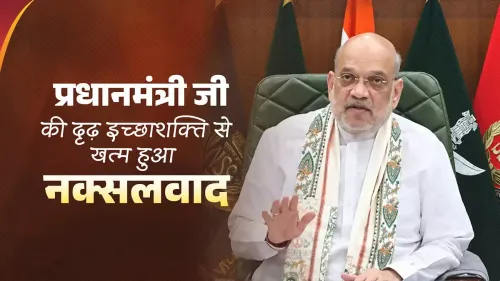
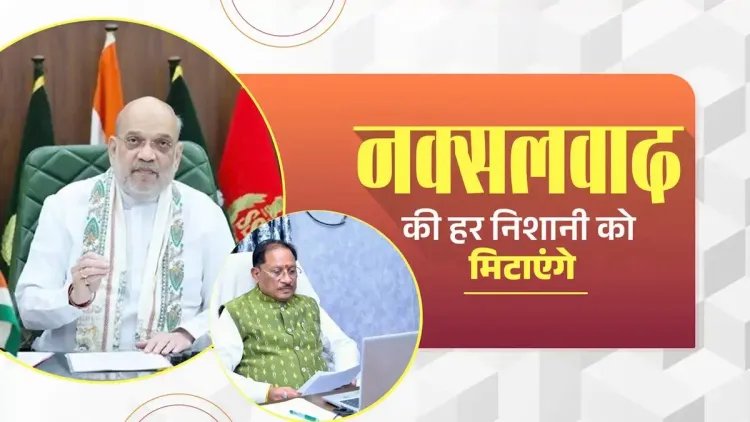
Union Home Minister Amit Shah, quoted by the Chhattisgarh CMO, vowed at a free divyang equipment camp in Bastar that the central government would erase every trace of Naxalism and rebuild the region through welfare and rehabilitation.
Key Takeaways
Union Home Minister Amit Shah addressed a free assistive-devices distribution camp in Bastar, Chhattisgarh on 15 October 2026 .
Shah pledged that the Government of India would stand 'like a rock' behind every person with a disability and every Naxal victim in the region.
He called for the camps to continue and committed to giving 'each and every divyangjan' a genuine chance at rehabilitation and progress.
Shah declared it the government's duty to 'erase every trace of Naxalism' and rebuild a 'laughing, playing Bastar.' The ADIP scheme , revised in 2014 , underpins the free assistive-device delivery mechanism used in these camps.
The event reflects the central government's dual-track LWE strategy: security operations paired with accelerated welfare delivery in affected districts.
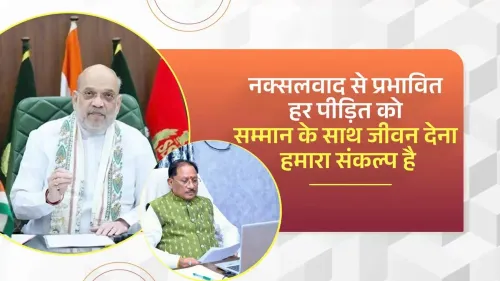
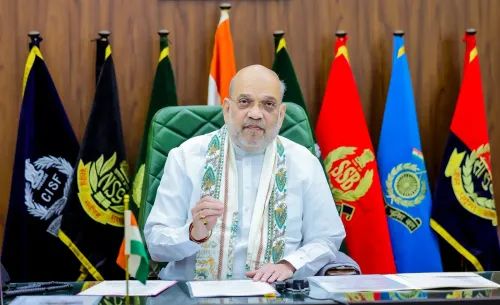
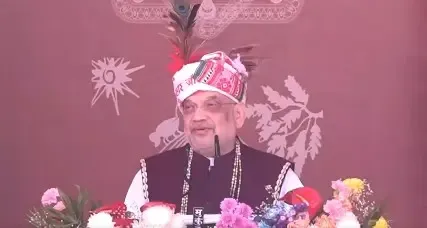
A free assistive-devices camp in Bastar became the backdrop for a pointed commitment on Thursday, 15 October 2026: Union Home and Cooperation Minister Amit Shah pledged that the Government of India would stand 'like a rock' behind every person with a disability — and behind every victim of Naxal violence — until the region is fully rehabilitated. The Chief Minister's Office of Chhattisgarh amplified his remarks, framing the camp not as routine welfare delivery but as a statement of intent about what a post-Naxal Bastar must look like.
Shah's words at the camp — and what they signal
Speaking at the distribution event, Shah said: 'Nihshulk divyang upkaran vitaran shivir jaari rakhiye' — 'Keep the free divyang equipment distribution camps going.' He added that the government's responsibility was to give 'each and every person with a disability, every victim, the chance to rehabilitate and progress in life.' The message was unambiguous: welfare here is not charity but an instrument of statecraft, designed to fill the vacuum that decades of insurgency left behind.
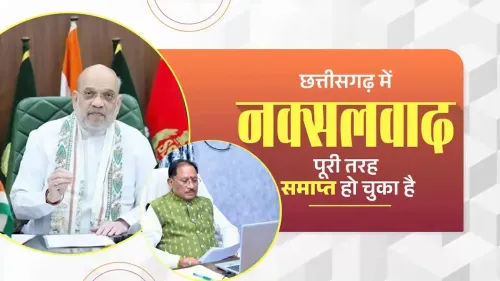
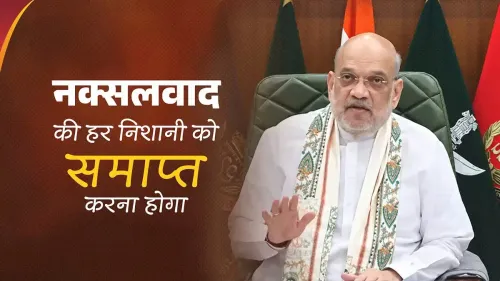
Shah closed with the sharper political line: 'It is the government's duty to erase every trace of Naxalism and rebuild a laughing, playing Bastar once more.' The hashtag #HantasKheltaBastar — a smiling, thriving Bastar — anchors the campaign's aspirational identity.
Bastar's disability burden and the ADIP camps
Bastar sits in southern Chhattisgarh, a region whose tribal communities have borne disproportionate harm from Left Wing Extremism — from landmine injuries and violence to displacement that severed access to basic healthcare. Many residents living with disabilities in these districts have historically had little access to assistive devices such as wheelchairs, crutches, hearing aids, and prosthetics.
The ADIP (Assistance to Disabled Persons) scheme, revised and expanded by the central government in 2014, provides assistive and adaptive devices to persons with disabilities free of charge through district-level camps. Periodic camps in LWE-affected areas represent a deliberate outreach step — bringing the scheme to communities that cannot easily travel to urban distribution centres.
Security plus rehabilitation — the dual-track doctrine in LWE zones
Shah's appearance at a divyang camp is not incidental. For years, the central government's strategy in Left Wing Extremism-affected states has rested on two parallel tracks: sustained security operations to degrade insurgent networks, and accelerated welfare delivery to win back civilian confidence. Chhattisgarh has been the most contested theatre of that strategy, with southern districts including Dantewada, Sukma, and Bijapur witnessing both military pressure on Naxal cadres and rolling out of roads, schools, and health infrastructure.
Disability rehabilitation sits at the intersection of both tracks — it directly addresses victims of Naxal-era violence while demonstrating that the state's reach extends to the most marginalised. The optics of a senior Union minister personally presiding over a free device camp in Bastar carries exactly that dual message.
The camp continues. The promise is on record. Now Bastar watches whether the next camp, and the one after that, show up on schedule.
Point of View
Embedding rehabilitation delivery in high-visibility ministerial events deepens the Centre's ownership of grassroots outcomes. The real test will be whether camp frequency and device availability translate into verifiable improvements in disability inclusion indices across Bastar's southern districts.
NationPress
15 Oct 2026
Frequently Asked Questions
What did Amit Shah say at the Bastar divyang camp?
Amit Shah said the Government of India would stand 'like a rock' behind every person with a disability and every Naxal victim, promised to continue free assistive-device distribution camps, and pledged to erase every trace of Naxalism to rebuild a thriving Bastar.
What is the ADIP scheme for divyang equipment distribution?
The ADIP (Assistance to Disabled Persons) scheme is a central government programme that provides assistive and adaptive devices — such as wheelchairs, prosthetics, hearing aids, and crutches — free of charge to eligible persons with disabilities, including through periodic camps in remote and LWE-affected areas.
Why is the Bastar region significant for Naxal rehabilitation?
Bastar in southern Chhattisgarh has been one of the most severely affected regions in India's decades-long Left Wing Extremism conflict; its tribal communities have suffered displacement, injuries, and restricted access to welfare services, making rehabilitation and inclusive development central to the post-conflict strategy.
What does 'Naxal-free Bastar' mean as a government goal?
'Naxal-free Bastar' refers to the central and state governments' stated objective of eliminating the presence and influence of Left Wing Extremist groups in Bastar's southern districts through a combination of security operations and accelerated welfare and infrastructure delivery.
Which Chhattisgarh districts are covered under LWE rehabilitation efforts?
The LWE rehabilitation and welfare drive in Chhattisgarh focuses primarily on the southern Bastar division, which includes districts such as Dantewada, Sukma, Bijapur, Narayanpur, Kondagaon, and Kanker — areas historically most affected by Naxal activity.