MP CM Mohan Yadav Reviews Monsoon, Orders Focus on 12 Deficit Districts
Synopsis
Chief Minister Dr. Mohan Yadav reviewed MP's monsoon and reservoir status on October 15, directing special water management for 12 below-normal rainfall districts, prioritising drinking water, promoting low-water crops, and linking Jal Ganga Abhiyan conservation work to rural employment generation.
Key Takeaways
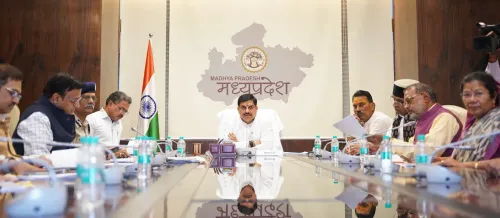
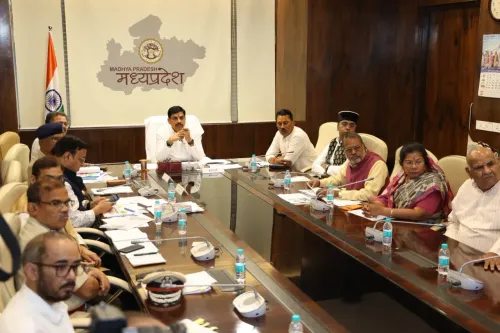
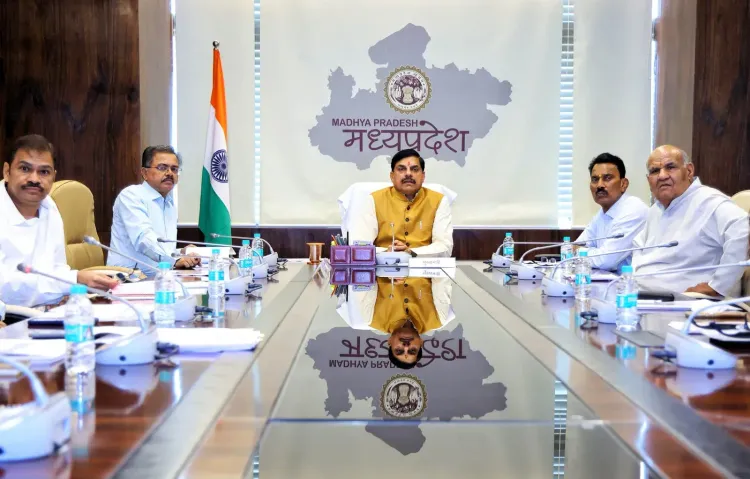
Mohan Yadav chaired a monsoon and rainfall review at the Mantralaya on October 15, 2026 .
12 districts in Madhya Pradesh have recorded below-normal rainfall this season, triggering special water management directives.
Drinking water supply has been declared the highest priority in deficit districts.
Farmers in low-rainfall zones are being encouraged to adopt low water-consuming crops .
Jal Ganga Abhiyan conservation activities are to be used to generate rural employment alongside water conservation goals.
Water User Committees are directed to play an active role in implementing water management at the local level.
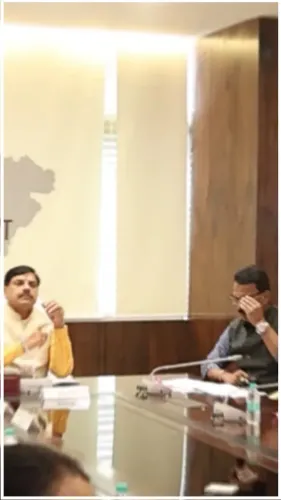
With the monsoon season drawing to a close and rainfall deficits already biting in parts of Madhya Pradesh, Chief Minister Dr. Mohan Yadav convened a high-level review at the Mantralaya on Thursday, October 15, 2026, assessing dam storage levels, reservoir conditions, and the water situation across districts that have received below-normal rainfall this season.
Directives for the 12 Rainfall-Deficit Districts
The Chief Minister zeroed in on 12 districts where rainfall has fallen short of seasonal averages. His instructions were direct: prioritise water management in those zones, treat drinking water supply as the single highest priority, and actively encourage farmers to shift to low water-consuming crops. Three clear mandates — no ambiguity, no delay.
The explicit push toward kam paani wali fasalein (low-water crops) signals a realistic reckoning with ground conditions. In a state where millions of farmers depend on rain-fed agriculture, nudging them away from water-intensive varieties mid-cycle can blunt the worst of a deficit season before it compounds into a full agrarian crisis.
Jal Ganga Abhiyan: Conservation Work as Rural Employment
Jal Ganga Abhiyan, the state government's flagship water conservation campaign, took centre stage as the Chief Minister linked conservation activities directly to employment generation. The directive: use the campaign's rainwater harvesting and groundwater recharge works to create jobs in the very districts most stressed by the rainfall shortfall. It is a dual-purpose approach — fix the water table while keeping rural livelihoods afloat.
Dr. Yadav also stressed that Water User Committees — local community institutions managing irrigation and water resources at the grassroots — must be brought into active participation. Community ownership, the Chief Minister indicated, is not optional; it is the mechanism through which state directives actually reach the last field and the last household.
Why This Review Matters Beyond a Seasonal Routine
Madhya Pradesh conducts pre- and post-monsoon reservoir reviews as standard governance practice, but the stakes this cycle are sharper. Spatial rainfall variability — where some regions flood while others go dry within the same state — has become a defining challenge for central Indian agriculture. A deficit in 12 districts simultaneously is a stress signal that demands coordinated, not routine, action.
The Jal Ganga Abhiyan framework, designed precisely for this kind of community-driven, employment-linked conservation, now faces its clearest test: whether district-level water management plans and activated Water User Committees can translate a Chief Minister's Mantralaya directive into measurable relief on the ground before Rabi sowing season pressures peak.
Point of View
The CM is attempting to convert a distress signal into a development opportunity — a politically and administratively astute framing. The emphasis on Water User Committees signals intent to decentralise responsibility, which historically determines whether state-level water directives survive the journey from Bhopal to the block level. The real test arrives during Rabi sowing, when the cumulative weight of the deficit season will become visible in groundwater tables and crop choices.
NationPress
15 Oct 2026
Frequently Asked Questions
What is Jal Ganga Abhiyan in Madhya Pradesh?
Jal Ganga Abhiyan is a Madhya Pradesh government water conservation campaign focused on rainwater harvesting, groundwater recharge, and generating rural employment through conservation works.
Which districts in MP have received below-normal rainfall in 2026?
Chief Minister Dr. Mohan Yadav identified 12 districts with below-normal rainfall during his October 15 review, though their specific names have not been officially disclosed in the public communication.
What are Water User Committees in Madhya Pradesh?
Water User Committees are local community institutions in Madhya Pradesh responsible for managing irrigation and water resources at the grassroots level, and the CM has directed them to actively participate in current water management efforts.
What did CM Mohan Yadav instruct farmers in low-rainfall districts?
CM Dr. Mohan Yadav directed officials to encourage farmers in the 12 deficit-rainfall districts to adopt low water-consuming crops as an adaptation measure to the rainfall shortfall.
What is the top priority for Madhya Pradesh in the 12 deficit districts?
Chief Minister Dr. Mohan Yadav has declared drinking water supply the single highest priority in the 12 districts that have recorded below-normal rainfall this monsoon season.