Indian-American lawmakers lead Congress backlash against Trump's Graham Act waiver
Synopsis
President Trump signed an executive order on 16 October that activated and then immediately waived up to 100% tariffs under the Lindsey Graham Russia Sanctions Act — sparing India and other major Russian oil buyers. Indian-American lawmakers Ami Bera and Suhas Subramanyam led a bipartisan congressional backlash, with even Republican Senator John Cornyn breaking ranks, just as Secretary of State Rubio prepares to meet EAM Jaishankar in Mumbai.
Key Takeaways
President Donald Trump signed an executive order on 16 October activating and simultaneously waiving the Graham Act 's tariffs of up to 100% on major buyers of Russian oil, including India .
Congressman Ami Bera (California) and Congressman Suhas Subramanyam (Virginia), both Indian-American Democrats, were among the sharpest congressional critics of the waiver.
Republican Senator John Cornyn of Texas, founder of the Senate India Caucus , also condemned the move, saying 'Lindsey would be appalled.' Senate Democratic Whip Dick Durbin accused Trump of 'capitulation to the Kremlin.' The Foundation for India and Indian Diaspora Studies (FIIDS) backed the waiver, calling it 'a pragmatic pause' as energy prices rise.
Secretary of State Marco Rubio is scheduled to meet External Affairs Minister S.
Jaishankar in Mumbai on 20 October .
Indian-American members of the US Congress were among the most vocal critics on 18 October 2026 of President Donald Trump's decision to waive tariffs and sanctions under the Lindsey Graham Russia Sanctions Act, a law targeting buyers of Russian oil. The backlash spanned party lines, with a senior Republican senator joining Democrats in condemning the move.
Indian-American Voices at the Forefront
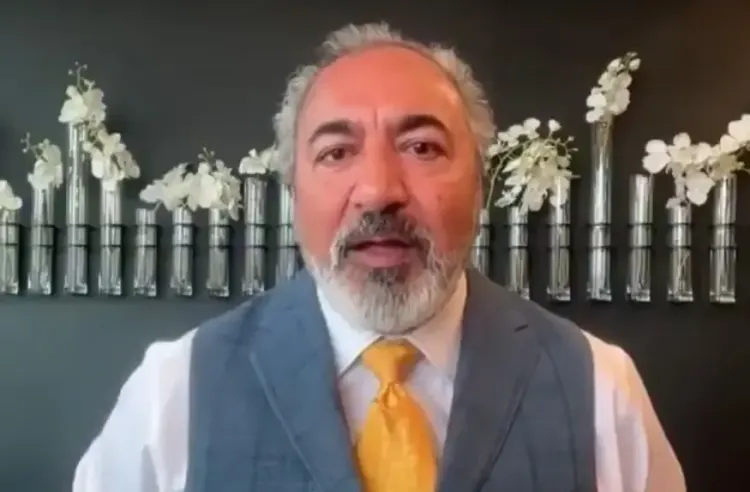
Congressman Ami Bera, a California Democrat, wrote on X: 'Trump's decision to waive new sanctions on Russia should leave no doubt: that is exactly what is happening,' when asked whether the administration was abandoning Ukraine. He added: 'My Republican colleagues pushed hard to pass the Lindsey Graham Russia sanctions bill before we left town. They ought to be standing up and screaming at the top of their lungs that we don't side with Russia.'
Congressman Suhas Subramanyam, a Virginia Democrat, was equally direct: 'Trump is doing exactly what we warned: undermining Congress' authority, abandoning Ukraine, and letting Putin off the hook.'
Republicans Break Ranks
The criticism was not confined to Democrats. Republican Senator John Cornyn of Texas, a founder of the Senate India Caucus, shared a news report on the executive order with a pointed one-line comment: 'Lindsey would be appalled.' The remark carried particular weight given that Senator Lindsey Graham, the South Carolina Republican after whom the law is named, died in July.
Broader Democratic Condemnation
Senate Democratic Whip Dick Durbin said: 'President Trump has once again opted for capitulation to the Kremlin. Lindsey Graham, John McCain, and Ronald Reagan must be turning in their graves.'
Congressman Gregory Meeks, the top Democrat on the House Foreign Affairs Committee, said Trump 'has had the power to sanction Russia for years. What he lacks is the will.' Meeks also wrote that Trump 'deserves a different honor: the Neville Chamberlain Appeasement Award.'
Congressman Jim McGovern, a Massachusetts Democrat, questioned: 'What did Putin promise Trump in exchange? That he'd try to influence US elections — again?' He added that 'immoral imports from Russia won't help — but will make it harder to roll back Russian aggression.'
What the Executive Order Does
President Trump's executive order, signed on 16 October, simultaneously brought into effect and then waived the Graham Act's duties of up to 100% on the largest buyers of Russian oil and gas. The waiver spares countries including India, one of the world's largest buyers of Russian crude.
Not all reactions were negative. The Foundation for India and Indian Diaspora Studies (FIIDS), a US-based advocacy group, thanked Trump 'for a pragmatic pause' on oil import tariffs, citing rising diesel and energy prices amid the wars in Ukraine and Iran. The group argued that 'with winter approaching, affordable energy and diplomacy must remain priorities.'
India Dimension and Diplomatic Context
The waiver carries direct significance for India, which has been a major purchaser of discounted Russian crude since the outbreak of the Ukraine war. The order arrives as Secretary of State Marco Rubio is scheduled to travel to India for talks with External Affairs Minister S. Jaishankar in Mumbai on 20 October. The diplomatic timing has drawn attention from analysts tracking Indo-US energy and foreign policy alignments.
With bipartisan criticism mounting and key allies watching, the Trump administration's next moves on the Graham Act — and the broader Ukraine policy it embodies — are likely to dominate upcoming congressional sessions.
Point of View
What signal does that send to future Congresses contemplating foreign-policy legislation?
NationPress
18 Oct 2026
Frequently Asked Questions
What is the Lindsey Graham Russia Sanctions Act and what did Trump do to it?
The Lindsey Graham Russia Sanctions Act (Graham Act) is a US law imposing tariffs of up to 100% on the largest buyers of Russian oil and gas, named after the late South Carolina Senator Lindsey Graham who died in July. President Trump's executive order of 16 October activated the law's duties and waived them in the same order, effectively nullifying their impact on countries like India.
Why are Indian-American lawmakers criticising Trump's Russia waiver?
Congressmen Ami Bera and Suhas Subramanyam argue the waiver undermines Congress's authority, abandons Ukraine, and relieves pressure on Russia's Vladimir Putin. Both lawmakers had supported the bipartisan push for tougher Russia sanctions and say the waiver contradicts the legislative intent of a bill many of their Republican colleagues championed.
How does the Graham Act waiver affect India?
India is one of the world's largest buyers of Russian crude oil at discounted prices since the Ukraine war began, and the waiver directly spares it from tariffs of up to 100% that would otherwise apply. The Foundation for India and Indian Diaspora Studies (FIIDS) welcomed the waiver as a 'pragmatic pause' that helps keep energy costs manageable.
Did any Republicans criticise the waiver?
Yes. Republican Senator John Cornyn of Texas, a co-founder of the Senate India Caucus, shared a news report on the executive order with the comment 'Lindsey would be appalled,' signalling discomfort within the GOP. His remark underscores that the backlash is not purely a partisan Democratic response.
What is the diplomatic significance of the Rubio-Jaishankar meeting on 20 October?
Secretary of State Marco Rubio is scheduled to meet External Affairs Minister S. Jaishankar in Mumbai on 20 October, days after the Graham Act waiver that effectively shields India's Russian oil imports. The meeting is expected to cover bilateral ties, energy security, and the broader geopolitical landscape, with the waiver now adding a fresh dimension to the agenda.