What to Expect from the Upcoming India-Arab Foreign Ministers Meeting?
Synopsis
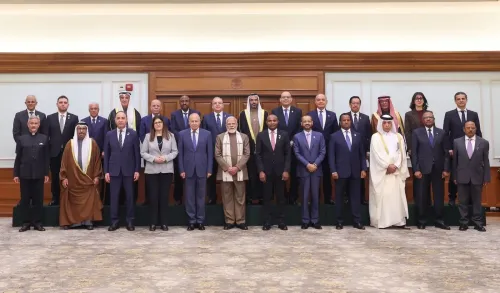
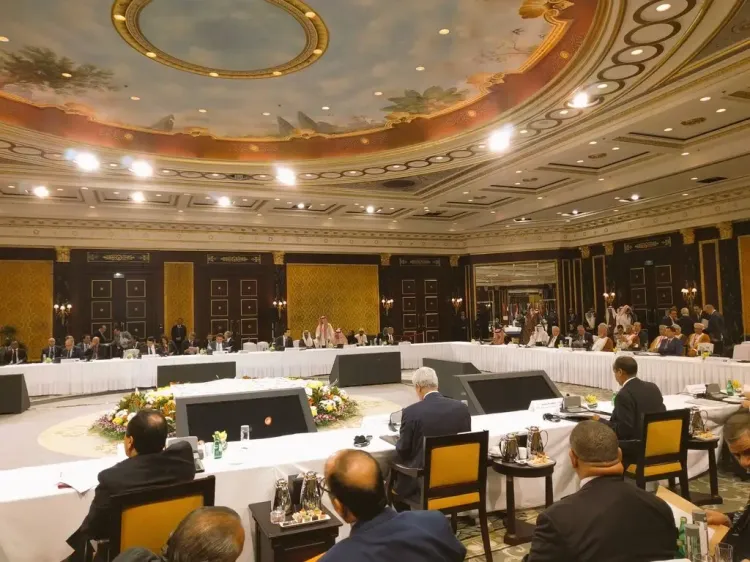
As India prepares to host the India-Arab Foreign Ministers Meeting this week, key officials from 20 nations will gather to strengthen ties and discuss vital economic and cultural collaborations. This meeting underscores the historical and ongoing relationship between India and the Arab world, emphasizing mutual interests and shared challenges.
Key Takeaways
India-Arab Foreign Ministers Meeting involves 20 participating nations.
Strong historical ties exist between India and the Arab League .
Trade between India and Arab nations exceeds USD 240 billion .
Arab countries supply a significant portion of India's crude oil and fertilizers.
Over 9 million Indians reside in Arab League countries.
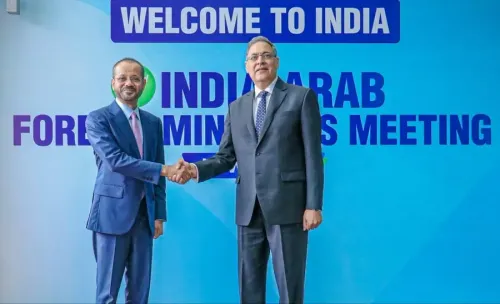
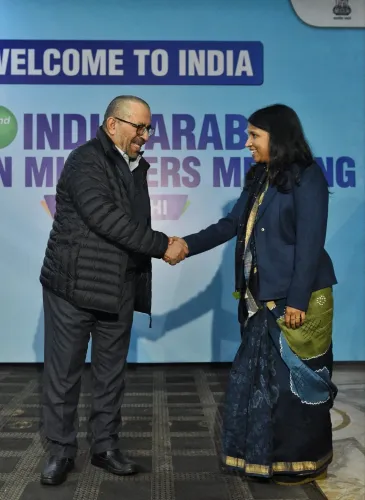
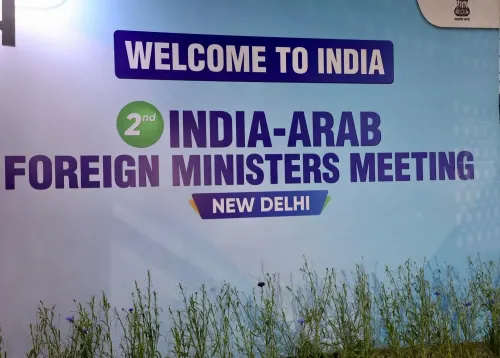
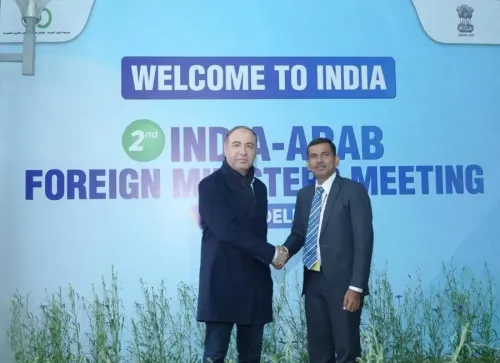
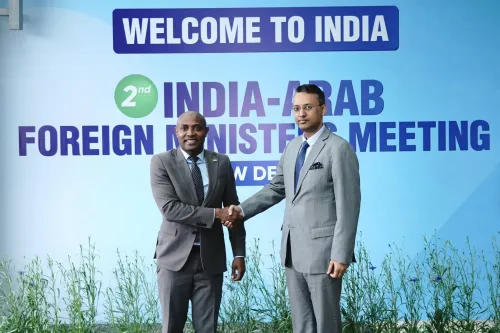
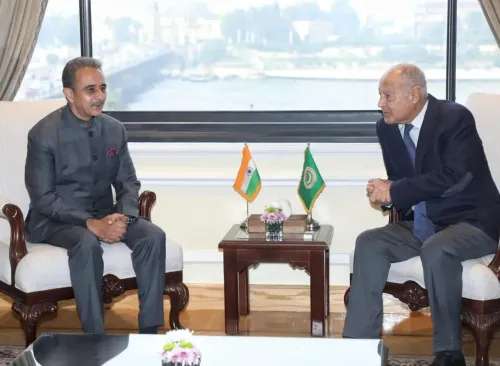
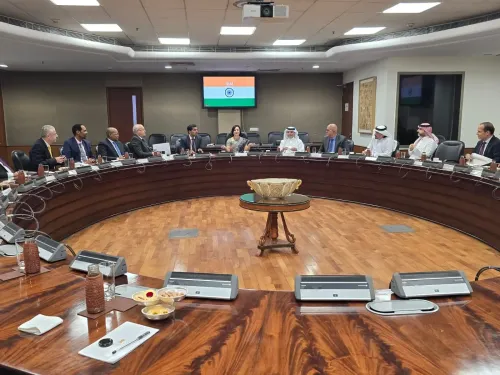
New Delhi, Jan 28 (NationPress) - The Ministry of External Affairs (MEA) announced on Wednesday that Foreign Ministers and senior officials from 20 nations will gather for the India-Arab Foreign Ministers Meeting (FMM) and the 4th India-Arab Senior Officials Meeting (SOM) in 2026, set to occur this week.
Delegates from Palestine, Sudan, Egypt, Djibouti, Algeria, Comoros, Jordan, the League of Arab States, Kuwait, Yemen, Saudi Arabia, Bahrain, Somalia, Lebanon, Qatar, Syria, Libya, Mauritania, Iraq, and Oman will begin arriving in India from Thursday.
The MEA emphasized that India has historically maintained close and amicable ties with the nations that constitute the League of Arab States (LAS), also known as the Arab League. These relationships trace back to ancient times when merchants, scholars, and diplomats traversed the Arabian Sea and land routes connecting India to West Asia and the Arabian Peninsula, facilitating the exchange of knowledge and goods. A shared cultural heritage, bolstered by connections in language and religion, continues to strengthen these age-old bonds.
Established in Cairo in March 1945 with seven founding members, the Arab League currently encompasses 22 member states from both North Africa and the Middle East, aiming to promote the collective interests of its nations.
According to the MEA, Arab League nations are integral to India’s extended neighborhood. India's unwavering dedication to enhancing ties with this region, coupled with shared perspectives on significant global developments and robust economic relations, underpin India-Arab collaborations. A considerable portion of India’s external trade traverses the Suez Canal, Red Sea, and Gulf of Aden. There are substantial Indian investments in countries ranging from Oman and Saudi Arabia to Egypt and Sudan.
Trade between India and the Arab world has proven resilient, even amidst the challenges posed by the COVID-19 pandemic and global geopolitical tensions. Presently, this trade exceeds USD 240 billion. Arab nations supply approximately 60 percent of India’s crude oil imports and over 50 percent of fertilizers and related products, making this partnership both robust and essential. The collaboration with Arab countries spans nearly every domain, including Food and Energy, Financial Services, Health and Education, Information Technology, and Renewable Energy, encompassing both startups and large-scale infrastructure projects. Additionally, more than 9 million Indians have established their homes in Arab League nations, contributing significantly to the region’s advancement and prosperity.
Point of View
The upcoming India-Arab Foreign Ministers Meeting is a significant event that underscores India's commitment to fostering strong ties with the Arab League. This gathering reflects the mutual interests and historical connections that bind these nations, paving the way for enhanced collaboration in trade, culture, and diplomacy. As we navigate global challenges, such partnerships become increasingly vital for regional stability and prosperity.
NationPress
1 Oct 2026
Frequently Asked Questions
What is the India-Arab Foreign Ministers Meeting?
The India-Arab Foreign Ministers Meeting is a diplomatic gathering aimed at strengthening ties and discussing mutual interests between India and Arab nations.
Which countries are participating in the meeting?
Top officials from 20 countries, including Palestine, Sudan, Egypt, Saudi Arabia, and others, will participate in the meeting.
What is the significance of the India-Arab trade relationship?
The trade relationship between India and Arab nations exceeds USD 240 billion and is crucial for India's energy security, with Arab countries supplying a majority of India's crude oil and fertilizers.
When was the Arab League established?
The Arab League was established in March 1945 in Cairo, Egypt, with seven founding members.
How many Indian nationals live in Arab League countries?
Over 9 million Indian nationals have made the Arab League nations their home, significantly contributing to the region's development.