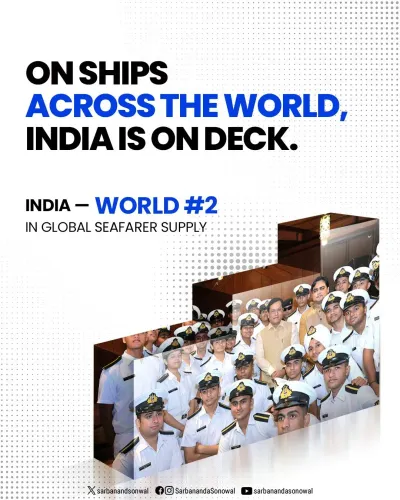
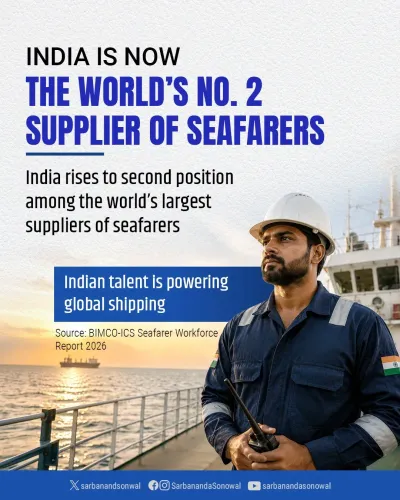
India becomes world's 2nd-largest seafarer supplier with 3.11 lakh professionals
Synopsis
India has more than doubled its share of the global seafaring workforce in a decade — from 5.2% and fifth place in 2015 to 12.16% and second place in 2026, with 3,11,936 professionals now serving on merchant vessels worldwide. The government's next bet is Mission 20 per cent: one in every five seafarers on the planet being Indian.
Key Takeaways
India is now the world's second-largest supplier of seafarers , per the BIMCO-ICS Seafarer Workforce Report 2026 .
India contributes 3,11,936 seafarers , accounting for 12.16 per cent of the global workforce — up from 5.2 per cent in 2015 .
India ranks behind only the Philippines and ahead of China , the Russian Federation , and Indonesia .
India supplies 1,40,718 officers ( 13.41% of world officers) and 1,71,218 ratings ( 11.29% of global ratings).
Global seafarer supply stands at 2.57 million against demand of 2.55 million , highlighting a tightening labour market.
The government has launched Mission 20 per cent to raise India's share from 12.16% to 20% of the global seafaring workforce.
India has risen to become the world's second-largest supplier of seafarers, contributing 3,11,936 maritime professionals to the global shipping industry, according to the BIMCO-ICS Seafarer Workforce Report 2026. The country now accounts for 12.16 per cent of the global seafaring workforce, ranking behind only the Philippines and ahead of China, the Russian Federation, and Indonesia.
A Decade of Remarkable Growth
In 2015, India contributed just 5.2 per cent of the world's seafarers and ranked fifth globally, trailing China, the Philippines, Indonesia, and the Russian Federation. Over the past decade, India's share has more than doubled — a structural shift that reflects sustained investment in maritime education, training infrastructure, and regulatory reform.
The country's strength is particularly pronounced in the officer cadre. India now supplies 1,40,718 officers, representing 13.41 per cent of the world's officer workforce. An additional 1,71,218 ratings — accounting for 11.29 per cent of global ratings — serve aboard merchant vessels worldwide.
A Tightening Global Labour Market
The BIMCO-ICS report estimates the global supply of seafarers at 2.57 million against a demand of 2.55 million, signalling an increasingly tight labour market. A continuing shortage of qualified officers worldwide positions India as a critical partner in meeting the shipping industry's future manpower requirements. This comes at a time when global trade volumes and fleet sizes continue to expand, placing greater pressure on the available talent pool.
What the Government Said
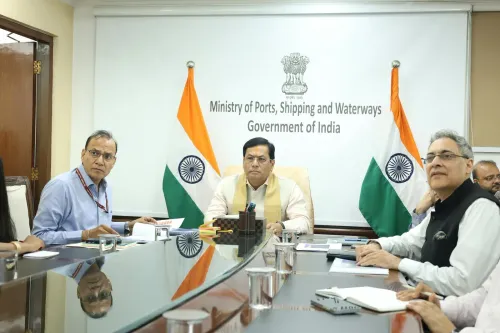
Union Minister of Ports, Shipping and Waterways Sarbananda Sonowal welcomed the report, stating: 'India's rise from the fifth-largest supplier of seafarers in 2015 with just 5.2 per cent of the global workforce to the world's second-largest maritime manpower nation with a 12.16% share in 2026 is a story of vision, resolve and transformative leadership.'
Sonowal credited the turnaround to initiatives spanning world-class maritime education, modern training infrastructure, digitisation of seafarer services, reform of maritime laws, and the creation of globally benchmarked standards. He added that these measures have 'empowered thousands of young Indians to compete and excel on the world stage.'
Mission 20 Per Cent: India's Next Target
The government has now set its sights on Mission 20 per cent — an ambitious national goal to raise India's share of the global seafaring workforce from 12.16 per cent to 20 per cent. The strategy includes expanding maritime training capacity, strengthening shipboard training opportunities, deepening industry-academia partnerships, and leveraging digital technologies.
Notably, the initiative also aims to create greater opportunities for women to pursue careers at sea. 'Our vision is clear: to ensure that one in every five seafarers serving aboard merchant ships anywhere in the world is an Indian, recognised globally for professionalism, competence and excellence,' Sonowal said.
With global shipping demand projected to grow and officer shortages persisting, India's trajectory suggests the 20 per cent target — while ambitious — is within strategic reach if training pipelines and industry partnerships scale at pace.
Point of View
But the bottleneck is not ambition — it is the pipeline of qualified officers, where India's 13.41% share, while leading, must grow faster than fleet expansion. The inclusion of women in the maritime workforce, still a marginal cohort, is the most underdeveloped lever in the government's strategy and deserves sharper policy focus than a passing mention.
NationPress
27 Oct 2026
Frequently Asked Questions
What is the BIMCO-ICS Seafarer Workforce Report 2026?
The BIMCO-ICS Seafarer Workforce Report is a periodic industry study jointly published by the Baltic and International Maritime Council (BIMCO) and the International Chamber of Shipping (ICS). The 2026 edition estimates the global supply of seafarers at 2.57 million and demand at 2.55 million, and ranks countries by their contribution to the global maritime workforce.
How many seafarers does India contribute globally?
India contributes 3,11,936 seafarers to the global shipping industry, accounting for 12.16 per cent of the worldwide seafaring workforce, according to the BIMCO-ICS Seafarer Workforce Report 2026. This includes 1,40,718 officers and 1,71,218 ratings.
How has India's ranking changed since 2015?
In 2015, India ranked fifth globally with a 5.2 per cent share of the world's seafarers, trailing China, the Philippines, Indonesia, and the Russian Federation. By 2026, India has climbed to second place with a 12.16 per cent share — more than doubling its contribution over the decade.
What is Mission 20 per cent?
Mission 20 per cent is the Indian government's national goal to increase India's share of the global seafaring workforce from 12.16 per cent to 20 per cent. The strategy involves expanding maritime training capacity, strengthening shipboard training, building industry-academia partnerships, and creating more opportunities for women to pursue careers at sea.
Why is India's rise significant for global shipping?
The global seafarer labour market is tightening, with supply of 2.57 million barely exceeding demand of 2.55 million, and a continuing shortage of qualified officers persisting worldwide. India's growing pool of trained maritime professionals — particularly officers — makes it a critical partner for global shipping operators seeking skilled manpower.