India Claims Top Spot as Nepal's Leading Bilateral Donor for FY 2024–25
Synopsis
In a remarkable display of support, India has secured its position as the largest bilateral donor to Nepal for the fiscal year 2024–25, disbursing US$107.8 million. This report highlights the growing partnership and development initiatives between the two nations.
Key Takeaways
India is the largest bilateral donor to Nepal in FY 2024–25, with US$107.8 million contributed.
The UK and USAID follow, disbursing US$84.2 million and US$67.1 million, respectively.
Indian aid focuses on connectivity and community development.
India ranks third overall in development aid, behind the World Bank and ADB.
India's aid has shown an upward trend over the last decade.
Kathmandu, March 31 (NationPress) In the fiscal year 2024–25, which concluded in mid-July 2025, India has established itself as the foremost bilateral donor to Nepal, contributing a total of US$107.8 million, as indicated by a report from the government.
The Development Cooperation Report 2024–25, published by Nepal's Finance Ministry, ranks the United Kingdom as the second-largest donor, with disbursements totaling US$84.2 million, while USAID holds the third position with US$67.1 million.
Japan's contribution amounts to US$58.3 million, placing it fourth, followed by Switzerland, which disbursed US$30.1 million. This annual report tracks the flow of grants, loans, and technical aid from international development partners to Nepal.
The report reveals that out of the total aid from India, US$73.3 million was allocated as grants, US$25.8 million as loans, and US$8.8 million for technical assistance.
Historically, multilateral donors such as the World Bank and the Asian Development Bank have been significant contributors to Nepal. According to the report, the country received a total of US$1.60 billion from both multilateral and bilateral sources in the previous fiscal year.
In the overall ranking of all donors—both multilateral and bilateral—India stands third in terms of development aid to Nepal. The World Bank leads with US$541.0 million in disbursements, followed by the Asian Development Bank with US$443.2 million, and then India with US$107.8 million.
Over the last decade, from the fiscal year 2015–16, India's development aid has seen fluctuations but has generally exhibited an upward trend, as noted in the report.
In 2023–24, India achieved its highest annual disbursement of the decade at US$118.1 million, while the data for 2024–25 indicates a decrease of 8.7 percent from the previous year.
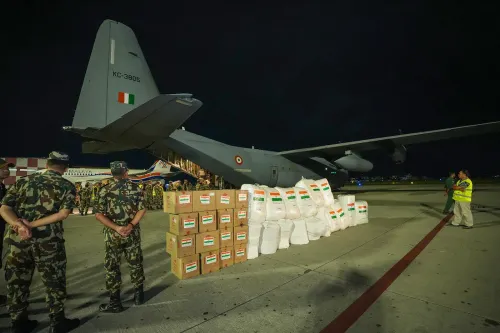
According to the report, India continues to be a key bilateral development partner for the Nepali government, concentrating its efforts on enhancing connectivity, impactful community development initiatives, and educational infrastructure.
Point of View
This report underscores India's pivotal role in Nepal's development landscape. As the leading bilateral donor, India's contributions are instrumental in fostering connectivity and community development, aligning with Nepal's growth objectives.
NationPress
9 Sept 2026
Frequently Asked Questions
What amount did India donate to Nepal in FY 2024–25?
India donated US$107.8 million to Nepal in the fiscal year 2024–25.
Who are the other major donors to Nepal?
The United Kingdom and USAID follow India, with contributions of US$84.2 million and US$67.1 million, respectively.
What sectors does Indian aid focus on in Nepal?
Indian aid primarily focuses on connectivity, community development projects, and educational infrastructure.
How does India's aid compare to multilateral donors?
India ranks third among all donors, with multilateral donors like the World Bank and Asian Development Bank providing higher amounts.
Has India's aid to Nepal increased over the years?
Yes, India's development aid has generally followed an upward trend over the past decade.