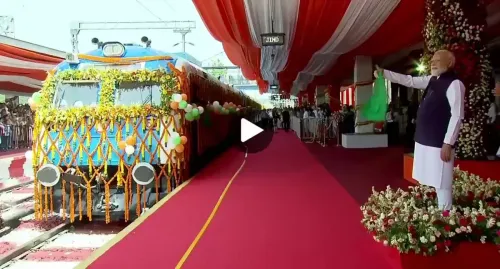
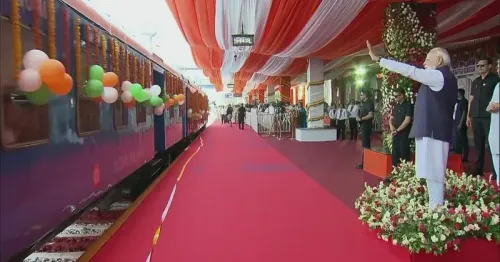
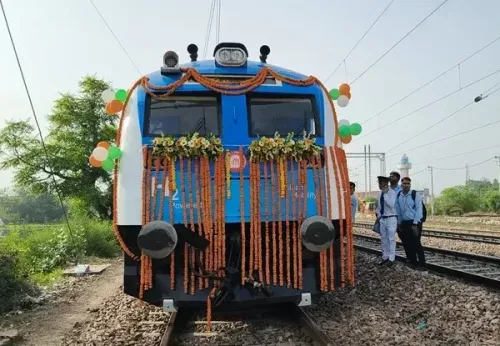
India's first hydrogen train flagged off from Haryana's Jind on Jind-Sonipat route
Synopsis
India joined a small global club of hydrogen-rail nations on 17 July as PM Modi flagged off the country's first hydrogen-powered train from Jind in Haryana. Running 89 km to Sonipat with zero carbon emissions and fares reportedly lower than standard trains, the launch is the first real-world test of hydrogen traction on Indian tracks — and a signal of how seriously Railways is chasing its decarbonisation mandate.
Key Takeaways
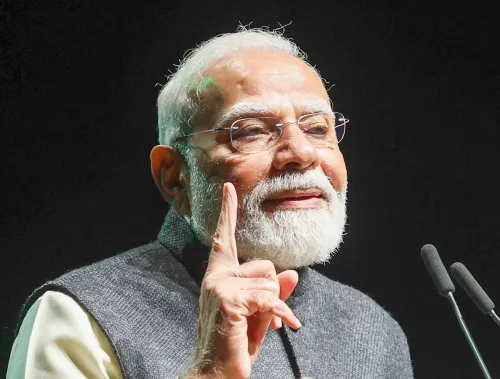
PM Narendra Modi flagged off India's first hydrogen-powered train from Jind, Haryana on 17 July .
The train operates on the 89-km Jind-Sonipat route under the Northern Railway zone.
The train produces zero carbon or greenhouse gas emissions , emitting only water vapour.
Fares are reportedly lower than standard trains , aimed at benefiting ordinary passengers.
The launch aligns with India's National Green Hydrogen Mission , which targets 5 million metric tonnes of green hydrogen production by 2030.
Residents of Jind district described the occasion as a historic moment for the town and the country.
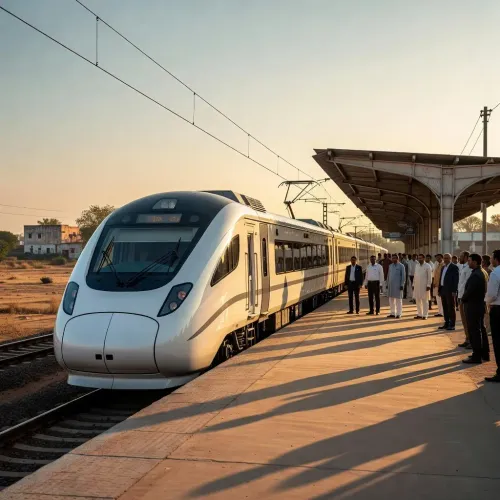
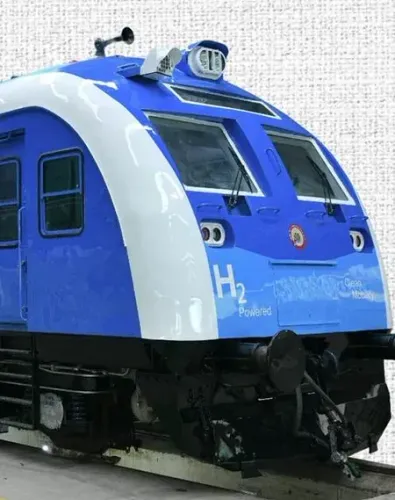
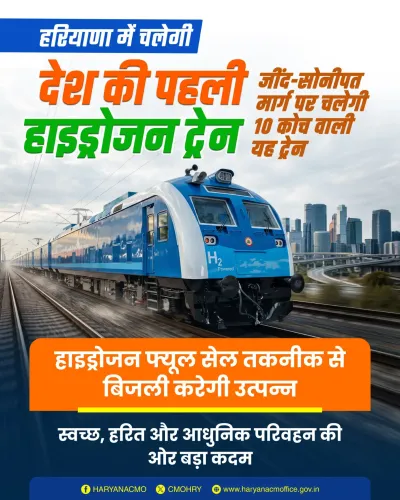
Prime Minister Narendra Modi on Friday, 17 July flagged off India's first hydrogen-powered train from Jind in Haryana, marking a landmark moment in the country's railway history. The zero-emission train will operate on the 89-km Jind-Sonipat route under the Northern Railway, becoming the first of its kind to enter commercial service in India.
A Historic First for Indian Railways
The launch places India among a select group of nations to have deployed hydrogen fuel-cell technology on its rail network. Unlike conventional diesel or electric trains, hydrogen trains emit no carbon or greenhouse gases — producing only water vapour as a byproduct. The Jind-Sonipat corridor was selected as the inaugural route under the Northern Railway zone, connecting two key towns in Haryana.
Local Reaction: Pride and Jubilation in Jind
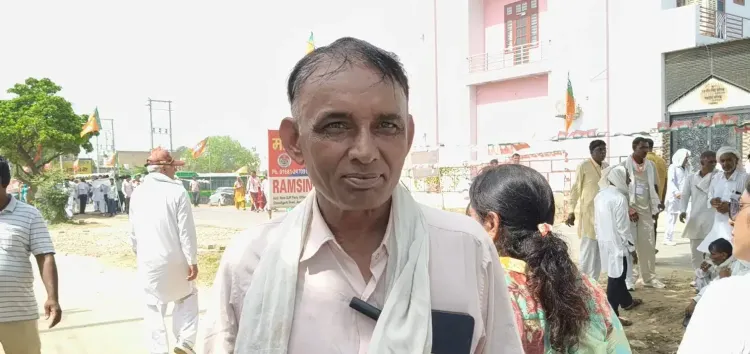
The flagging-off triggered an outpouring of pride among residents of Jind district, who described the occasion as a historic day not just for the region but for the entire country. An elderly local resident said he was immensely happy over the launch, noting that 'Jind has scripted history today.' He added that the train's operation would save passengers' time and make travel more convenient, and that fares — reportedly lower than those of standard trains — would directly benefit the common people.
Resident Captain Rathi called the launch 'a matter of pride for the entire district,' saying Jind had become a focal point of national discussion. Another resident, Pala Ram, remarked that the hydrogen train had brought fame to Jind not only within India but on the global stage as well, crediting accelerated development activity to Prime Minister Modi's leadership.
Why This Matters for India's Green Mobility Push
The hydrogen train launch aligns with India's broader clean energy commitments, including its National Green Hydrogen Mission, which targets production of 5 million metric tonnes of green hydrogen annually by 2030. Railways — one of the country's largest energy consumers — have been identified as a key sector for decarbonisation. This is the first tangible deployment of hydrogen traction technology on Indian tracks, moving the initiative beyond pilot studies and into operational reality.
Notably, European nations such as Germany and the United Kingdom have already run hydrogen trains on select routes, and India's entry into this space signals an accelerating technology transfer and indigenous capability push.
What Comes Next
Officials have not yet confirmed a timeline for expanding hydrogen train services to additional routes, but the Jind-Sonipat launch is expected to serve as a proof-of-concept for wider deployment. Industry observers will watch closely for ridership data, maintenance performance, and fare uptake — the metrics that will determine whether hydrogen rail scales beyond a flagship demonstration.
Point of View
But the harder question is scale. India has run hydrogen pilot studies for years; what changes today is that a train is actually carrying passengers. The real test will come in six to twelve months — whether the Jind-Sonipat service maintains uptime, whether fares hold, and whether the government commits procurement orders for additional rakes. Without that follow-through, this risks being a high-visibility inauguration rather than a system-level shift. Indian Railways is one of the world's largest diesel consumers; a single 89-km route barely registers. The hydrogen mission needs a credible fleet rollout plan, not just a ribbon-cutting.
NationPress
16 Oct 2026
Frequently Asked Questions
What is India's first hydrogen train and where does it run?
India's first hydrogen-powered train was flagged off by PM Narendra Modi on 17 July from Jind in Haryana. It operates on the 89-km Jind-Sonipat route under the Northern Railway zone, producing zero carbon emissions.
Why is the hydrogen train launch significant for India?
It marks India's first operational deployment of hydrogen fuel-cell traction technology on its rail network, moving beyond pilot studies. It aligns with India's National Green Hydrogen Mission and the broader push to decarbonise one of the country's largest energy-consuming sectors.
How does a hydrogen train differ from a regular train?
A hydrogen train uses fuel cells that combine hydrogen and oxygen to generate electricity, emitting only water vapour — no carbon dioxide or other greenhouse gases. Conventional diesel trains emit significant carbon emissions, making hydrogen an environmentally cleaner alternative.
What are the fares on the Jind-Sonipat hydrogen train?
According to local residents, fares on the hydrogen train are reportedly lower than those of standard trains on comparable routes, though official fare schedules have not been detailed in available reports.
Will hydrogen trains be expanded to other routes in India?
Officials have not yet announced a confirmed timeline for expanding hydrogen train services beyond the Jind-Sonipat route. The current launch is expected to serve as a proof-of-concept, with ridership and maintenance data likely to inform future deployment decisions.