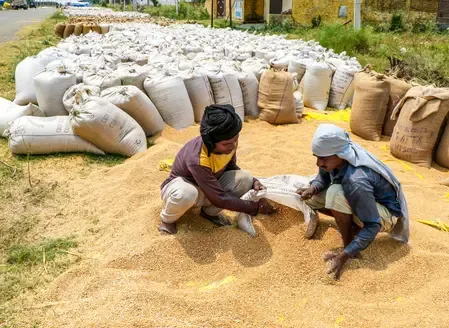
India foodgrain production hits record 378.53 MT in 2025-26
Synopsis
India harvested a record 378.53 million tonnes of foodgrain in 2025-26, with rice, wheat, moong, groundnut and mustard all at all-time highs. With rice and wheat now in surplus, the government is focusing on pulses and oilseeds to cut import dependence. Oilseeds, however, rose only 2.66 lakh tonnes.
Key Takeaways
India's foodgrain production hit a record 378.53 million tonnes in 2025-26 , up 208.06 lakh tonnes over 2024-25.
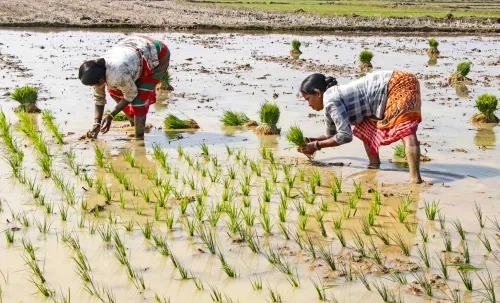
Rice reached a record 1551.54 lakh tonnes and wheat a historic 1220.64 lakh tonnes .
Pulses rose to 272.40 lakh tonnes , with moong at a record 43.96 lakh tonnes .
Oilseeds hit a record 432.55 lakh tonnes , led by groundnut ( 131.71 lakh tonnes ) and rapeseed-mustard ( 137.66 lakh tonnes ).
Kharif foodgrain output for 2026-27 is estimated at 1671.43 lakh metric tonnes despite El Nino and a delayed monsoon.
Rice exports grew 5 per cent , according to Agriculture Minister Shivraj Singh Chouhan .
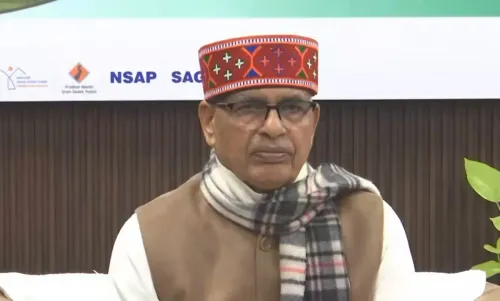
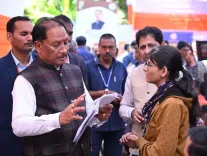
India's foodgrain production touched a record 378.53 million tonnes in 2025-26, an increase of 208.06 lakh tonnes over the 3577.32 lakh tonnes harvested in 2024-25. Union Agriculture Minister Shivraj Singh Chouhan released the final crop estimates at a press conference in New Delhi on Thursday, 26 November 2026.
Rice, wheat, moong, groundnut, and rapeseed-mustard all reached all-time highs. The minister said the figures show India is meeting its own food needs while contributing to global supplies.
Record Highs in Rice and Wheat
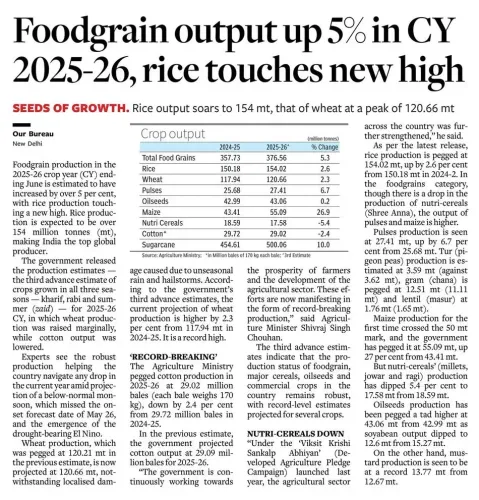
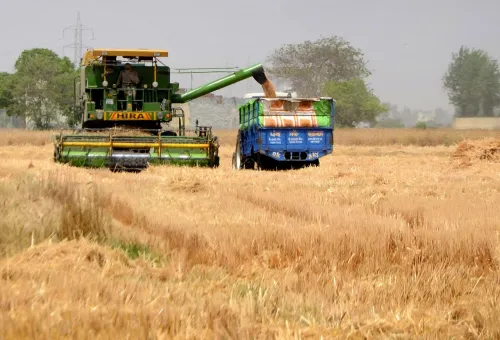
Total rice production rose by 49.70 lakh tonnes, from 1501.84 lakh tonnes in 2024-25 to a record 1551.54 lakh tonnes in 2025-26. Wheat output reached a historic 1220.64 lakh tonnes, up 41.19 lakh tonnes from 1179.45 lakh tonnes the previous year.
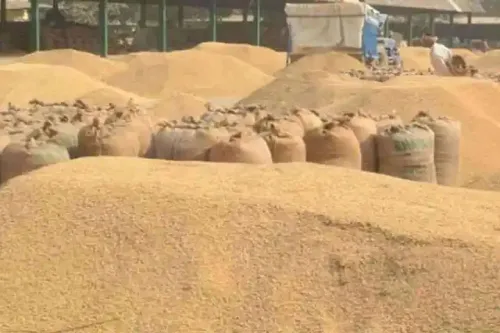
Chouhan said India has adequate stocks of both rice and wheat. He added that Indian rice exports have grown by 5 per cent, with basmati reaching consumers in the United States, Canada, and countries in the Middle East.
Maize, Millets and Pulses Gain Ground
Maize recorded one of the sharpest jumps, rising from 434.09 lakh tonnes in 2024-25 to 550.25 lakh tonnes in 2025-26. Nutri-cereals and coarse cereals together stood at 740.80 lakh tonnes, of which 'Shri Anna' (millets) accounted for 172.09 lakh tonnes.
Pulse output increased by 15.57 lakh tonnes, from 256.83 lakh tonnes to 272.40 lakh tonnes. The crop-wise figures for 2025-26 were:
- Moong: a record 43.96 lakh tonnes
- Gram: 125.13 lakh tonnes
- Tur (arhar): 35.99 lakh tonnes
Oilseeds and Commercial Crops
Total oilseed production rose by 2.66 lakh tonnes to a record 432.55 lakh tonnes, against 429.89 lakh tonnes a year earlier. Two crops drove most of the gain:
- Groundnut: a record 131.71 lakh tonnes, up 12.29 lakh tonnes from 119.42 lakh tonnes
- Rapeseed and mustard: a new high of 137.66 lakh tonnes, up 10.99 lakh tonnes from 126.67 lakh tonnes
Soybean production stood at 126.36 lakh tonnes. Among commercial crops, the estimates were:
- Sugarcane: 5037.29 lakh tonnes
- Cotton: 280.06 lakh bales of 170 kg each
- Jute and mesta: 94.28 lakh bales of 180 kg each
India's Global Standing in Agriculture
According to the minister, India ranks first globally in the production of rice, pulses, jute, millets, and spices. It is second only to China in wheat, cotton, groundnut, fruits, and vegetables, and second to Brazil in sugarcane.
Kharif Outlook Despite El Nino
Chouhan said kharif foodgrain production in 2026-27 is estimated at 1671.43 lakh metric tonnes. That is 97.67 lakh tonnes above the average of the previous five years. The estimate comes despite serious weather challenges, including El Nino and a delayed monsoon, which the minister said reflects the resilience of farmers.
Shift Towards Pulses and Oilseeds
Chouhan said that with India now in surplus in rice and wheat, the government's focus has turned to crop diversification and self-reliance in pulses and oilseeds. Domestic demand for both continues to rise, making it important to cut dependence on imports.
The government is pursuing these goals in mission mode through the National Pulses Mission and the National Oilseeds Mission. The minister said the impact of these programmes is now visible in the final figures for pulses and oilseeds. He added that diversification will broaden the farm production base and encourage farmers to grow a wider range of crops.
Whether the oilseed and pulse gains can be sustained, and whether they translate into lower import bills, will be the main test of the government's diversification strategy.
Point of View
But most of the gain comes from cereals: maize alone added about 116 lakh tonnes, while oilseeds grew by just 2.66 lakh tonnes. That gap undercuts the self-reliance story, because edible oil is where India's import dependence hurts most. Surplus rice and wheat stocks are reassuring for food security, but they also reflect the procurement incentives that keep farmers tied to water-intensive cereals. The diversification missions will be judged on whether pulse and oilseed output rises faster than demand, not on year-on-year records.
NationPress
26 Nov 2026
Frequently Asked Questions
What is India's foodgrain production for 2025-26?
India produced a record 378.53 million tonnes of foodgrain in 2025-26, according to final estimates released by Agriculture Minister Shivraj Singh Chouhan. That is 208.06 lakh tonnes more than the 3577.32 lakh tonnes produced in 2024-25.
How much rice and wheat did India produce in 2025-26?
Rice production reached a record 1551.54 lakh tonnes and wheat a historic 1220.64 lakh tonnes in 2025-26. Rice grew by 49.70 lakh tonnes and wheat by 41.19 lakh tonnes over the previous year.
What is the kharif foodgrain estimate for 2026-27?
Kharif foodgrain production for 2026-27 is estimated at 1671.43 lakh metric tonnes. That is 97.67 lakh tonnes above the previous five-year average, despite El Nino and a delayed monsoon.
Why is the government focusing on pulses and oilseeds?
With India in surplus in rice and wheat, the government wants self-reliance in pulses and oilseeds, where domestic demand keeps rising and imports remain high. It is pursuing this through the National Pulses Mission and the National Oilseeds Mission.
Where does India rank globally in agricultural production?
India ranks first in rice, pulses, jute, millets and spices, according to the Agriculture Minister. It is second after China in wheat, cotton, groundnut, fruits and vegetables, and second after Brazil in sugarcane.