India rising as global space power: Chandrayaan-3 to Bharatiya Antariksh Station
Synopsis
From Aryabhata in 1975 to a crewed Moon mission by 2040 — India's space programme has crossed a threshold. With Chandrayaan-4 targeting lunar sample return, the Bharatiya Antariksh Station due in 2028, and Gaganyaan preparing Indian astronauts for orbit, this is no longer a development story. It is a great-power story, and the rest of the world is taking notice.
Key Takeaways
Chandrayaan-3 (2023) made India one of a handful of nations to achieve a lunar soft landing.
Chandrayaan-4 , approved in 2024 , aims to collect Moon samples and return them to Earth — a multi-launch, multi-docking mission of far greater complexity.
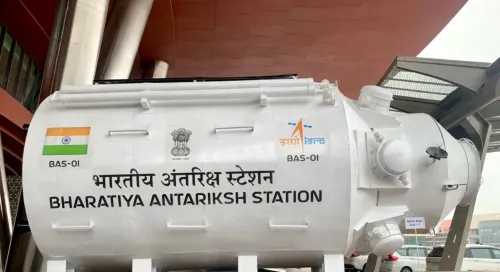
The Bharatiya Antariksh Station's first module is targeted for 2028 , with full completion by 2035 .
A crewed Indian lunar mission is on the roadmap for 2040 .
The Shukrayaan Venus Orbiter Mission is targeted for launch in March 2028 .
Over 900 ISRO-developed integrated circuits are already deployed in Indian railway locomotives, illustrating the space programme's economy-wide multiplier effect.
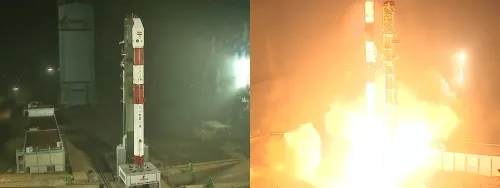
India is rapidly ascending as a formidable global space power, having evolved from launching its first satellite Aryabhata in 1975 to executing a landmark lunar landing with Chandrayaan-3, extending solar reach with Aditya-L1, and now advancing towards human spaceflight with Gaganyaan and the planned Bharatiya Antariksh Station. This sweeping transformation — from applying space technology for national development to pioneering deep-space exploration — has drawn international attention, including a feature in Tanzania's The Guardian newspaper, which examined India's expanding footprint in space.
Milestones That Defined the Journey
The success of Chandrayaan-3 in 2023 marked India's ability to execute a highly complex lunar soft landing, placing it among an elite group of nations capable of doing so. Aditya-L1, now positioned approximately 1.5 million km from Earth, studies solar activity and space weather from the Sun-Earth Lagrange Point 1. The SpaDeX mission further demonstrated India's orbital docking capabilities — a prerequisite for future crewed and multi-launch missions.
The more ambitious Chandrayaan-4 project, approved in 2024, is designed to land on the Moon, collect surface samples, and return them to Earth — a feat requiring multiple launches, orbital rendezvous and docking, sample collection, lunar ascent, and a safe re-entry, representing a significant leap in technological sophistication over a simple landing mission.
Human Spaceflight and the Station Vision
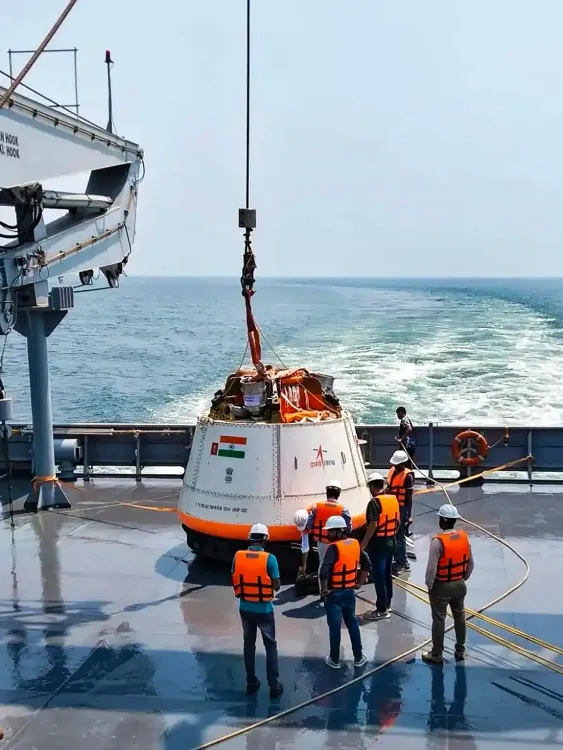
Gaganyaan, India's human spaceflight programme, is widely regarded as the most visible symbol of the country's technological transition. Human spaceflight demands exceptionally high reliability standards: crew escape systems, life-support technologies, parachutes, re-entry systems, and exhaustive testing must all be validated before astronauts can fly safely. India has accordingly adopted a phased approach, using uncrewed missions to certify critical systems ahead of crewed flights.
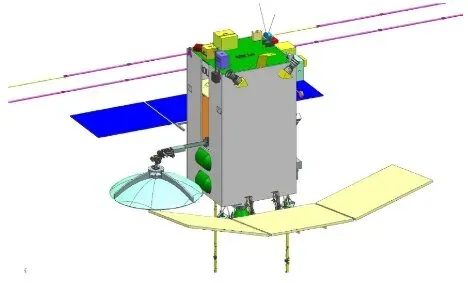
Gaganyaan is now embedded within a far grander vision. The Bharatiya Antariksh Station is targeted to receive its first module in 2028, with the full station envisaged for completion by 2035. India's long-term roadmap further envisions a crewed Indian lunar mission by 2040 — a progression from satellites to astronauts to a permanent space station and, ultimately, to the Moon.
Planetary Ambitions: Venus, the Sun and Beyond
India's planetary ambitions extend well past the Moon. The Shukrayaan Venus Orbiter Mission is targeted for launch in March 2028, with the objective of studying Venus's atmosphere, surface, and subsurface to yield insights into planetary evolution and habitability. Alongside Aditya-L1's ongoing solar observations, these missions signal India's intent to be a serious contributor to global planetary science.
Space Technology's Impact on Everyday Life
According to the assessment, India's space programme is not limited to rockets and satellites — it has become a powerful engine of innovation, industrial development, employment, and socio-economic transformation. Satellite technology today underpins weather forecasting, agricultural advisory services, navigation, communications, disaster management, and environmental monitoring.
Earth-observation satellites help identify flood, cyclone, and landslide-prone zones before disasters strike, while satellite communications support emergency response in remote regions. Space-based data also assists climate action by tracking forests, water bodies, urban expansion, and pollution. In healthcare, satellite communications can extend medical services to underserved communities, and augmented and virtual reality enabled by space-linked infrastructure supports medical education and training.
The Economy-Wide Multiplier Effect
Space investment generates a multiplier effect, producing knowledge, intellectual property, engineering expertise, manufacturing capabilities, and new commercial opportunities across sectors well beyond aerospace. Technology transfers from space programmes are strengthening domestic manufacturing and enabling Indian enterprises to enter sophisticated global supply chains.
A striking illustration of this cross-sector impact: more than 900 application-specific integrated circuits developed by ISRO's Semi-Conductor Laboratory are now deployed in railway locomotives. Innovations in advanced electronics, sensors, materials, communications, and navigation originating in space missions are finding wide commercial applications, reinforcing the case that India's space investment pays dividends far beyond the launchpad.
As India advances toward a crewed Moon mission by 2040 and the completion of its own space station by 2035, the country's trajectory points unmistakably toward a new identity — as a major developer, explorer, and provider of space capabilities on the world stage.
Point of View
Planetary probes, and a crewed Moon mission on the horizon — yet domestic coverage often undersells this strategic leap. The Bharatiya Antariksh Station and Chandrayaan-4 together represent a capability threshold that only the US, Russia, and China have crossed. The bigger question mainstream coverage rarely asks is whether ISRO's budget and industrial ecosystem can absorb this ambition without the kind of schedule slippage that plagued Gaganyaan. The railway locomotive chip story is the detail that gets lost — and it is precisely the detail that makes the economic case for sustained space investment.
NationPress
2 Oct 2026
Frequently Asked Questions
What is India's current status in global space exploration?
India has established itself as a significant global space power, with landmark achievements including the Chandrayaan-3 lunar landing in 2023, the Aditya-L1 solar observatory, and the SpaDeX docking demonstration. The country is now preparing for human spaceflight via Gaganyaan and plans its own space station by 2035.
What is the Bharatiya Antariksh Station and when will it be ready?
The Bharatiya Antariksh Station is India's planned orbital space station, with its first module targeted for launch in 2028 and full completion envisaged by 2035. It forms the centrepiece of India's long-term human spaceflight roadmap, which culminates in a crewed lunar mission by 2040.
What is Chandrayaan-4 and how is it different from Chandrayaan-3?
Chandrayaan-4, approved in 2024, goes beyond Chandrayaan-3's soft landing by aiming to collect lunar surface samples and return them to Earth. The mission requires multiple launches, orbital rendezvous and docking, sample collection, a lunar ascent stage, and a safe re-entry — far greater technical complexity than a landing-only mission.
What is the Shukrayaan mission?
Shukrayaan is India's Venus Orbiter Mission, targeted for launch in March 2028. It will study Venus's atmosphere, surface, and subsurface, providing insights into planetary evolution and the conditions for habitability.
How does India's space programme benefit everyday citizens?
India's space technology directly supports weather forecasting, agricultural advisories, disaster early-warning systems, navigation, and healthcare delivery in remote areas. ISRO has also transferred technology to other sectors — more than 900 application-specific integrated circuits developed for space applications are now deployed in Indian railway locomotives.