BRICS 2026: Iran envoy says unipolar security model has failed
Synopsis
Iran's ambassador to India used the platform of the BRICS Foreign Ministers' Meeting in New Delhi to declare, on X, that the 2026 BRICS Summit must expose the failure of single-power security guarantees — a pointed message directed at the US-led global order, delivered as Iran remains embroiled in active conflict with the United States and Israel.
Key Takeaways
Iranian Ambassador Mohammad Fathali posted on X that the 2026 BRICS Summit should highlight the failure of unipolar security models.
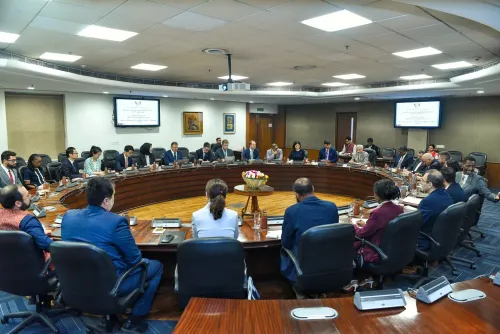
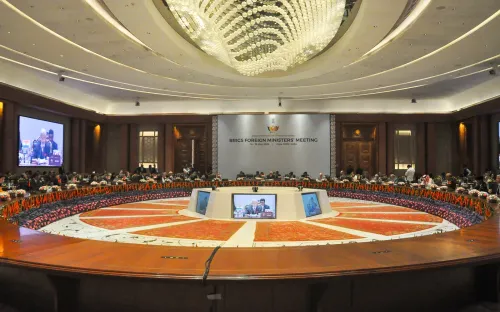
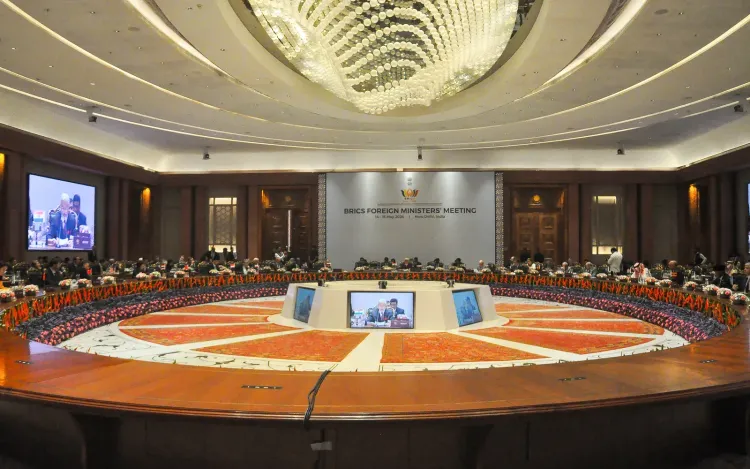
The statement followed the two-day BRICS Foreign Ministers' Meeting in New Delhi , chaired by EAM S.
PM Narendra Modi met visiting BRICS foreign ministers and heads of delegation, stressing multilateralism and inclusive global order.
Iran's Foreign Minister Abbas Araghchi called UN Security Council reform 'not a choice, but a necessity for the survival of the United Nations.' EAM Jaishankar also called for reforms in the UN Security Council in both permanent and non-permanent categories.
Iran's remarks come amid its ongoing conflict with the United States and Israel , underscoring Tehran's strategic interest in multipolarity.
Iranian Ambassador to India Mohammad Fathali on Saturday, 17 May 2025, said the upcoming 2026 BRICS Summit in India is a critical platform to demonstrate how a global security architecture built around guarantees from a single dominant power has broken down amid today's rapidly shifting world order. The remarks carry particular weight given the ongoing conflict involving Iran, the United States, and Israel.
The Ambassador's Statement
In a post on social media platform X, Ambassador Fathali wrote: 'The BRICS Summit in India is an opportunity to highlight a key reality: a security model based on guarantees of security and prosperity by a single power, even a major one, has failed in today's complex and rapidly evolving world.' The statement came shortly after the conclusion of the two-day BRICS Foreign Ministers' Meeting held in New Delhi on Thursday and Friday under India's chairship of the grouping.
India's Role as BRICS Chair
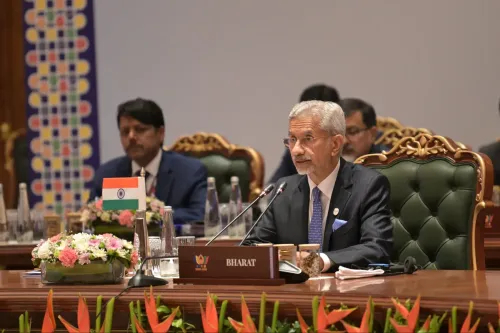
The high-level ministerial gathering was chaired by External Affairs Minister S. Jaishankar and attended by foreign ministers and senior representatives from BRICS member nations as well as partner countries. On Thursday, Prime Minister Narendra Modi met the visiting foreign ministers and heads of delegation, reiterating that under India's chairmanship, BRICS would work towards strengthening multilateralism, promoting sustainable development, enhancing economic resilience, and building a more inclusive global order.
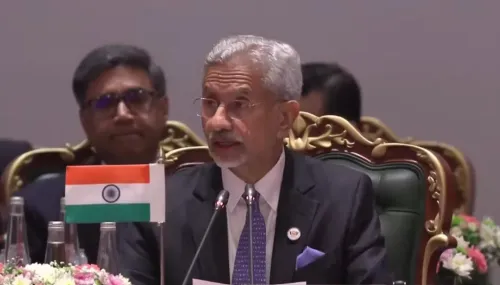
EAM Jaishankar expressed confidence that deliberations among member nations would contribute to a more stable, equitable, and inclusive international system. He also stressed the importance of reformed multilateralism and called for reforms in the United Nations Security Council — in both permanent and non-permanent categories.
Iran's Push for UN Security Council Reform
Iran's Foreign Minister Abbas Araghchi echoed the call for structural reform at the UN, stating during the New Delhi meeting that Security Council reform was 'not a choice, but a necessity for the survival of the United Nations.' Araghchi said Iran seeks a Security Council that 'truly represents all continents and regions of the world,' and urged BRICS nations to utilise their collective strength to reshape global governance and restore trust in multilateral institutions.
He further argued that the selective application of international law, the use of unilateral sanctions, and disregard for national sovereignty point to a deepening crisis in the current global governance framework. 'What we see today in some international institutions is not multilateralism, but an effort to preserve unilateralism under the cover of international law,' he remarked.
Wider Context and What Comes Next
Iran's inclusion in the expanded BRICS grouping has amplified Tehran's voice on multilateral platforms, and its messaging at the New Delhi meeting reflects a consistent strategic push against what it characterises as Western-dominated global institutions. Notably, this is the first major BRICS ministerial under India's chairship, making New Delhi's management of these divergent geopolitical perspectives a key test ahead of the full summit. The 2026 BRICS Summit is expected to sharpen these debates further, with UN reform, multipolarity, and sanctions regimes likely to feature prominently on the agenda.
Point of View
Not incidental — Tehran is leveraging its newly acquired BRICS membership to internationalise grievances that bilateral diplomacy cannot resolve. What mainstream coverage often misses is the bind this creates for India: as BRICS chair, New Delhi must project an inclusive, reform-minded multilateralism while managing the optics of hosting a nation actively in conflict with two US allies. Jaishankar's parallel call for UN Security Council reform offers India a way to signal solidarity with the reform agenda without explicitly endorsing Tehran's framing. The real question ahead of the 2026 summit is whether BRICS can produce a coherent multilateral position — or whether its expanding membership will deepen its internal contradictions faster than any summit communiqué can paper over them.
NationPress
29 Sept 2026
Frequently Asked Questions
What did Iran's ambassador say about the 2026 BRICS Summit?
Iranian Ambassador to India Mohammad Fathali said the 2026 BRICS Summit is an opportunity to highlight how a security model dependent on guarantees from a single dominant power has failed in today's complex world. He made the statement in a post on social media platform X following the BRICS Foreign Ministers' Meeting in New Delhi.
What was the BRICS Foreign Ministers' Meeting in New Delhi about?
The two-day BRICS Foreign Ministers' Meeting, held in New Delhi on Thursday and Friday under India's chairship, brought together foreign ministers and senior representatives from BRICS member nations and partner countries. It focused on multilateralism, global governance reform, and building a more inclusive international order.
Why is Iran pushing for UN Security Council reform at BRICS?
Iran's Foreign Minister Abbas Araghchi argued that UN Security Council reform is 'not a necessity for the survival of the United Nations,' and that the body must truly represent all regions of the world. Tehran views BRICS as a collective platform to challenge what it calls the selective application of international law and the use of unilateral sanctions.
What did PM Modi and EAM Jaishankar say at the BRICS meeting?
PM Narendra Modi met the visiting BRICS foreign ministers and stressed that India's chairmanship would focus on strengthening multilateralism, sustainable development, economic resilience, and an inclusive global order. EAM Jaishankar separately called for reforms to the UN Security Council in both permanent and non-permanent categories.
How does Iran's BRICS membership affect its global standing?
Iran's inclusion in the expanded BRICS grouping has given Tehran a formal multilateral platform to advocate for multipolarity and challenge Western-dominated institutions. Its participation in the New Delhi ministerial marks one of its highest-profile diplomatic engagements since its BRICS accession, amplifying its calls for a restructured global governance framework.