Iran's Supreme Leader's Envoy Claims US Was 'Compelled' to Ceasefire
Synopsis
In a striking revelation, Iran's Supreme Leader's envoy, Abdul Majid Hakeem Ilahi, asserts that the US was 'forced' into a ceasefire after failing to sustain its military efforts against Iran. This exclusive interview delves into the complexities of the ongoing conflict and the conditions for lasting peace.
Key Takeaways
The US was 'compelled' to ceasefire due to military failures.
Lasting peace is contingent on Iran's acceptance of terms.
Iran denies pursuing nuclear weapons based on religious beliefs.
The conflict is viewed as imposed on Iran, not initiated by them.
Iran targets US military infrastructure, not civilian populations.
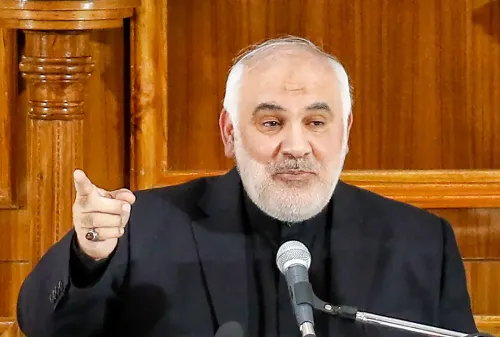
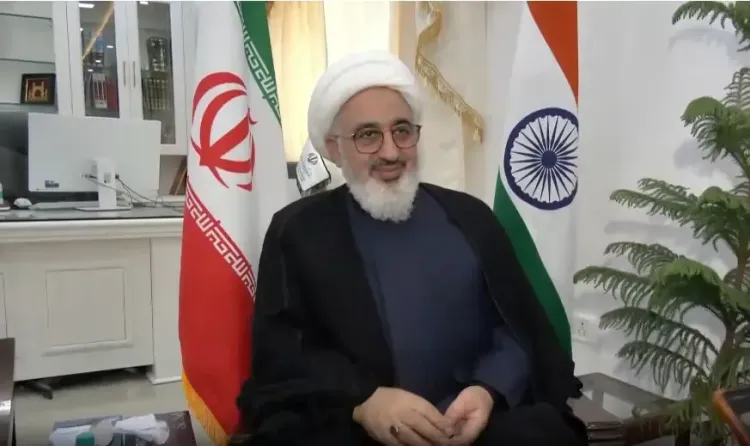
New Delhi, April 8 (NationPress) The representative of Iran's Supreme Leader in India, Abdul Majid Hakeem Ilahi, stated on Wednesday that the United States was obliged to declare a ceasefire with Iran due to its failure to maintain the conflict, suggesting that ongoing hostilities would have resulted in further setbacks for the US.
In an exclusive interview with IANS, Ilahi emphasized that the US's decision to stop fighting was not a matter of choice but rather a consequence of its inability to continue the conflict.
"The US found itself compelled to announce a ceasefire because it could no longer sustain the war. They made a significant error, and over the past 41 days, they sought to halt the war but were unable to do so. Ultimately, they recognized that they could not persist and would face more defeats, prompting their ceasefire announcement," he stated.
When asked if this ceasefire could lead to a sustainable resolution, Ilahi suggested that lasting peace hinges on the acceptance of Iran’s conditions.
“If they agree to our demands, then yes, it could signify the conclusion of this conflict,” he remarked.
Discussing the wider conflict, Ilahi asserted that Iran has no desire to engage in warfare, characterizing the situation as one that was imposed upon them.
"From the outset, we did not seek this conflict; it has been forced upon us. We are aware that many individuals from various nations have suffered due to it, which was never our intention. We did not aim to target civilians in the countries attacking us. Our actions have always been guided by principles of humanity and international law concerning warfare," he noted.
Nevertheless, he affirmed that Iran stands ready to respond decisively if the situation demands.
“Ultimately, we must also understand how to respond, and they realized that should they persist, we would respond with strength,” Ilahi commented.
In response to allegations regarding Iran’s nuclear ambitions, Ilahi firmly denied that Tehran is pursuing or possesses nuclear weapons, referencing religious doctrines.
"This assertion is unfounded. From the very beginning, our Supreme Leader clearly declared that nuclear arms are forbidden (Haram) by our faith. We neither desire them now nor in the future—never," he emphasized.
Regarding claims from Gulf nations about attacks allegedly conducted by Iran, Ilahi attributed rising tensions to external meddling in the region.
"We have coexisted in this region for thousands of years without such conflicts. The crises emerged when America intervened from thousands of miles away and introduced instability. The military bases used by the US to launch attacks against us are situated in neighboring Arab countries," he explained.
He clarified that Iran’s military actions have been directed at US military installations rather than towards neighboring nations.
"We were compelled to target American bases, yet we have never attacked our neighbors or civilians, even though we had the capability to do so," Ilahi concluded.
Point of View
It is crucial to provide an unbiased perspective on the claims made by Iran's representative. The assertions regarding the US's necessity to cease hostilities and the conditions for peace highlight the complexities of international relations and the ongoing geopolitical tensions in the region. It is essential to approach this narrative with a focus on factual reporting and analysis.
NationPress
18 Oct 2026
Frequently Asked Questions
What led to the US declaring a ceasefire with Iran?
According to Abdul Majid Hakeem Ilahi, the US was compelled to announce a ceasefire due to its inability to sustain the conflict and the potential for further setbacks.
What conditions must be met for lasting peace between the US and Iran?
Ilahi stated that peace would depend on the acceptance of Iran’s terms by the US.
Does Iran have nuclear weapons?
Ilahi categorically denied that Iran possesses or seeks to develop nuclear weapons, citing religious prohibitions.
What does Iran's representative say about the conflict?
Ilahi emphasized that Iran did not wish for the war and described it as being imposed upon them.
How does Iran respond to allegations of attacks on Gulf nations?
Ilahi attributed tensions to external interference and clarified that Iran's actions targeted US military bases, not neighboring countries.