Iran Vows to Uphold Self-Defence Until US-Israel Aggression Ends or UN Acts
Synopsis
Iran asserts its self-defence rights amid ongoing military actions by the US and Israel. The nation demands the UN Security Council's intervention to identify aggressors, emphasizing its commitment to sovereignty and international law.
Key Takeaways
Iran insists on its right to self-defence against perceived aggression from the US and Israel.
Request for UN Security Council action emphasizes international accountability.
Iran cites violations of international law regarding military aggression.
Commitment to regional relations remains intact despite military responses.
Diplomatic channels have been utilized to communicate concerns with the UN.
Tehran, March 8 (NationPress) On Sunday, Iran asserted that its right to self-defence will persist until what it refers to as the "aggression" from the United States and Israel ceases or until the United Nations Security Council identifies and names the "aggressors" as stipulated in Article 39 of the UN Charter.
In a statement from Iran’s Ministry of Foreign Affairs, it was mentioned that the coordinated military operations initiated by the US and Israel started on February 28, resulting in the death of Supreme Leader Ayatollah Ali Khamenei along with several high-ranking Iranian officials.
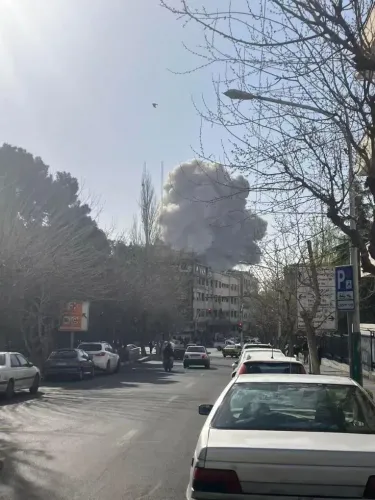
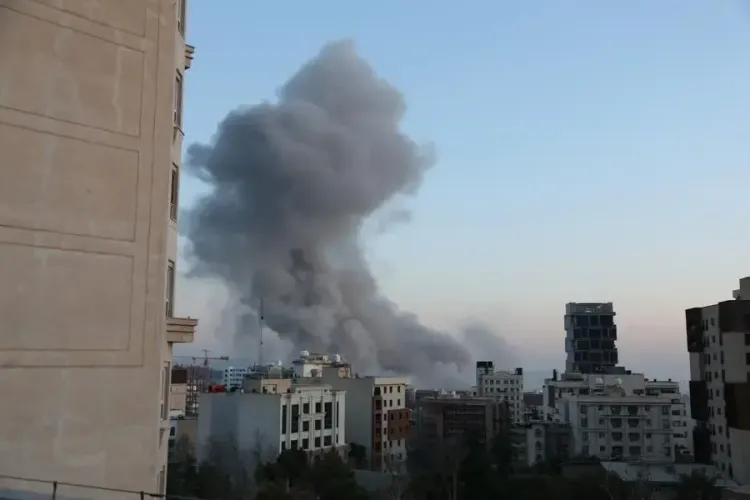
The statement further indicated that these attacks have persisted, targeting both military and civilian infrastructure throughout the nation.
Reportedly, these operations have hit various facilities, including schools, hospitals, sports complexes, residential buildings, and public service entities.
The ministry characterized these military actions as a "blatant violation of Iran's territorial integrity and national sovereignty," claiming that they have contravened fundamental principles of international law.
Iran indicated that responding to this so-called "ruthless military aggression" is its "inherent right to self-defence," referencing Article 51 of the United Nations Charter.
"Iran's exercise of its inherent right to legitimate self-defence will continue until the aggression halts or until the UN Security Council fulfills its obligations under Article 39 of the UN Charter by identifying and naming the aggressors and clarifying the responsibilities arising from their actions," the statement highlighted.
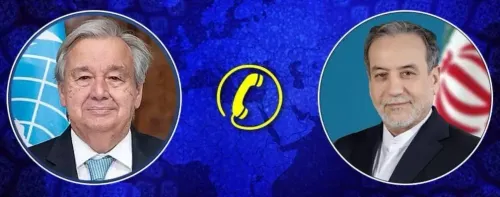
Additionally, Tehran noted its communications with the United Nations Security Council, emphasizing that international law mandates states to prevent their territories from being used in acts of aggression.
"As articulated in multiple correspondences with the UN Security Council, based on the fundamental principle of international law regarding the 'prohibition of causing harm from one's own territory,' states are prohibited from permitting their territory to be utilized, directly or indirectly, to inflict harm or damage upon other states," the statement elucidated.
The ministry also referenced provisions in UN General Assembly Resolution 3314, which delineates definitions and instances of military aggression as defined by international law.
"In this context, UN General Assembly Resolution 3314, reached by consensus and reflective of customary international law on defining military aggression, identifies in Article 3, paragraph (f), that one form of military aggression is 'The action of a State in permitting its territory, which it has made available to another State, to be used by that other State for committing an act of aggression against a third State,'" it added.
The Foreign Ministry pointed out that international law necessitates that states prevent their territories from being exploited to launch attacks on other nations and to refrain from facilitating such actions.
Moreover, the statement underscored that countries permitting their territory to be utilized for military aggression against another state could incur legal liabilities under international law.
"It is clear that should there be a violation of these essential obligations, other states from whose territory military aggression is initiated against a third state will face international legal responsibilities, including those related to compensation for direct and indirect damages incurred," the statement continued.
Iran further asserted that its right to respond militarily is justified under international law and has been communicated consistently through various diplomatic and political channels.
"No circumstance can diminish Iran's intrinsic right to defend itself against the military aggression of the United States and the Zionist regime. Iran's defensive actions target the locations and facilities that are the origin and source of the aggressive actions against the Iranian nation, or that facilitate such purposes. Regional nations have undoubtedly come to understand that US bases on their territories do not bolster regional security but merely support the actions of Zionist aggressors and American forces," the statement concluded.
Simultaneously, the ministry reiterated Iran's commitment to fostering constructive relations with neighboring countries and regional allies.
The statement emphasized that Tehran continues to promote friendly relations with regional nations based on mutual respect, good neighborliness, and acknowledgment of each other's sovereignty and territorial integrity.
"It is important to stress that Iran's defensive operations against US military bases and installations in the region should not be interpreted as hostility or enmity towards the nations in the area," the ministry remarked.
Point of View
Iran's declaration highlights the complex geopolitical tensions involving military actions and the urgent need for accountability on the international stage. The commitment to sovereignty and legal frameworks is pivotal in understanding the regional dynamics at play.
NationPress
23 Sept 2026
Frequently Asked Questions
What triggered Iran's declaration of self-defence?
Iran's declaration was triggered by joint military operations initiated by the US and Israel, which resulted in significant casualties among Iranian leadership.
What does Iran demand from the UN?
Iran demands that the UN Security Council identifies and names the aggressors as per Article 39 of the UN Charter.
How does Iran justify its military response?
Iran justifies its military response under Article 51 of the UN Charter, which allows for self-defence against armed attacks.
What are the international implications of Iran's statement?
The implications include a potential escalation of military tensions and a call for the international community to address violations of sovereignty.
How does Iran view US military bases in the region?
Iran views US military bases as a source of aggression that undermines regional security rather than contributing to it.