ISI's fake officer channels: How Pakistan traps Indian army personnel
Synopsis
Pakistan's ISI has shifted from conventional honey-trapping to a more elusive tactic: forging communication channels that mimic high-ranking Indian officers, triggering fake emergencies to bypass protocol, then vanishing. The arrest of a couple in Ferozepur — just kilometres from the India-Pakistan border — has cracked open a network that Indian agencies are now racing to map before it is rebuilt.
Key Takeaways
A husband and wife from Kalu Wala village, Ferozepur district, Punjab were arrested for allegedly running an ISI-linked honey-trap operation targeting Indian military installations.
The accused allegedly shared sensitive data on Army movements and deployments in border areas; the woman reportedly posed as a police officer to extract confidential information.
ISI is now forging fake communication channels impersonating high-ranking police and army officers to pressure junior personnel into bypassing protocols.
Forged channels are deliberately kept dormant before activation and are shut down immediately after information is extracted, making them difficult to trace.
The tactic has intensified since Operation Sindoor (May 2025) , after Indian agencies dismantled several earlier ISI modules and honey-trap networks.
Officials describe the short-lived, single-use impersonation networks as a 'fresh challenge' for Indian intelligence agencies.
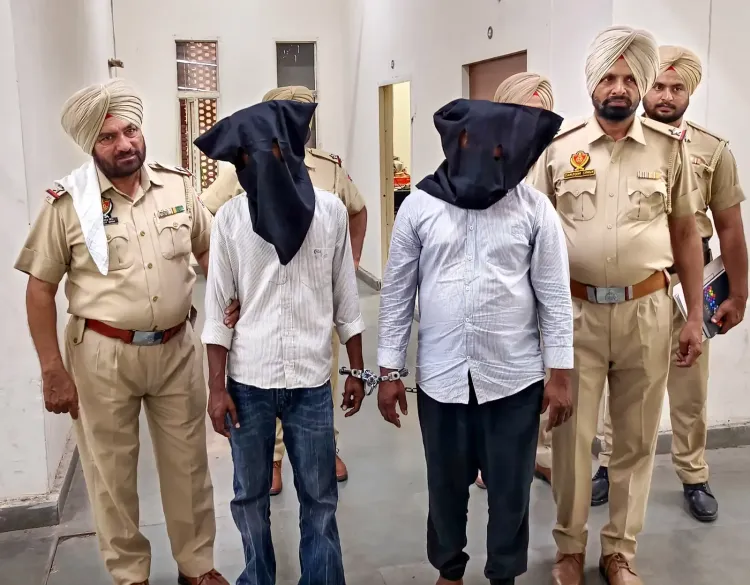
The arrest of a couple in Punjab for allegedly running a honey-trap operation targeting key military installations has exposed a suspected ISI-linked espionage network using impersonation tactics to extract sensitive information from Indian armed forces personnel. The suspects, a husband and wife from Kalu Wala village in Ferozepur district — situated close to the India-Pakistan border — are accused of sharing intelligence on Army movements and deployments in border areas.
How the Impersonation Network Operates
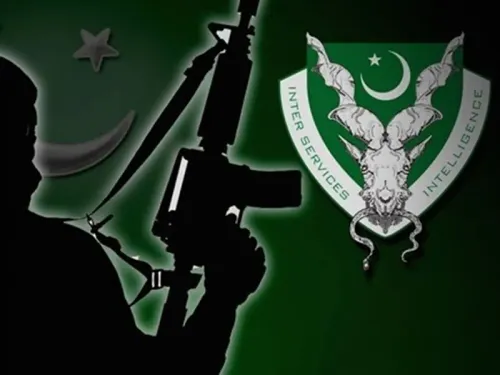
According to intelligence officials, Pakistan's Inter-Services Intelligence (ISI) has moved beyond conventional honey-trapping to a more sophisticated model: forging communication channels that impersonate high-ranking police and army officers. The woman in the arrested couple allegedly posed as a police officer to mislead individuals and gain access to confidential information, officials said.
An Intelligence Bureau official explained that once these fake channels are created, they do not become active immediately. 'Once created, these communication channels do not begin operations immediately. They keep a watch on junior officers who are likely to fall into such communication channels,' the official said. The channels lie dormant for a period before triggering a message — almost always framed with a severe sense of urgency — to a targeted junior officer.
The Psychology of the Trap
The urgency element is central to the tactic's effectiveness, officials noted. When an artificial emergency is manufactured, the junior officer tends to pass on information almost reflexively, prioritising the apparent urgency over protocol checks to verify whether the communication channel is genuine. In some cases, officers have reportedly been instructed to provide access to unauthorised networks, bypassing standard security procedures entirely.
Once the required information is gathered, the forged channel is shut down immediately — eliminating digital trails and making it significantly harder for investigators to trace those behind the operation.
Post-Operation Sindoor: ISI Reinvents Its Playbook
This tactical evolution comes in the aftermath of Operation Sindoor in May 2025, when India demonstrated military strength against Pakistan and, according to officials, also gained a decisive edge in the intelligence domain. The operation, launched in response to the Pahalgam terror attack, was followed by the dismantling of several espionage modules and the shutdown of multiple honey-trapping networks by Indian agencies.
Notably, Pakistan has reportedly been unable to fully revive many of its proxy networks and continues to struggle with infiltration attempts. Officials say these setbacks have compelled the ISI to reinvent its approach — pivoting toward impersonation-based networks that are deliberately designed for short operational lifespans.
Why Short-Lived Networks Are a Serious Challenge
The ISI's current strategy — deploy an impersonation network for a single operation, shut it down, and build a new one — presents a structural problem for Indian intelligence agencies. The short operational life of each network limits the window for investigators to map connections, identify handlers, and dismantle the broader architecture before it is replaced.
Officials describe this as a 'fresh challenge' that demands faster detection cycles and more proactive monitoring of communication channels accessed by military and paramilitary personnel. The Ferozepur arrest is being treated as a significant lead in understanding how these networks are structured and who coordinates them from across the border.
What Happens Next
Investigations into the arrested couple are ongoing, with agencies working to trace the full network of handlers and recipients of the leaked information. Security forces in border districts of Punjab have reportedly been placed on heightened alert. The case is expected to prompt a fresh review of communication protocols within the armed forces, particularly for personnel stationed in border-adjacent areas.
Point of View
Pakistan's intelligence arm is exploiting the asymmetry between detection time and operational exposure. Indian agencies are good at busting networks after the fact; the new challenge is catching them during the narrow window between activation and shutdown. The post-Operation Sindoor intelligence dominance that officials claim has not neutralised the threat — it has changed its shape. The harder question is whether Indian armed forces communication protocols, built for a slower-moving threat, are agile enough for networks designed to live and die within hours.
NationPress
24 Oct 2026
Frequently Asked Questions
What is the ISI honey-trap operation busted in Punjab?
A couple from Kalu Wala village in Ferozepur district, Punjab, were arrested for allegedly running an espionage operation linked to Pakistan's Inter-Services Intelligence (ISI). They are accused of sharing sensitive information about Indian Army movements and deployments in border areas, with the woman reportedly impersonating a police officer to access confidential data.
How does the ISI's fake communication channel tactic work?
According to intelligence officials, ISI operatives forge communication channels that impersonate high-ranking Indian police and army officers. These channels lie dormant before being activated to send urgent messages to junior officers, who — under the pressure of an artificial emergency — tend to bypass verification protocols and share sensitive information. The channel is shut down immediately after data is extracted.
Why has this tactic emerged now?
Officials say the shift to impersonation-based networks accelerated after Operation Sindoor in May 2025, during which Indian intelligence agencies dismantled several ISI modules and honey-trap networks. With Pakistan unable to fully revive its proxy and infiltration networks, the ISI has reportedly pivoted to these faster, harder-to-trace tactics.
Why are these short-lived spy networks so difficult to detect?
The networks are designed with a short operational lifespan — activated for a single intelligence-gathering operation and then immediately shut down. This limits the time window available for investigators to trace connections, identify handlers, and dismantle the broader structure before it is replaced by a new network.
Who is most at risk from this type of espionage?
Junior military and paramilitary officers stationed in or near border areas are most vulnerable. Officials say these personnel are specifically targeted because they are likely to respond to urgent-seeming messages from apparent superiors without first verifying the authenticity of the communication channel.