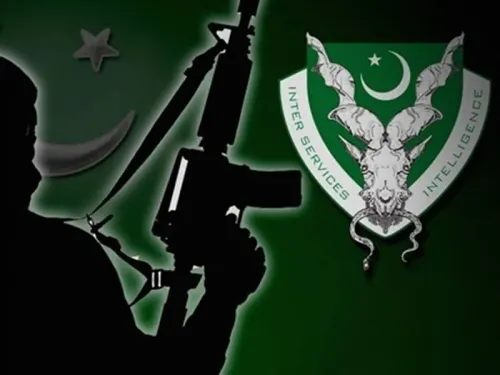
ISI runs 24/7 social media network to recruit, honey trap Indians
Synopsis
Pakistan's ISI has moved well beyond traditional espionage — it is now running a structured, 24/7 social media army that targets Indian influencers with money and likes, and defence officials with honey traps. With active modules in four Indian states and operations intensified after Operation Sindoor, the scale of the campaign is, by the admission of Indian officials, overwhelming counter-intelligence capacity.
Key Takeaways
Pakistan's ISI has built a 24/7 social media operation targeting Indian influencers, defence personnel, and government officials, per an intelligence assessment.
Active ISI modules have been identified inside India in Rajasthan , Uttar Pradesh , Gujarat , and Madhya Pradesh .
Terror outfits Jaish-e-Mohammad and Lashkar-e-Tayiba are scouting social media recruits in large numbers.
Indian Air Force Wing Commander M S Sabharwal was allegedly honey-trapped; he reportedly recorded drone trial firings on a personal device and shared operational details with an ISI agent.
The ISI's three-pronged strategy covers influencer recruitment, honey trapping of officials, and coordinated disinformation campaigns.
Officials say the operation escalated significantly following Operation Sindoor , as Pakistan sought to counter the embarrassment caused by the Indian military strikes.
Pakistan's Inter-Services Intelligence (ISI) has built a round-the-clock social media operation targeting Indian citizens — from influencers chasing viral fame to defence personnel with access to classified data — according to a detailed intelligence assessment reviewed by security officials in New Delhi. The assessment, flagged ahead of anticipated internal security reviews, warns that the ISI and affiliated terror outfits are exploiting social media at a scale that is straining Indian counter-intelligence resources.
Scale and Structure of the Operation
According to officials, the ISI's social media apparatus is not a loose network but a structured, multi-layered operation running 24 hours a day, seven days a week. Recruitment and scouting hubs have reportedly been established both inside Pakistan and within India itself, with active modules identified in Rajasthan, Uttar Pradesh, Gujarat, and Madhya Pradesh. The stated objective, officials say, is to cultivate scores of agents on Indian soil through whom intelligence can flow continuously.
Terror outfits Jaish-e-Mohammad (JeM) and Lashkar-e-Tayiba (LeT) have been scouting recruits in large numbers, with some operatives specifically tasked with approaching social media influencers and content creators, officials said.
Why Influencers Are the Primary Target
Intelligence Bureau officials say that content creators — particularly those who produce short-video reels — have emerged as the ISI's preferred entry point. 'These persons, in a bid to expand their reach and get more likes, have become the easiest targets,' an official said. The ISI reportedly lures such individuals with engagement (likes, shares) and money, using them to push narratives favourable to Pakistan and to spread disinformation against India.
Indian agencies have reportedly dismantled several influencer-linked modules in recent months. However, officials warn that the scale of recruitment continues to outpace interdiction efforts. 'The problem lies in the scale and the manner in which the ISI is targeting people on social media — it is extremely overwhelming,' one official said.
Honey Trapping: Targeting Defence and Government Personnel
Beyond influencers, the ISI's strategy includes a focused honey-trapping operation directed at officials with access to sensitive government and military information, according to the assessment. Agents reportedly conduct detailed profiling of targets over several months before making contact, studying personal vulnerabilities before setting the trap.
A recent case cited in the assessment involves Indian Air Force Wing Commander M S Sabharwal, who was allegedly honey-trapped by an ISI agent. Investigators found he had allegedly used a personal device to record drone trial firings inside an exercise area. Communications with the ISI agent reportedly included details on the interval between a drone's launch and its arrival at a target — information of direct operational sensitivity.
Post-Operation Sindoor Escalation
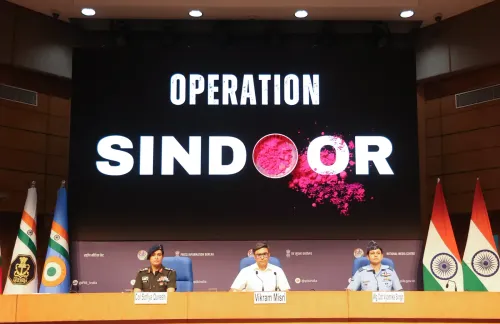
Officials say the ISI has been in 'overdrive mode' since Operation Sindoor, the Indian armed forces' cross-border strike that, according to officials, exposed what they described as Pakistan's nuclear bluff and caused significant embarrassment to Islamabad. In the aftermath, the ISI has reportedly intensified efforts to discredit the Indian military establishment through disinformation campaigns on social media.
'They have found social media to be the easiest tool to carry out this large-scale exercise, and this is proving to be a major headache for the Indian security agencies,' an official said.
The Three-Pronged Strategy
The intelligence assessment outlines a three-part ISI playbook: first, recruiting influencers to shape narratives in Pakistan's favour; second, identifying and compromising officials with access to sensitive Union Government and armed forces data; and third, running coordinated disinformation campaigns to set false narratives against India. Officials acknowledge that Indian agencies are capable of busting such networks but concede that the volume and speed of operations make comprehensive interdiction difficult.
With ISI modules now embedded across multiple Indian states and operations running without pause, security agencies are expected to escalate monitoring protocols — particularly around social media activity linked to defence and government personnel.
Point of View
Exploiting the same engagement mechanics that platforms use to monetise attention. The Wing Commander Sabharwal case is a symptom, not an outlier; honey-trapping via digital channels is cheaper, faster, and harder to detect than traditional HUMINT. What is missing from the official response is any mention of platform-level accountability — neither the government nor the agencies appear to be publicly pressuring social media companies to share intelligence on ISI-linked accounts. Until that gap closes, interdicting individual modules will remain a game of whack-a-mole against an adversary that can reconstitute networks faster than India can dismantle them.
NationPress
5 Oct 2026
Frequently Asked Questions
What is the ISI's social media strategy targeting India?
The ISI is running a three-pronged social media operation: recruiting influencers to push pro-Pakistan narratives, honey trapping government and defence officials with access to sensitive data, and running disinformation campaigns against India. The operation reportedly runs 24 hours a day, seven days a week, with modules active inside India across four states.
Why are social media influencers being targeted by the ISI?
Influencers and short-video content creators are targeted because their desire for more likes, views, and money makes them susceptible to ISI overtures. The ISI reportedly lures them with engagement and cash to spread narratives favourable to Pakistan, using their existing reach to amplify disinformation.
What happened in the Wing Commander M S Sabharwal honey trap case?
Indian Air Force Wing Commander M S Sabharwal was allegedly honey-trapped by an ISI agent. Investigators found he had allegedly used a personal device to record drone trial firings inside an exercise area and had shared details — including the interval between a drone's launch and its arrival at a target — with the ISI contact.
Which states have ISI modules been identified in?
According to officials, ISI-linked modules have been identified in Rajasthan, Uttar Pradesh, Gujarat, and Madhya Pradesh. These hubs are reportedly tasked with monitoring social media and facilitating recruitment of agents within India.
How has Operation Sindoor affected ISI's social media activity?
Officials say the ISI has been in 'overdrive mode' since Operation Sindoor, the Indian armed forces' cross-border strike that reportedly embarrassed Islamabad. The ISI has since intensified disinformation campaigns on social media aimed at discrediting the Indian military establishment.