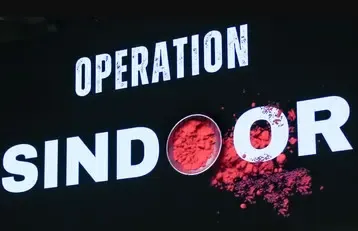
ISI recruits foreign influencers for anti-India propaganda after Operation Sindoor crackdown

Synopsis
After Indian agencies dismantled its India-based influencer network post-Operation Sindoor, the ISI has pivoted to recruiting foreign nationals in the UK, Canada, and Australia to push Jammu and Kashmir and pro-Khalistan narratives — with a 'hit-and-delete' content strategy designed to set a narrative and then vanish before agencies can trace the source.
Key Takeaways
The ISI is recruiting influencers in the UK , Canada , and Australia to push anti-India content, according to Indian intelligence officials.
The pivot follows post- Operation Sindoor crackdowns that busted a major ISI propaganda wing operating through Indian influencers .
Scripts focus on Jammu and Kashmir and the Khalistan movement , with a marked rise in content promoting proscribed outfit Sikhs for Justice (SFJ) .
The ISI reportedly instructs recruits to delete content within 15 to 30 days of posting — a 'hit-and-delete' tactic that hampers forensic tracking.
Foreign recruits are significantly harder to prosecute as action requires bilateral treaties and multi-agency coordination across jurisdictions.
Pakistan-backed channels reportedly spend large sums to amplify such videos and maximise their reach before takedown.
Pakistan's Inter-Services Intelligence (ISI) has shifted its propaganda strategy, turning to foreign-based influencers from countries including the United Kingdom, Canada, and Australia to push anti-India content, according to fresh intelligence reports. The tactical pivot follows a sweeping crackdown by Indian agencies that dismantled a major ISI-run influence network operating through Indian influencers in the aftermath of Operation Sindoor.
Why the ISI Switched Its Playbook
In the months following Operation Sindoor, Indian agencies busted multiple modules in which domestic influencers were recruited to promote pro-Pakistan narratives. These individuals were reportedly lured with lavish lifestyles, sponsored vacations, and substantial cash payments. Scores of arrests followed, effectively neutralising what officials describe as a significant propaganda arm of the ISI operating inside India.
According to an Intelligence Bureau official, the ISI has now directed its handlers to scout for international influencers, handing them pre-written scripts designed to disseminate content harmful to the Indian state. The shift is deliberate: when an international voice pushes a narrative, officials argue, it carries greater perceived credibility than the same content coming from an Indian or Pakistani account.
Key Themes in the Propaganda Scripts
Intelligence officials say the scripts handed to foreign recruits focus primarily on two flashpoints — Jammu and Kashmir and the Khalistan movement. Content promoting the proscribed organisation Sikhs for Justice (SFJ) has reportedly increased sharply over the past two months. Videos framing Indian governance in Punjab and Jammu and Kashmir as human rights violations — with titles such as 'India's brutality in Punjab or Jammu and Kashmir' — are being pushed with significant financial amplification through Pakistan-backed channels, according to officials.
Officials note that an earlier emphasis on stoking communal tensions and spreading hatred within the Indian community has been scaled back, reportedly because it made the ISI's agenda too transparent. The current framing leans on human rights angles, which officials say is harder to debunk and more likely to gain traction with international audiences.
The 'Hit-and-Delete' Tactic
One of the more notable operational details shared by officials is a deliberate content lifecycle strategy. After a video is posted, the ISI reportedly instructs its recruits to take the content down within 15 to 30 days. Officials describe this as a 'hit job' approach — by the time the video is removed, the narrative has already circulated and set in on social media. This tactic also complicates forensic tracking, since the original content is no longer accessible for analysis by Indian agencies.
Why Foreign Recruits Are Harder to Pursue
Intelligence officials acknowledge that tracking and prosecuting international actors presents a significantly higher barrier than handling domestic cases. Coordination across jurisdictions requires multiple inter-agency exchanges and the activation of bilateral treaties, a process that is considerably slower than domestic enforcement. This structural advantage, officials say, makes foreign-based influencer networks an attractive long-term tool for the ISI.
The ISI's use of overseas diaspora networks and sympathisers is not new, officials note, but the current scale and the explicit scripting of content marks a qualitative escalation compared to earlier years. The busting of the India-based influence wing appears to have accelerated the shift toward this harder-to-disrupt model.
What Indian Agencies Are Monitoring
Officials indicate that Indian intelligence agencies are actively monitoring the amplification patterns of such content across social media platforms. The heavy financial backing that Pakistan propaganda channels provide to boost these videos' reach is also under watch. As the ISI's external influence apparatus evolves, officials say the challenge is no longer just identifying the content — it is building legal pathways to act against creators who operate beyond Indian jurisdiction.
Point of View
However effective, cannot easily reach actors operating across friendly third-country jurisdictions. The 'hit-and-delete' model is particularly shrewd — it exploits the gap between how fast disinformation spreads and how slowly legal mechanisms across borders move. Equally notable is the reframing from crude hate-incitement to human rights language, which is harder to discredit and more likely to attract sympathetic amplification from mainstream international media. India's response will need to move beyond arrests and toward platform-level and diplomatic mechanisms if it is to keep pace with this evolving threat.
NationPress
20 Oct 2026
Frequently Asked Questions
Why has the ISI shifted to using foreign influencers for propaganda?
Indian agencies dismantled a major ISI influence network after Operation Sindoor, arresting scores of Indian influencers who had been recruited to promote pro-Pakistan content. With that domestic network disrupted, the ISI turned to foreign-based influencers in countries like the UK, Canada, and Australia, whose content carries greater perceived credibility and is far harder for Indian agencies to act on.
What topics are these foreign influencers being asked to cover?
According to intelligence officials, the primary scripts cover Jammu and Kashmir and the Khalistan movement, with a notable increase in content promoting the proscribed outfit Sikhs for Justice (SFJ). Earlier emphasis on inciting communal tensions has reportedly been scaled back in favour of human rights framing, which officials say is harder to debunk.
What is the 'hit-and-delete' tactic the ISI is reportedly using?
Officials say the ISI instructs its foreign recruits to post content and then take it down within 15 to 30 days. By the time the video is removed, the narrative has already spread across social media, and the absence of the original content makes it harder for agencies to trace and document the source.
Why is it difficult for India to pursue these foreign influencers?
Tracking and prosecuting individuals based in countries like the UK, Canada, and Australia requires coordination through bilateral treaties and multiple inter-agency exchanges — a significantly slower process than domestic enforcement. This jurisdictional complexity makes foreign-based networks a more resilient tool for the ISI.
How does the ISI amplify the content these influencers produce?
According to officials, Pakistan-backed propaganda channels spend large sums of money to promote these videos, ensuring they reach a wide audience before the content is taken down. The financial backing for amplification is described as a key part of the operation's effectiveness.