Is the ISI Fomenting an Anti-India Narrative in Bangladesh to Manipulate February Elections?
Synopsis
As the February elections in Bangladesh approach, intelligence reports suggest that the ISI is instigating an anti-India sentiment through reckless accusations and violent rhetoric. Amid political shifts and a potential BNP victory, the stakes are high, and the integrity of the elections hangs in the balance.
Key Takeaways
ISI's attempts to incite anti- India sentiment are evident.
The BNP is distancing itself from the Jamaat to appeal to voters.
Violence is being used to suppress voter turnout.
The February elections are likely to proceed, but their fairness is in question.
International pressure may influence the electoral process.
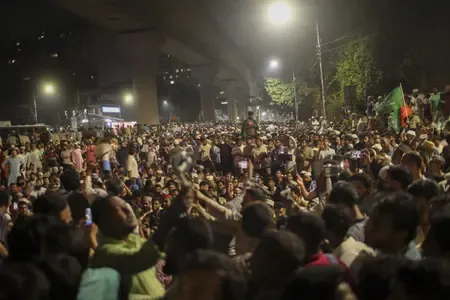
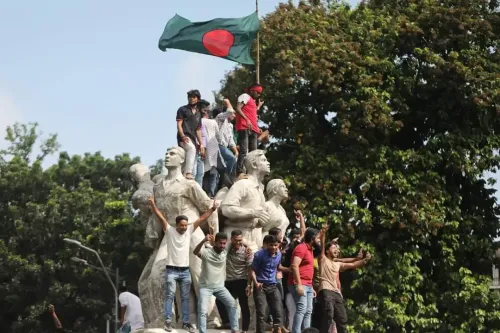
New Delhi, Dec 25 (NationPress) The involvement of ISI in inciting an anti-India narrative in Bangladesh is evident, particularly through the statements made by certain media outlets in Pakistan and some political figures. Several news sources have irresponsibly accused India’s Research and Analysis Wing (RAW) of being behind the assassination of student leader Sharif Osman Hadi. This accusation arises at a moment when even the authorities in Bangladesh are uncertain about the identities and motives of the actual perpetrators.
Compounding the situation is a provocative video message from Kamran Sayeed Usmani, a prominent member of Pakistan's ruling party, PML-N, who has launched a tirade against India.
In his remarks, he holds New Delhi accountable for the turmoil in Bangladesh and ominously threatens missile strikes against India. Officials have described these statements as reckless and aimed solely at perpetuating violence in Bangladesh.
An official has noted a discernible pattern in this kind of rhetoric. The objective is to internationalize Bangladesh's domestic issues, dragging India into the narrative to further their agenda. Notably, only Pakistan has accused India for the turmoil in Bangladesh, despite widespread recognition that the ISI orchestrated the unrest by initially facilitating the ousting of Sheikh Hasina and empowering the Jamaat-e-Islami. The global community understands that the Jamaat acts as a proxy for the ISI.
Post-Liberation War, it was the ISI and Jamaat that strategically planned extensive illegal immigration into India to alter demographics. Intelligence Bureau officials monitoring developments in Bangladesh suggest that the ISI is engaged in a dual strategy.
Pakistan has harbored a desire for revenge against India since its defeat in the 1971 war, which led to the establishment of Bangladesh. Consequently, a false narrative is being constructed to incite the populace of Bangladesh against India.
The ISI recognizes that to maintain power, they require a government aligned with the Jamaat. However, the Bangladesh National Party (BNP) is showing signs of distancing itself from the Jamaat and the ISI, as it aspires to foster a progressive rather than a radical nation.
This shift became evident when the BNP opted to contest the upcoming elections independently, moving away from the Jamaat.
This change has unsettled the ISI, as the BNP stands a good chance of victory. Polling data indicates a potential win for the BNP, especially in the absence of the Awami League, which is barred from participating.
Former Prime Minister and BNP leader Khaleda Zia's health issues may evoke sympathy for the party in the February 2026 elections. The BNP may also gain momentum with the anticipated return of Tarique Rehman, Zia's son, after a 17-year exile.
These developments have left the ISI and Jamaat feeling insecure, fearing they may lose control of the electoral process.
Observers of Bangladesh politics suggest that the elections are unlikely to be postponed due to escalating pressure from the international community. Experts believe that while the elections will likely proceed as scheduled, their integrity remains questionable.
Intelligence agencies have reported that violence is being instigated by Jamaat-affiliated groups to deter the populace from voting in large numbers. They aim to foster fear among the citizens, encouraging them to remain indoors during the elections.
Many supporters of the Awami League may opt out of voting due to the party's ban. Some may choose to realign with the BNP, which would enhance the party's prospects.
Analysts indicate that there could be a brief postponement of the elections or, alternatively, a deeply flawed electoral process.
The ISI is actively working to manipulate the elections by inciting violence while simultaneously promoting a false narrative to deepen anti-India feelings among the populace.
Point of View
I emphasize that while the complexities of Bangladesh's political landscape are undeniable, the integrity of its electoral process is paramount. Our duty is to report the facts and provide a balanced perspective, ensuring our audience remains well-informed amidst the turbulence.
NationPress
2 Oct 2026
Frequently Asked Questions
What role is the ISI playing in Bangladesh's politics?
The ISI is reportedly trying to incite anti-India sentiment and destabilize the political landscape in Bangladesh, particularly ahead of the February elections.
Why is the BNP distancing itself from the Jamaat?
The BNP aims to position itself as a progressive party rather than a radical one, distancing itself from the Jamaat and ISI to appeal to a broader electorate.
What is the significance of the upcoming elections in Bangladesh?
The elections are crucial as they could reshape the political landscape, particularly with the BNP potentially rising to power in the absence of the Awami League.
How is violence being used in the election process?
Reports indicate that violence is being instigated by Jamaat-affiliated groups to intimidate voters and suppress turnout during the elections.
What is the international community's stance on the elections?
The international community is pressuring Bangladesh to uphold democratic processes, suggesting that the elections are unlikely to be postponed despite prevailing tensions.