ISKP targets Indian diaspora in Kerala, Tamil Nadu for new recruitment push

Synopsis
ISKP has stopped trying to pull recruits out of India and is now going after the Indian diaspora abroad — particularly those from Kerala and Tamil Nadu — to build sleeper networks, compile target lists, and coordinate lone-actor strikes back home. It is a strategic adaptation forced by India's own counter-radicalisation success, and it shifts the threat to a space where Indian law enforcement has limited reach.
Key Takeaways
ISKP is now primarily targeting Indian diaspora members from Kerala and Tamil Nadu living abroad, rather than recruiting directly inside India.
Overseas recruits are being instructed to form smaller cells, expand networks, and identify targets inside India for potential hit jobs and lone-actor strikes.
The strategy mirrors a 2015–2016 playbook but with a key difference: recruits are no longer told to migrate to Islamic State territories.
The domestic recruitment drive was curtailed by the ban on PFI , NIA investigations , and heightened surveillance of Islamic State activity in South India.
ISKP handlers have reportedly been directed to monitor social media accounts of diaspora members and exploit psychological vulnerabilities through propaganda.
Indian agencies have deployed counter-radicalisation programmes — involving community elders, family members, and religious leaders — which officials say have yielded considerable results domestically.
The Islamic State Khorasan Province (ISKP) has been quietly recalibrating its India strategy, shifting focus from direct domestic recruitment to targeting members of the Indian diaspora — particularly individuals originally from Kerala and Tamil Nadu — who are living abroad, according to intelligence officials. The pivot comes as intensified surveillance by Indian security agencies has made recruiting within the country increasingly difficult.
A New Playbook, Built on an Old Template
The current outreach effort bears resemblance to a strategy the outfit attempted between 2015 and 2016, when it recruited members of the Indian diaspora and facilitated their travel to Iraq and Syria. Recruits operating from abroad faced considerably less scrutiny than those attempting to travel directly from Indian soil.
However, officials say the brief this time is meaningfully different. Rather than encouraging recruits to migrate to Islamic State-controlled territories, handlers are now instructing overseas contacts to form smaller cells, expand their networks, and reach back into Kerala and Tamil Nadu to identify and recruit additional members.
'The brief this time is not like the previous one where they were expected to migrate to Islamic State-controlled territories. They have been specifically told to connect with more people abroad and form smaller groups. They have also been instructed to reach out to Indians in Kerala and Tamil Nadu with the intention of recruiting them,' an intelligence official said.
Target Lists and Lone-Actor Strikes
According to officials, those recruited through the overseas network will eventually be directed to compile lists of personalities who could be targeted inside India. They are expected to coordinate with counterparts on Indian soil to carry out what officials described as 'hit jobs and lone-actor strikes.'
At present, however, the outfit's primary objective is not to execute attacks but to consolidate its network and expand its reach — a preparatory phase that security agencies are treating with considerable seriousness.
Why the Diaspora Is the Easier Target
Officials point to several structural vulnerabilities that make diaspora members susceptible. Individuals living outside India fall beyond the direct jurisdiction of Indian law enforcement, making monitoring and intervention more complex. Their distance from home can also heighten emotional vulnerability, making them more receptive to propaganda — including fabricated content alleging large-scale atrocities against Muslims in India.
Reportedly, ISKP handlers have been instructed to step up monitoring of the social media accounts of Indian diaspora members, with a directive to exploit psychological and informational vulnerabilities. The goal, according to officials, is to convert such individuals into 'long-serving assets' of the organisation.
The Domestic Setback That Forced the Shift
Between 2015 and 2019, the Islamic State made notable inroads into India, with the southern states — particularly Tamil Nadu and Kerala — recording the most activity. The ban on the Popular Front of India (PFI) and subsequent investigations by the National Investigation Agency (NIA) into suspected Islamic State-linked individuals dealt a significant blow to domestic recruitment networks.
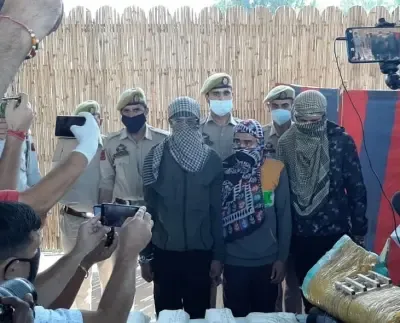
Several individuals were deported to India after being intercepted abroad. These include Shakul Hameed from Chennai, deported from Turkey; Shahjahan Velluva Kandy from Kannur, deported from Sudan; Mohamed Nasir from Thanjavur; and Ghulam Nabi Azad from Tamil Nadu, deported from the United Arab Emirates. All were allegedly part of larger conspiracies involving planned travel to Syria or Iraq to join the Islamic State.
An Intelligence Bureau official noted that with security agencies closely monitoring Islamic State activity in South India, the outfit has found it progressively harder to recruit domestically. 'Moreover, there is also the fear that they can be tracked down easily,' officials said.
Counter-Radicalisation Efforts and What Comes Next
Indian security agencies have responded with a multi-pronged counter-radicalisation approach that goes beyond surveillance. Awareness camps, community outreach involving elders, family members, and religious leaders have reportedly yielded considerable results in reducing the outfit's domestic appeal.
Nonetheless, officials acknowledge that the Islamic State retains a presence among radicalised youth in India, even if active recruitment has become harder. The shift toward diaspora targeting represents a strategic adaptation — one that will test the coordination between Indian intelligence agencies and their counterparts in countries with significant South Indian expatriate populations, including the Gulf states. How effectively that coordination develops is likely to define the next phase of the threat.
Point of View
At least within its own borders. But the new strategy exposes a structural gap: Indian law enforcement's reach ends at the border, while the threat does not. The reliance on Gulf-state and Western-country intelligence partnerships will now be decisive, and those partnerships are rarely as seamless as official statements suggest. The focus on lone-actor strikes and target lists — rather than mass-casualty spectaculars — also signals a more patient, harder-to-detect threat model that India's security architecture must now adapt to.
NationPress
21 Nov 2026
Frequently Asked Questions
What is ISKP's new strategy targeting India?
ISKP is now focusing on recruiting members of the Indian diaspora living abroad — particularly individuals originally from Kerala and Tamil Nadu — rather than attempting to recruit directly inside India. Overseas recruits are being told to form smaller cells, expand networks, and eventually help identify and target personalities inside India.
Why has ISKP shifted its focus to the Indian diaspora?
Intensified surveillance by Indian security agencies, the ban on the Popular Front of India (PFI), and NIA investigations have made domestic recruitment increasingly difficult. Diaspora members abroad fall outside the direct jurisdiction of Indian law enforcement, making them easier to approach and more vulnerable to propaganda.
Which Indian communities are being targeted by ISKP recruiters?
ISKP is specifically targeting individuals from Kerala and Tamil Nadu living overseas, as these two states had historically seen the most Islamic State activity in India between 2015 and 2019. Handlers have reportedly been instructed to monitor the social media accounts of such individuals.
How does this strategy differ from ISKP's earlier approach?
Between 2015 and 2016, ISKP recruited diaspora members primarily to facilitate their travel to Iraq and Syria to join Islamic State-controlled territories. The current strategy does not ask recruits to migrate; instead, they are told to build networks abroad and coordinate with contacts inside India for potential lone-actor strikes.
What steps have Indian agencies taken to counter Islamic State recruitment?
Indian security agencies have combined surveillance and NIA investigations with community-based counter-radicalisation programmes involving elders, family members, and religious leaders. Officials say these efforts have yielded considerable success in reducing the outfit's domestic appeal, though a residual presence among radicalised youth remains.