Israel strikes Hezbollah HQ in Beirut's Dahieh after ceasefire breach
Synopsis
Israel struck a Hezbollah headquarters in Beirut's Dahieh on Sunday, calling it a response to a ceasefire breach — even as President Trump publicly revealed the US has been in direct contact with Hezbollah asking Washington to help stop the fighting. The military and diplomatic tracks are now running simultaneously, with no clear convergence in sight.
Key Takeaways
The IDF struck a Hezbollah headquarters in Dahieh, Beirut on 7 June , authorised by PM Benjamin Netanyahu and Defence Minister Israel Katz .
Israel accused Hezbollah of breaching the ceasefire agreement, citing cross-border fire at Israeli territory.
The IDF issued an evacuation warning to residents of Tyre , including camps Al-Bass and Zakuk Al-Mufdi , directing them north of the Zahrani River .
On Friday , Hezbollah launched surface-to-air missiles at Israeli aircraft; sirens sounded in Kiryat Shmona and 8 villages in northeast Israel.
US President Donald Trump disclosed on Thursday that Washington has been in direct contact with Hezbollah as part of Lebanon stabilisation efforts.
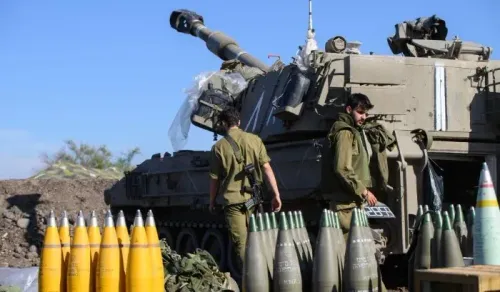
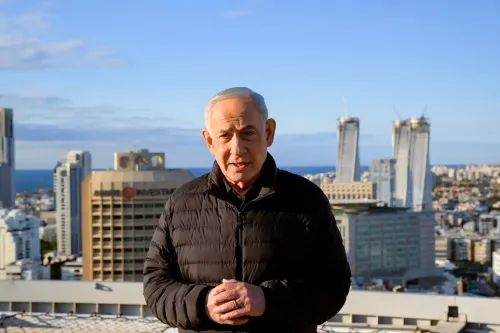
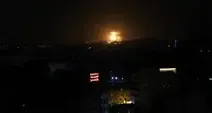
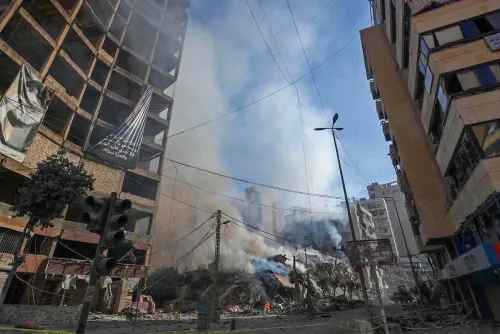
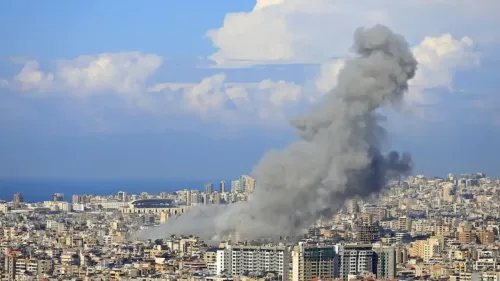
The Israel Defense Forces (IDF) on Sunday, 7 June struck what it described as a 'terrorist headquarters' in the Dahieh district of Beirut, retaliating against Hezbollah's firing at Israeli territory in what officials called a direct ceasefire violation. The strike was authorised by Prime Minister Benjamin Netanyahu and Defence Minister Israel Katz, according to a statement from the Israeli Prime Minister's office.
The Strike and Its Authorisation
The Israeli Prime Minister's office confirmed the operation in a post on social media platform X, stating that the IDF had struck Hezbollah infrastructure in Dahieh in direct response to cross-border fire at Israeli territory. The statement framed the action as a compelled military response to what Israel characterised as a breach of the existing ceasefire agreement.
An IDF spokesperson, also posting on X, declared: 'In light of the terrorist Hezbollah party breaching the ceasefire agreement, the Defence Army is compelled to act against it forcefully.' The spokesperson added that civilians near Hezbollah positions were putting their lives at risk.
Evacuation Warning for Tyre
Alongside the Beirut strike, the IDF issued an urgent evacuation warning to residents of the city of Tyre, directing them to move north of the Zahrani River. The warning specifically named the camps of Al-Bass and Zakuk Al-Mufdi, urging all civilians in proximity to Hezbollah elements or their facilities to leave immediately. 'The Defence Army does not intend to harm you,' the spokesperson said, while making clear that proximity to militant infrastructure constituted a life-threatening risk.
Hezbollah's Missile Launch on Friday
The latest escalation follows an incident on Friday in which the IDF said it detected surface-to-air missile launches by Hezbollah targeting Israeli Air Force aircraft. The IDF reported that the incident concluded without injuries or damage to any aircraft. However, the launches triggered air raid sirens in the city of Kiryat Shmona and eight villages in northeast Israel near the Lebanese border, sending thousands of residents rushing to shelters.
Trump Discloses Direct US Contact with Hezbollah
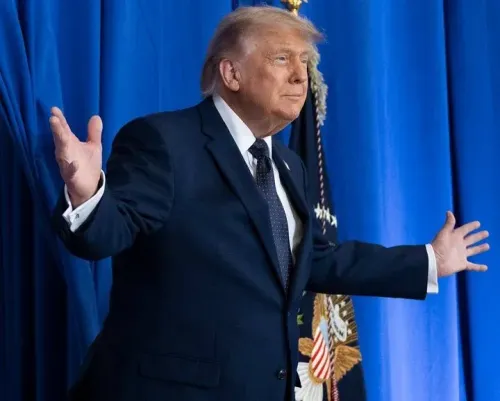
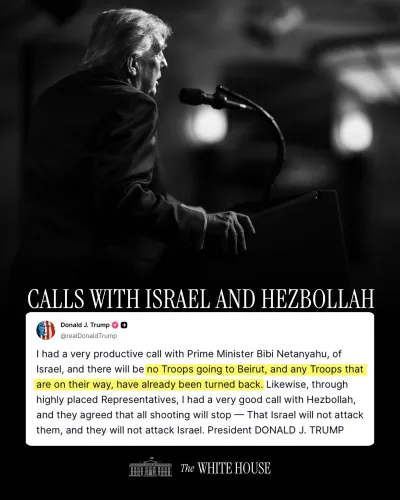
The military flare-up comes amid a parallel diplomatic track. US President Donald Trump, speaking to reporters at the White House on Thursday, disclosed that the United States had been in direct contact with Hezbollah as part of broader efforts to stabilise Lebanon and reduce regional tensions — a rare public acknowledgement of engagement with the Iran-backed group.
Trump pushed back on reports that Hezbollah had rejected a US-backed peace proposal. 'Yeah, what does reject mean? They didn't reject,' he said. He then revealed: 'I will tell you, they called us and they said, how about stopping?' The President added that he expected further developments, saying, 'I think you're going to see things happen over there.'
Trump described Lebanon's situation as closely linked to broader regional dynamics involving Iran, suggesting that progress in indirect Iran-related negotiations could ease pressure on Lebanon. The comments came even as Sunday's IDF strike signalled that military operations on the ground had not paused pending diplomatic outcomes.
What Comes Next
The dual tracks — active Israeli strikes and US-led back-channel engagement with Hezbollah — set up a volatile dynamic in the days ahead. Whether the ceasefire framework can be salvaged, or whether Sunday's strike marks a broader re-escalation, will depend heavily on Hezbollah's response and the pace of the US diplomatic push. Regional observers will be watching closely for any signal from Tehran, whose influence over Hezbollah remains the central variable in Lebanon's stability calculus.
Point of View
Made days before the Beirut strike, raises a pointed question: if Hezbollah was signalling willingness to stop, why did Israel escalate? The answer likely lies in the missile launches on Friday, which Israel could not absorb without a visible response. The risk now is that each side's internal logic — Hezbollah's need to not appear defeated, Israel's need to enforce deterrence, and Washington's need to show diplomatic traction — pulls in incompatible directions, making a durable ceasefire structurally harder to achieve.
NationPress
24 Oct 2026
Frequently Asked Questions
Why did Israel strike Beirut on 7 June 2025?
Israel struck a Hezbollah headquarters in the Dahieh district of Beirut on 7 June in retaliation for Hezbollah firing at Israeli territory, which Israel described as a breach of the existing ceasefire agreement. The strike was authorised by Prime Minister Benjamin Netanyahu and Defence Minister Israel Katz.
What is the Dahieh district of Beirut?
Dahieh is a southern suburb of Beirut that has historically served as a stronghold for Hezbollah and has been a frequent target of Israeli strikes during periods of conflict. The IDF described the site hit on 7 June as a 'terrorist headquarters.'
Why did the IDF warn residents of Tyre to evacuate?
The IDF issued an evacuation warning to Tyre alongside the Beirut strike, directing residents — particularly those in the Al-Bass and Zakuk Al-Mufdi camps — to move north of the Zahrani River. The military said anyone near Hezbollah elements or their facilities was in danger.
What did Trump say about US contact with Hezbollah?
President Trump disclosed on Thursday that the United States has been in direct contact with Hezbollah as part of efforts to stabilise Lebanon, saying Hezbollah had reached out asking about stopping the fighting. He pushed back on reports that the group had rejected a US-backed peace proposal, saying 'they didn't reject.'
What happened with Hezbollah's missile launch on Friday?
The IDF reported that Hezbollah launched surface-to-air missiles targeting Israeli Air Force aircraft on Friday, though the incident ended without injuries or damage to any aircraft. The launches triggered air raid sirens in Kiryat Shmona and eight villages in northeast Israel near the Lebanese border.