Hezbollah blocking Israel-Lebanon ceasefire, US says
Synopsis
Washington has gone public with its frustration: Hezbollah, backed by Iran, has effectively torpedoed a sequenced US ceasefire proposal that Lebanese President Aoun was ready to advance. With Speaker Berri demanding Israel stand down first — despite Hezbollah initiating the current round of fighting on March 2 — the diplomatic window is narrowing fast.
Key Takeaways
The United States accused Hezbollah of blocking a US-backed ceasefire proposal between Israel and Lebanon as of 1 June 2025 .
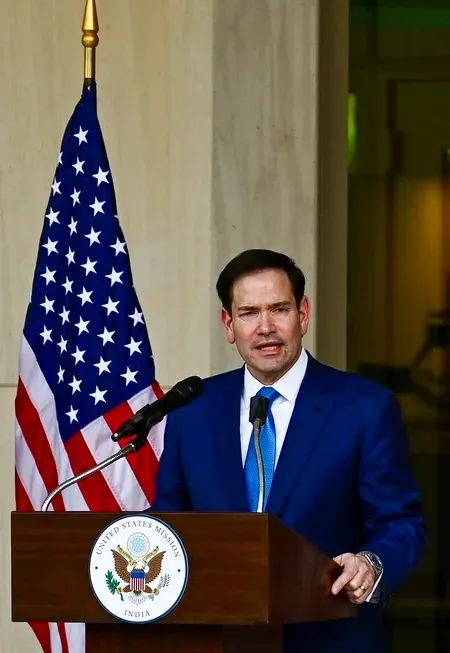
Secretary of State Marco Rubio held talks with Lebanese President Joseph Aoun and Israeli PM Benjamin Netanyahu as part of the diplomatic push.
The US proposal required Hezbollah to halt attacks first, after which Israel would refrain from escalating in Beirut .
Parliament Speaker Nabih Berri 's response was called 'evasive and disappointing' by a senior US official; Berri insisted Israel stop operations first.
The US blamed Iran for encouraging Hezbollah to prolong the conflict, saying Tehran seeks to 'claim credit for saving the day.' The current round of fighting was initiated by Hezbollah on March 2 , according to the US official.
The United States has formally accused Hezbollah of obstructing a ceasefire agreement with Israel, alleging the Iran-backed militant group is deliberately prolonging cross-border hostilities despite a concrete US-backed de-escalation proposal tabled in recent days. The accusation, relayed by a senior US official familiar with the diplomatic talks, marks a sharp escalation in Washington's public frustration over the stalled Lebanon-Israel negotiations.
The US Proposal and How It Stalled
Secretary of State Marco Rubio held separate calls with Lebanese President Joseph Aoun and Israeli Prime Minister Benjamin Netanyahu as part of ongoing shuttle diplomacy. The US put forward what the official described as a straightforward sequenced plan: Hezbollah would halt all attacks on Israel first, after which Israel would refrain from escalating operations in Beirut, creating conditions for a gradual cessation of hostilities.
According to the official, President Aoun actively sought to advance the proposal and secure agreement from all parties. The effort collapsed, however, after a response from Lebanese Parliament Speaker Nabih Berri, a close political ally of Hezbollah.
What Berri Said — and Why Washington Rejected It
'Speaker Berri's response was evasive and disappointing,' the US official said. Berri reportedly offered to 'guarantee' Hezbollah's adherence to a ceasefire, but on the condition that Israel cease military operations first.
Washington rejected this framing outright. 'Berri claimed to guarantee Hizbollah's commitment to a ceasefire, but placed the burden on Israel to stop shooting first even though Hizbollah started this round of fighting on March 2, just as it started the previous war in 2023,' the official said.
Iran's Role in Prolonging the Conflict
The United States also pointed the finger at Tehran, accusing Iran of actively encouraging Hezbollah to continue fighting. 'Hizbollah is following Tehran's lead. It clearly has no interest in the welfare of the Lebanese people. Iran wants to prolong the conflict in Lebanon so it can claim credit for saving the day,' the official said.
This comes amid broader US efforts to contain Iranian influence across the Middle East, with Lebanon increasingly seen as a flashpoint where Tehran's proxy strategy is most visible.
Washington's Position on Israeli Retaliation
The US made its stance on Israeli self-defence unambiguous. 'The United States does not expect Israel to absorb ongoing attacks on its civilians by a terrorist organisation,' the official stated. Officials added that the fastest route to protecting civilians on all sides remains an immediate halt to Hezbollah fire.
Notably, this is at least the second major diplomatic push that has stalled at the same juncture — with Hezbollah's political interlocutors unwilling to commit to a unilateral stop to hostilities without parallel Israeli concessions.
What Comes Next
With the US-brokered sequenced proposal now effectively on hold, Washington faces pressure to either revise its framework or escalate diplomatic costs on Hezbollah and its backers. The cross-border hostilities along the Israel-Lebanon border show no signs of abating, and the risk of a broader regional conflict remains elevated. How Beirut, Tehran, and Tel Aviv respond to Washington's public rebuke in the coming days will likely determine whether a ceasefire window remains open.
Point of View
Not just venting. But the US framing has a credibility problem: demanding Hezbollah stand down first while Israel continues operations in the south is a sequencing ask that Beirut's political class, including Aoun allies, cannot sell domestically. The deeper issue is that Berri's 'guarantee' of Hezbollah compliance was never going to be taken at face value in Washington or Tel Aviv after 2023. Until the US is willing to offer Israel something concrete in exchange for a simultaneous stand-down — or impose real costs on Tehran — this ceasefire architecture will keep collapsing at the same point.
NationPress
17 Oct 2026
Frequently Asked Questions
Why is the US accusing Hezbollah of blocking a ceasefire?
The US says Hezbollah, through its political ally Speaker Nabih Berri, rejected a sequenced de-escalation proposal that required Hezbollah to halt attacks on Israel first. Washington argues that placing the burden on Israel to stop first is unreasonable given that Hezbollah initiated the current round of fighting on March 2.
What was the US ceasefire proposal for Israel and Lebanon?
The US proposed a clear sequence: Hezbollah would stop all attacks on Israel, after which Israel would refrain from escalating operations in Beirut, creating space for a gradual cessation of hostilities. Lebanese President Joseph Aoun reportedly supported advancing the proposal.
What role is Iran playing in the Israel-Lebanon conflict?
US officials have accused Iran of actively encouraging Hezbollah to continue fighting, alleging Tehran wants to prolong the conflict so it can later claim credit for brokering peace. Washington views Hezbollah as effectively acting on Tehran's instructions.
Who is Nabih Berri and why does his response matter?
Nabih Berri is the Speaker of the Lebanese Parliament and a long-standing political ally of Hezbollah. His response to the US proposal is significant because he has historically acted as an interlocutor for Hezbollah in diplomatic negotiations; his rejection effectively signals Hezbollah's refusal of the US terms.
What happens next in the Israel-Lebanon ceasefire talks?
With the sequenced US proposal stalled, Washington faces pressure to revise its diplomatic framework or increase pressure on Hezbollah and Iran. Cross-border hostilities are ongoing, and the risk of broader regional escalation remains high pending the next round of diplomatic engagement.