Trump Attends FIFA Reception Ahead of 2026 World Cup
Synopsis
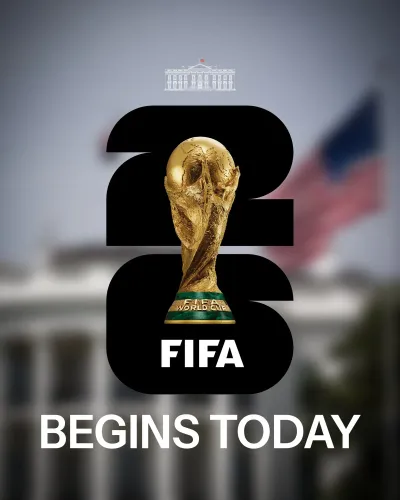
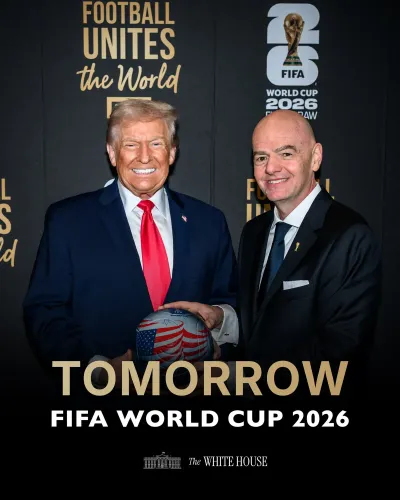
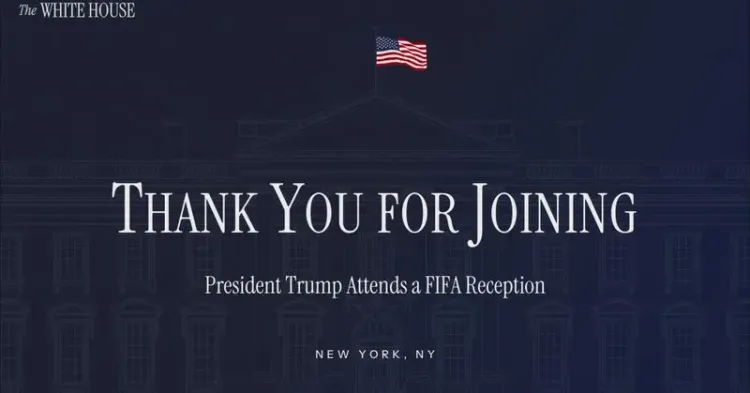
US President Donald Trump attended a FIFA reception on 18 July 2026, with the White House broadcasting the event. The 2026 FIFA World Cup, co-hosted by the United States, Canada, and Mexico, marks the first three-nation edition of the tournament, featuring an expanded 48-team format.
Key Takeaways
President Donald Trump attended a FIFA reception on 18 July 2026 , as broadcast by the White House .
The 2026 FIFA World Cup is co-hosted by the United States , Canada , and Mexico — the first three-nation edition in history.
Hosting rights were awarded to the three nations by FIFA in June 2018 .
The tournament features an expanded 48-team format, the largest in World Cup history.
Presidential engagement with FIFA reflects the administration's positioning of the tournament as a national showcase and diplomatic priority.
Host cities across the US are expected to see significant tourism and infrastructure benefits from the event.
US President Donald Trump attended a FIFA reception on Friday, 18 July 2026, as the White House shared the event via an official broadcast, signalling the administration's active engagement with preparations for the 2026 FIFA World Cup co-hosted by the United States, Canada, and Mexico.
Context
The 2026 FIFA World Cup is the first edition of the tournament to be hosted across three nations simultaneously, with the United States serving as the primary host. FIFA awarded the hosting rights to the United States, Canada, and Mexico in June 2018, making it a landmark in international football governance. The tournament is set to feature an expanded format with 48 teams, the largest field in World Cup history.
Presidential engagement with FIFA ahead of a major tournament reflects a tradition of American executive involvement in global sporting events staged on home soil. Such receptions typically bring together football officials, host-city representatives, and government stakeholders to coordinate logistics, security, and public diplomacy.
Policy Backdrop
The United States hosting the 2026 World Cup is part of a broader pattern of American cities leveraging major international sporting events to drive tourism revenue and accelerate infrastructure investment. Multiple US cities across the country are designated as official match venues, each requiring federal coordination on security and transport.
The Trump administration has positioned the tournament as a showcase for American capacity to host large-scale global events. Presidential attendance at FIFA functions underscores the diplomatic dimension of the tournament, which involves trilateral cooperation with Canada and Mexico — two countries with which the administration has maintained complex trade and border relations.
Stakeholders and Impact
Host cities across the United States stand to benefit significantly from the economic activity generated by the tournament, with millions of international visitors expected. FIFA officials and local organising committees are the primary institutional stakeholders working alongside the federal government to finalise venue readiness and operational plans.
For football fans in India and across South Asia, the 2026 World Cup represents a highly anticipated event, with the expanded team format increasing the chances of regional participation. The White House's visible engagement with FIFA signals that the tournament remains a top-tier national priority for the administration.
What's Next
Attention now turns to the finalisation of venue readiness, security frameworks, and any executive directives tied to the tournament's operational rollout. Further announcements from the White House and FIFA on coordination mechanisms are expected in the weeks ahead as the tournament draws closer. The trilateral host-nation partnership between the United States, Canada, and Mexico will continue to be a focal point of diplomatic activity surrounding the event.
Point of View
Projecting American readiness to the world ahead of the most expansive World Cup in history. The optics of executive engagement with FIFA carry particular weight given the administration's complex relationships with co-hosts Canada and Mexico, where trade and border tensions have periodically strained trilateral ties. For the White House, the 2026 tournament offers a rare opportunity to frame a unifying national narrative around American organisational capacity. How the administration manages the diplomatic choreography with Ottawa and Mexico City in the run-up to the tournament will be closely watched by both sports bodies and foreign policy observers.
NationPress
18 Jul 2026
Frequently Asked Questions
Why did President Trump attend a FIFA reception in 2026?
President Trump attended a FIFA reception as part of the US government's engagement with preparations for the 2026 FIFA World Cup, which the United States is co-hosting alongside Canada and Mexico.
When is the 2026 FIFA World Cup being held?
The 2026 FIFA World Cup is scheduled to be held in the United States, Canada, and Mexico. It is the first World Cup hosted by three nations simultaneously and features an expanded 48-team format.
Which countries are hosting the 2026 FIFA World Cup?
The 2026 FIFA World Cup is jointly hosted by the United States, Canada, and Mexico, with hosting rights awarded by FIFA in June 2018.
How many teams are playing in the 2026 FIFA World Cup?
The 2026 FIFA World Cup features 48 teams, the largest field in the history of the tournament.
What is the White House's role in the 2026 FIFA World Cup?
The White House has been actively engaged in FIFA-related functions, with President Trump attending receptions tied to the tournament, reflecting federal coordination on security, logistics, and public diplomacy for the event.