Did PM and HM Aim to be Historians but Become 'Distorians'?
Synopsis
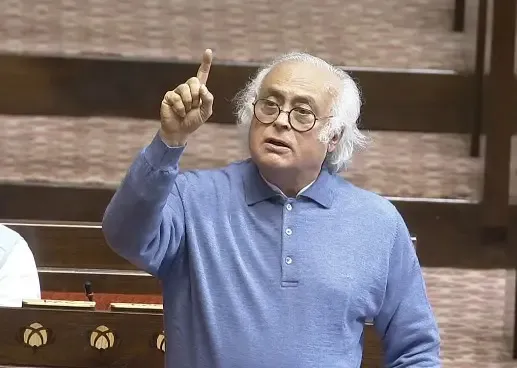
In a recent address, Congress leader Jairam Ramesh critiques the ruling party's historical interpretations in Parliament, branding them as 'distorians'. He emphasizes the need for a genuine understanding of history to honor freedom fighters like Nehru and Tagore, amidst ongoing political manipulation.
Key Takeaways
Debates in Parliament reflect a lack of historical awareness.
Political manipulation of history is a pressing issue.
Jairam Ramesh critiques the ruling party's approach to historical figures.
Current discussions may undermine the legacies of freedom fighters.
Understanding history is crucial for informed political discourse.
New Delhi, Dec 10 (NationPress) Congress Rajya Sabha member Jairam Ramesh stated on Wednesday that the current discussions occurring in Parliament reveal a significant lack of historical awareness in Indian politics, coupled with excessive political distortion of history.
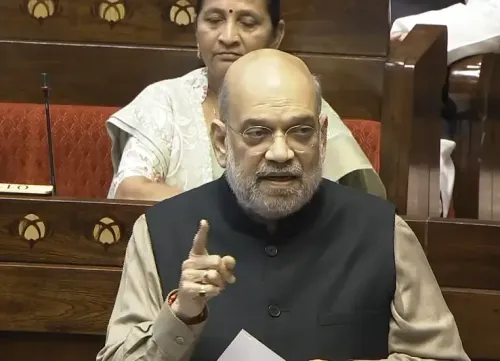
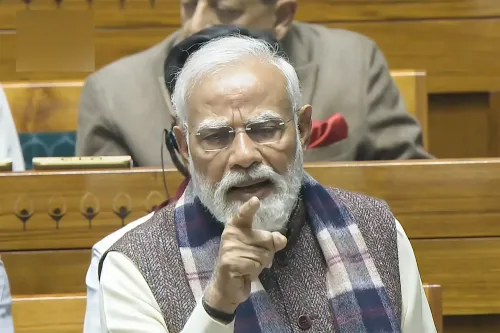
Ramesh directed his comments towards Prime Minister Narendra Modi, Home Minister Amit Shah, and other prominent leaders from the ruling party, asserting that they intended to be historians but have instead become 'distorians'.
In a debate honoring the 150th anniversary of the creation of 'Vande Mataram', Ramesh remarked, "The discussions in both the Lok Sabha and Rajya Sabha indicate that we possess far too little history in our political discourse and an overabundance of politics in how we interpret history. The Prime Minister, Home Minister, and others from the treasury benches sought to be historians yet have turned into 'distorians'."
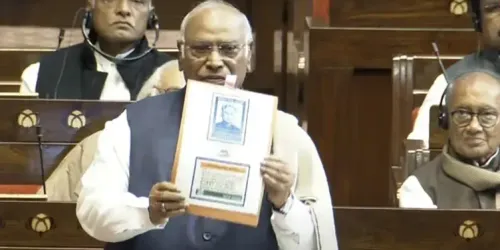
He reiterated the points made by Leader of Opposition Mallikarjun Kharge, stressing that it was a collective decision of the Congress Working Committee—including luminaries such as Rajendra Prasad, Sardar Vallabhbhai Patel, Mahatma Gandhi, Maulana Azad, Rabindranath Tagore, and Jawaharlal Nehru—to adopt the current version of Vande Mataram.
Ramesh questioned whether, when the government accuses Nehru of 'appeasement', it applies the same accusations to all other leaders as well.
Furthermore, he asserted that the government is not just 'insulting' Nehru but also Rabindranath Tagore.
"What is this government attempting? Bankim Chandra Chatterjee versus Rabindranath Tagore? This is not merely an affront to Nehru, but also to Tagore," he stated.
The Congress representative claimed that the government's initiative to discuss Vande Mataram was purely aimed at 'insulting' Jawaharlal Nehru.
"By insulting Nehru, they diminish the legacy of everyone who fought in the freedom struggle," he said.
Continuing his address, he referenced a book entitled 'Equality', written by Bibek Debroy, Chairman of the Prime Minister's Economic Advisory Council, which includes a translation of 'Samya' by Bankim Chandra Chatterjee.
He highlighted that in this book, Chatterjee identifies the caste system as the principal issue confronting the nation.
"When discussing Bankim Chandra Chatterjee, we must also acknowledge this critical perspective," Ramesh concluded.
Point of View
The discourse initiated by Jairam Ramesh emphasizes the critical need for political leaders to engage with history authentically. His remarks reflect a growing concern about the manipulation of historical narratives in contemporary politics, which can distort public understanding and respect for past leaders and their contributions.
NationPress
3 Oct 2026
Frequently Asked Questions
Who is Jairam Ramesh?
Jairam Ramesh is a Congress Rajya Sabha member known for his outspoken views on Indian politics and history.
What did Ramesh say about Modi and Shah?
He accused them of attempting to be historians but ultimately becoming 'distorians', distorting historical facts for political gain.
What is Vande Mataram?
Vande Mataram is a famous Bengali poem by Bankim Chandra Chatterjee, which has been adopted as a national song in India.
Why is Nehru significant in Indian history?
Jawaharlal Nehru was the first Prime Minister of India and played a crucial role in the country's independence and early development.
What does Ramesh's statement imply about historical interpretation?
It suggests a concern that current political narratives overshadow genuine historical understanding, which is vital for honoring India's freedom fighters.