Major Wildfire Rages in Japan's Iwate: 1,200 Hectares Scorched
Synopsis
A raging wildfire in Japan's Iwate Prefecture has scorched nearly 1,200 hectares, destroyed 8 buildings, and forced 2,600 residents to evacuate — all while a separate 7.7-magnitude earthquake alert covers the same region. Japan is simultaneously battling two major natural disasters, stretching emergency response to its limits.
Key Takeaways
Nearly 1,200 hectares of land in Iwate Prefecture, Japan have been scorched by an uncontained wildfire as of Friday, April 25, 2025 .
The fire broke out on Wednesday in a mountainous area of Otsuchi Town and has destroyed eight buildings , including residential homes.
Mandatory evacuation orders have been issued for nearly 2,600 residents , roughly one-quarter of Otsuchi Town's population.
Firefighting support has been requested from five prefectures — Hokkaido, Yamagata, Fukushima, Tochigi , and Niigata — alongside Self-Defence Forces helicopter operations.
A separate 7.7-magnitude earthquake on Monday triggered a week-long seismic alert from the Japan Meteorological Agency covering 182 municipalities across seven prefectures , including Iwate.
Japan faces heightened wildfire risk every late winter and early spring due to dry conditions, resin-rich coniferous forests, and seasonal winds.
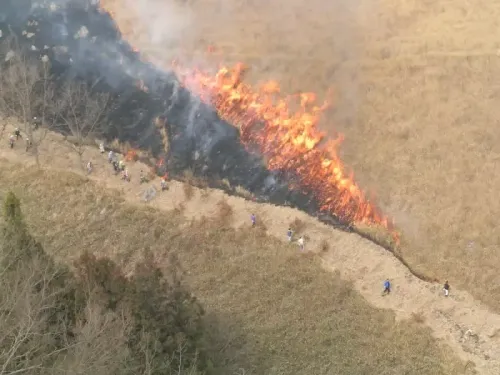
Iwate Prefecture, Japan, April 25 (NationPress) — A devastating wildfire in Iwate Prefecture, northeastern Japan, has burned through nearly 1,200 hectares as of 6 a.m. local time on Friday, with containment efforts still falling significantly short. The fire, which ignited on Wednesday in a mountainous zone of Otsuchi Town, has razed eight buildings including residential homes, triggering mass evacuations and multi-prefecture emergency response operations.
Scale of Destruction and Evacuation Orders
Local authorities in Otsuchi Town have issued mandatory evacuation orders covering nearly 2,600 residents — approximately one-quarter of the town's total population. The speed at which the fire has expanded has alarmed disaster management officials, who are now coordinating one of the most extensive wildfire responses in the region in recent memory.
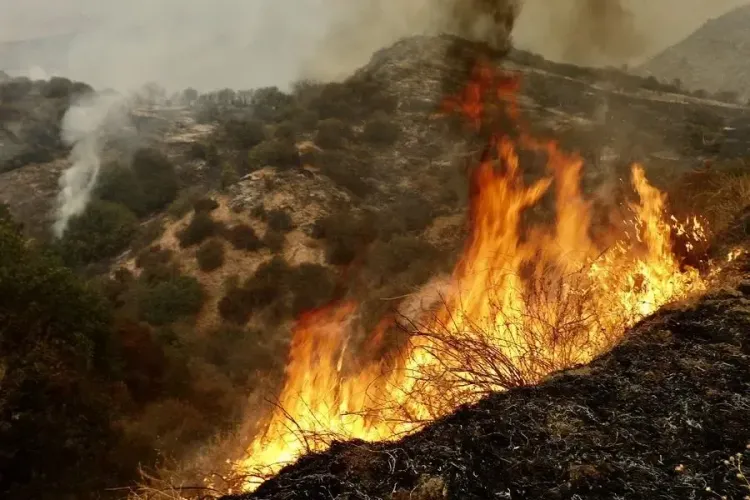
The blaze originated in a heavily forested mountainous area, where dry vegetation and seasonal winds created near-ideal conditions for rapid fire spread. As of Friday morning, the fire remained largely uncontained, according to reports by Kyodo News.
Multi-Prefecture Firefighting Response
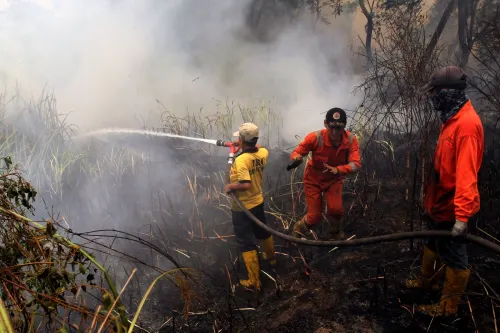
Helicopters deployed by the Iwate prefectural government and Japan's Self-Defence Forces have been conducting continuous water-dropping operations over the affected zones. Ground personnel from fire departments across Iwate Prefecture have also been mobilised in large numbers.
In a significant escalation of response, firefighting assistance has been formally requested from five additional prefectures — Hokkaido, Yamagata, Fukushima, Tochigi, and Niigata — underscoring the severity of the situation and the limitations of local resources alone.
Compounded Crisis: Earthquake Alert Adds to Emergency
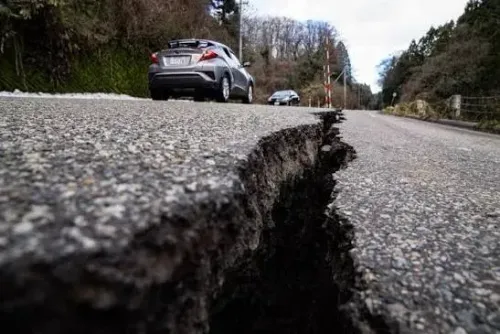
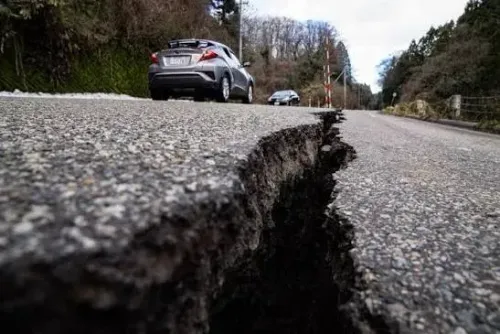
The wildfire crisis is unfolding against the backdrop of a separate but equally alarming natural disaster. A 7.7-magnitude earthquake struck off the northeastern coast of Japan on Monday, prompting the Japan Meteorological Agency (JMA) to issue a special week-long seismic alert covering 182 municipalities across seven prefectures, including Iwate.
Authorities have explicitly warned that emergency responders and residents must simultaneously maintain vigilance for earthquake risks while managing the active wildfire — a dual-hazard scenario that severely stretches disaster response capacity and complicates evacuation logistics.
Why Japan Is Vulnerable to Wildfires
Japan experiences pronounced dry periods during late winter and early spring, when vegetation moisture levels drop sharply, making forests highly susceptible to ignition. Seasonal winds associated with shifting weather systems can rapidly accelerate flames once a fire takes hold.
A significant portion of Japan's landmass is forested, with large swaths dominated by coniferous species such as cedar and pine. These trees are rich in natural resins that combust easily, and their density creates continuous fuel corridors that allow fires to travel fast and far.
Human activity is another persistent risk factor. Accidental ignition sources — including unattended campfires, agricultural burns, discarded cigarettes, and equipment sparks — are among the leading causes of wildfires in Japan. The proximity of residential settlements to forested areas further elevates the probability of fire ignition and rapid escalation.
Broader Implications and What Comes Next
This incident highlights a growing pattern of compound natural disasters in Japan — where overlapping crises such as earthquakes and wildfires simultaneously tax emergency infrastructure. Climate scientists have noted that warming temperatures and shifting precipitation patterns are extending fire-risk seasons globally, and Japan is not immune to this trend.
With containment still elusive and weather conditions remaining uncertain, authorities are expected to maintain elevated alert levels through the coming days. The JMA's seismic alert remains active, and residents across affected municipalities have been urged not to lower their guard. The international community and disaster management experts will be closely watching how Japan manages this rare simultaneous multi-hazard emergency.
Point of View
The convergence of a 1,200-hectare uncontained blaze and a 7.7-magnitude seismic alert for 182 municipalities tests even the most prepared systems. What this crisis exposes is a structural truth increasingly relevant to all densely forested, seismically active nations: compound disasters are the new normal, and single-hazard emergency planning is dangerously obsolete. India, with its own forests and fault lines, should be taking notes.
NationPress
14 Sept 2026
Frequently Asked Questions
How big is the wildfire in Iwate Prefecture, Japan?
The wildfire in Iwate Prefecture, Japan has burned through nearly 1,200 hectares as of 6 a.m. local time on Friday, April 25, 2025. The fire started on Wednesday in a mountainous area of Otsuchi Town and remains largely uncontained.
How many people have been evacuated due to the Japan wildfire?
Nearly 2,600 residents of Otsuchi Town have been issued mandatory evacuation orders due to the wildfire. This accounts for approximately one-quarter of the town's total population.
Is Japan also dealing with an earthquake at the same time as the wildfire?
Yes, a 7.7-magnitude earthquake struck off northeastern Japan on Monday, prompting the Japan Meteorological Agency to issue a special week-long seismic alert for 182 municipalities across seven prefectures, including Iwate. Authorities have warned responders to remain vigilant for earthquake risks while fighting the fire.
Why are wildfires common in Japan?
Japan's dry late-winter and early-spring seasons, combined with dense coniferous forests of cedar and pine containing flammable resins, create high wildfire risk. Human activities such as agricultural burning, campfires, and cigarette disposal near forested areas are also leading causes.
Which prefectures are helping fight the Iwate wildfire?
Firefighting assistance has been requested from Hokkaido, Yamagata, Fukushima, Tochigi, and Niigata prefectures to support local teams in Iwate. Japan's Self-Defence Forces and Iwate prefectural government helicopters are also conducting water-dropping operations.