5.9-magnitude earthquake hits Ibaraki, Japan; 37 injured across Tokyo region
Synopsis
A 5.9-magnitude earthquake jolted Ibaraki Prefecture near Tokyo at 2 a.m. on Sunday, injuring at least 37 people across four prefectures, bursting water pipes, and temporarily halting trains across the Kanto region. The Japan Meteorological Agency is warning of potential aftershocks of similar intensity over the next week — with the next 48 to 72 hours flagged as the highest-risk window.
Key Takeaways
A 5.9-magnitude earthquake struck Ibaraki Prefecture , northeast of Tokyo, at approximately 2 a.m. local time on Sunday, 23 August .
At least 37 people were injured across Tokyo , Ibaraki , Kanagawa , and surrounding prefectures.
The quake registered lower 5 on Japan's 7-point seismic intensity scale in parts of Ibaraki, Saitama, Chiba, and Tokyo's Adachi Ward.
Multiple water pipes burst in Tokyo and train services across the Kanto region were temporarily disrupted.
No abnormalities were detected at the Tokai No.
2 , Fukushima Daiichi , or Fukushima Daini nuclear plants.
The Japan Meteorological Agency has issued an aftershock alert for the next week , with the next two to three days flagged as the highest-risk period.
A 5.9-magnitude earthquake struck Ibaraki Prefecture, northeast of Tokyo, in the early hours of Sunday, 23 August, injuring at least 37 people across multiple prefectures and triggering infrastructure disruptions in the Kanto region. The tremor, centred at a depth of approximately 70 km, was among the strongest felt in the capital in recent years, according to residents.
Scale and Intensity
The Japan Meteorological Agency (JMA) recorded the quake at around 2 a.m. local time, assigning it a lower 5 on Japan's seismic intensity scale of 7 — the threshold at which most people are frightened and compelled to hold onto something stable, and at which objects are liable to fall from shelves. Parts of Ibaraki, Saitama, and Chiba prefectures, as well as Tokyo's Adachi Ward, recorded this intensity level. The tremor was felt across a wide swath of the country, extending into northeastern and central Japan.
Injuries and Infrastructure Damage
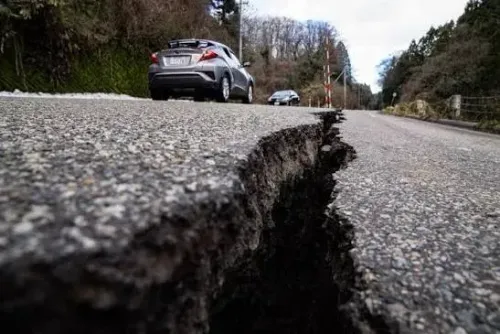
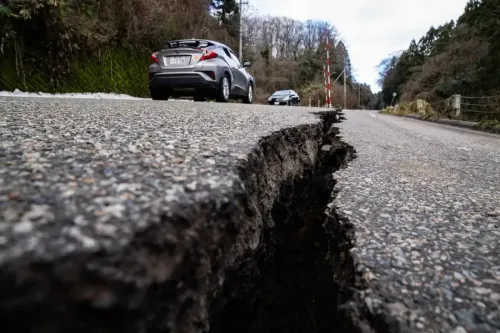
As of 10 a.m. local time, at least 37 people had been reported injured across Tokyo, Ibaraki Prefecture, Kanagawa Prefecture, and surrounding areas, according to the Fire and Disaster Management Agency, as cited by Japan's Fuji News Network. Multiple water pipes burst in Tokyo and other areas, causing temporary flooding on certain roads. Train services across the Kanto region were temporarily disrupted, though operations were gradually being restored.
Nuclear Plants Unaffected
Operators confirmed no abnormalities were detected at the Tokai No. 2 nuclear power plant in Ibaraki Prefecture, nor at the Fukushima Daiichi nuclear plant or the nearby Fukushima Daini plant in northeastern Japan — a critical reassurance given the region's seismic history. The 2011 Tohoku earthquake and subsequent tsunami caused catastrophic damage to Fukushima Daiichi, making nuclear plant status a standard first check after any significant tremor in the area.
Public Reaction and Aftershock Warning
Several Tokyo residents described the shaking as the most intense they had experienced in recent years, with accounts circulating on social media shortly after the event. The JMA has urged the public to remain alert for a further earthquake of lower 5 intensity over the next week, with heightened caution advised particularly during the next two to three days. Japan sits on the Pacific Ring of Fire and regularly records thousands of earthquakes annually, though events of this scale and breadth of impact are less routine.
What Comes Next
Authorities are assessing the full extent of damage to water infrastructure and road surfaces. Residents in affected areas have been advised to check their homes for structural damage before returning to normal routines. The JMA's aftershock advisory remains active, and emergency services across the Kanto region remain on standby.
Point of View
Felt across four prefectures and the capital simultaneously, exposes how densely the Kanto region's infrastructure is packed into a narrow seismic corridor. The nuclear plant checks passing clean is the right headline to lead with, but the burst water pipes and rail disruptions point to an urban resilience gap that successive governments have acknowledged but not fully resolved. With JMA flagging aftershock risk for the next week, the real test is whether Tokyo's emergency coordination holds up under a sustained alert posture rather than a single-event response.
NationPress
7 Oct 2026
Frequently Asked Questions
Where and when did the Japan earthquake occur on 23 August?
The earthquake struck Ibaraki Prefecture, northeast of Tokyo, at approximately 2 a.m. local time on Sunday, 23 August. It was centred at a depth of about 70 km and measured 5.9 in magnitude.
How many people were injured in the Ibaraki earthquake?
At least 37 people were injured as of 10 a.m. local time on Sunday, according to the Fire and Disaster Management Agency. Injuries were reported across Tokyo, Ibaraki Prefecture, Kanagawa Prefecture, and other areas.
What damage did the earthquake cause?
Multiple water pipes burst in Tokyo and other areas, causing temporary road flooding. Train services across the Kanto region were temporarily suspended, though operations were being gradually restored. No structural collapse was immediately reported.
Were any nuclear power plants affected?
No abnormalities were detected at the Tokai No. 2 nuclear power plant in Ibaraki Prefecture, or at the Fukushima Daiichi and Fukushima Daini plants in northeastern Japan, according to their respective operators.
Is there a risk of aftershocks after the Ibaraki earthquake?
Yes. The Japan Meteorological Agency has urged the public to remain alert for a further earthquake of lower 5 intensity over the next week, with the next two to three days identified as the highest-risk window.