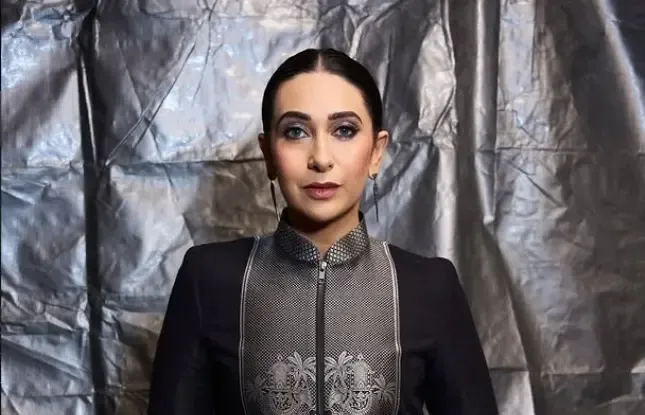
Karisma Kapoor Reveals Her Great Grandfather Prithviraj Kapoor's Inspiring Legacy in Bollywood
Synopsis
In a poignant episode of Indian Idol, Karisma Kapoor shares touching insights into her great grandfather, Prithviraj Kapoor, a key figure in Hindi cinema. Discover his journey from law student to Bollywood legend and how his legacy continues to influence the film industry.
Key Takeaways
Karisma Kapoor shares personal insights about her great grandfather.
Prithviraj Kapoor transitioned from law to acting.
He starred in pioneering films like Alam Ara and Mughal-E-Azam .
The Kapoor family's legacy continues through multiple generations.
Prithviraj's impact on Hindi cinema remains significant.
Mumbai, April 5 (NationPress) In a captivating segment of the singing competition, Indian Idol, Bollywood star Karisma Kapoor unveiled intriguing details about her late great grandfather, the legendary Prithviraj Kapoor, a pivotal figure in Hindi cinema.
After a soulful rendition of the classic Hindi song ‘Pyar Kiya to Darna Kya’ from the historic 1959 film ‘Mughal-E-Azam,’ featuring Prithviraj Kapoor, Karisma appeared visibly touched.
Reflecting on his remarkable journey, she expressed, “I’m not sure if everyone knows that Prithviraj ji began his career as a law student. His passion for acting drove him to Mumbai, which was known as Bombay back then.”
She further elaborated, “He faced numerous challenges before landing his first role. Notably, Prithviraj Kapoor featured in India’s inaugural talkie film, Alam Ara, and later starred in the nation’s first color film, Mughal-E-Azam.
Praising Jyotirmayee’s performance, Karisma remarked, “Thank you for your beautiful rendition today.”
For those unfamiliar, Prithviraj Kapoor is recognized as a foundational figure in Hindi cinema, giving rise to the illustrious Kapoor family.
He was the father of renowned actors Raj Kapoor, Shammi Kapoor, and Shashi Kapoor. His legacy continues through his grandchildren Randhir Kapoor, Rishi Kapoor, Rajiv Kapoor, and great-grandchildren including Karisma Kapoor, Kareena Kapoor, and Ranbir Kapoor.
Prithviraj Kapoor's portrayal of Emperor Akbar in the film Mughal-E-Azam is hailed as one of the greatest performances in Bollywood history.
The late icon was honored during the episode by host Aditya Narayan, who stated, “People say there are many stars in the sky, but there is only one moon, and the moon of the Kapoor legacy is Prithviraj Kapoor.”
He continued, “Without Prithviraj Kapoor, this Kapoor legacy would not exist. The industry would lack many superstars, RK Studios, and Prithvi Theatre. Prithviraj entered the film industry as an extra and transformed it into something extraordinary. Whether it was the first talkie film, Alam Ara, which gave voice to Hindi cinema, or the classic Mughal-E-Azam, which showcased unparalleled acting, Prithviraj ji exemplified why the Hindi film industry affectionately calls him Papaji.”
Point of View
The revelations by Karisma Kapoor about her great grandfather Prithviraj Kapoor highlight the rich heritage and legacy of the Kapoor family in Bollywood, emphasizing the profound impact he had on the industry.
NationPress
9 Oct 2026
Frequently Asked Questions
Who is Prithviraj Kapoor?
Prithviraj Kapoor was a pioneering actor in Hindi cinema and a key figure in establishing the Kapoor family's legacy in Bollywood.
What is Prithviraj Kapoor's connection to Indian Idol?
In a recent episode of Indian Idol, Karisma Kapoor shared stories about her great grandfather, Prithviraj Kapoor, while reflecting on his contributions to cinema.
Which films is Prithviraj Kapoor known for?
He is best known for his roles in India's first talkie film, Alam Ara, and the classic Mughal-E-Azam.
How did Prithviraj Kapoor start his career?
He initially pursued a law degree before transitioning into acting, driven by his passion for the arts.
What legacy did Prithviraj Kapoor leave behind?
He is credited with being a foundational figure in Hindi cinema, influencing generations of actors and filmmakers within the Kapoor family.