Karnataka to renew Kadugolla ST inclusion bid with fresh ethnographic study
Synopsis
Karnataka has tried — and failed — five times to get the Kadugolla community into the ST list. Now, instead of resubmitting the same documents, the Shivakumar cabinet is commissioning a fresh ethnographic study, with a three-month deadline. The move comes just before a bypoll in Hiriyur, where the Golla community is a decisive vote bank.
Key Takeaways
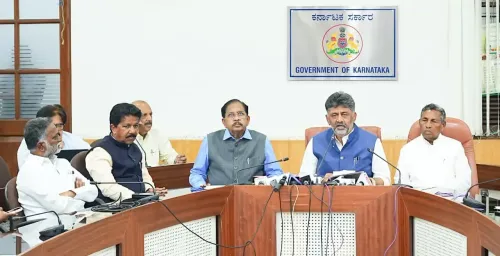
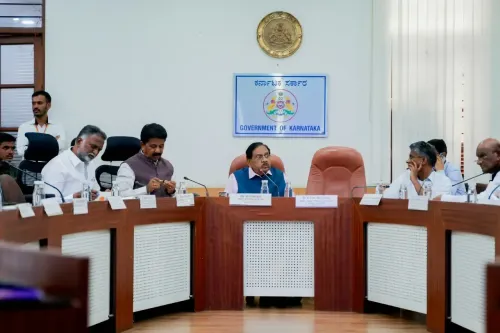
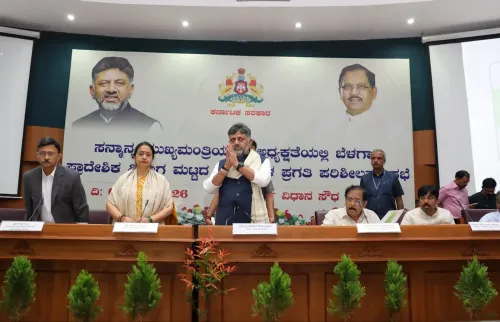
The Karnataka Cabinet , chaired by Chief Minister D.K.
Shivakumar , approved a fresh bid to include the Kadugolla (Adavigolla) and Hattigolla communities in the ST list on 19 November .
The Centre has rejected Karnataka's proposals on five occasions , most recently on 22 July 2026 , citing lack of new evidence.
A fresh ethnographic study will be conducted by the Centre for Multi-Disciplinary Development Research (CMDR) , Dharwad , with a three-month submission deadline.
More than six lakh Kadugolla community members live in 1,273 settlements across 40 taluks in 12 districts of Karnataka.
The move precedes the bypoll to the Hiriyur Assembly constituency , where the Golla community is a significant vote bank.
Karnataka has been pursuing ST inclusion for the Kadugolla community since 2015 , submitting proposals on seven separate occasions.
The Karnataka government has decided to make a fresh attempt to include the Kadugolla (Adavigolla) and Hattigolla communities in the Scheduled Tribes (ST) list, commissioning a new ethnographic study after the Centre rejected its proposals on five separate occasions. The decision was confirmed by the Chief Minister's Office (CMO) on Saturday, 21 November.
Cabinet Decision and New Approach
The resolution was adopted at a State Cabinet meeting chaired by Chief Minister D.K. Shivakumar on 19 November. Crucially, instead of resubmitting earlier documents — a strategy that the Centre has repeatedly faulted — the government has opted to commission a fresh, comprehensive study. The Department of Scheduled Tribes Welfare issued a formal order to this effect on 18 November.
Expert anthropologists from the Centre for Multi-Disciplinary Development Research (CMDR) in Dharwad have been tasked with preparing the report. The Director of the Department of Scheduled Tribes Welfare and the Director of the Karnataka State Tribal Research Institute in Mysuru have been directed to complete the study and submit findings within three months.
A Decade of Rejected Proposals
Karnataka's efforts to secure ST status for the Kadugolla community date back to 2015. The first proposal was submitted to the Union Ministry of Tribal Affairs on 18 March 2015, followed by a second on 17 August 2015. Subsequent submissions were made on 28 September 2018, 12 October 2021, 4 February 2022, 5 June 2023, and 3 April 2025.
The Office of the Registrar General of India (ORGI) declined to recommend inclusion on five occasions — on 6 February 2017, 18 February 2019, 22 September 2022, 27 March 2024, and 15 June 2026. A key objection cited each time was that the proposals did not contain new information or additional supporting evidence. Under revised guidelines issued by the Centre on 14 September 2022, inclusion of any new community in the ST list requires the concurrence of the Registrar General of India. The Union Ministry of Tribal Affairs formally rejected the state's most recent proposal on 22 July 2026.
Political Backdrop and Community Representation
The renewed push carries a distinct political dimension. The development comes ahead of the bypoll to the Hiriyur Assembly constituency, where the Golla community constitutes a significant vote bank. Critics argue the timing is not coincidental, though the government has not linked the two developments.
Union Minister of State for Railways and Jal Shakti V. Somanna had written to Chief Minister Shivakumar on 7 October and 30 October, noting that repeated resubmission of earlier information had been the primary reason for rejection. He recommended constituting an expert committee to prepare a fresh report aligned with the Centre's revised criteria — a suggestion the state government has now acted upon.
Separately, Karnataka State Kadugolla Development Corporation Chairman Mahesh M. submitted a representation to the Chief Minister on 31 October, highlighting the socio-economic conditions of Kadugolla families across the state and reiterating the community's longstanding demand.
Community Conditions and What the Study Will Cover
According to the representation submitted by the Development Corporation chairman, more than six lakh members of the Kadugolla community reside in 1,273 settlements across 40 taluks in 12 districts of Karnataka. Several families live in forest-fringe areas, approximately three to four kilometres from major habitations, and continue to face shortages of basic infrastructure including roads and drinking water.
The CMDR study is expected to document the community's distinctive lifestyle, traditional practices, social and cultural conditions, settlement patterns, and tribal characteristics — providing the comprehensive evidence base that earlier proposals lacked and that the Centre has consistently demanded.
What Happens Next
The state government's immediate priority is completing the ethnographic study within the mandated three-month window, after which a fresh recommendation backed by the new evidence will be submitted to the Centre. Whether the CMDR report can address the ORGI's structural objections — and whether the Centre's scrutiny process will proceed differently this time — will determine whether a decade-long demand finally advances.
Point of View
And the regulator has been consistent in its objections. The timing, however, is impossible to ignore: a bypoll in Hiriyur, a constituency with a substantial Golla vote bank, gives the announcement an electoral logic that runs alongside its administrative one. If the three-month study deadline slips or the report fails to satisfy the ORGI's criteria, the community — which has waited over a decade — will have little to show for yet another cycle of political momentum.
NationPress
21 Nov 2026
Frequently Asked Questions
Why does Karnataka want to include the Kadugolla community in the ST list?
The Kadugolla (Adavigolla) and Hattigolla communities have been seeking Scheduled Tribes status since 2015, citing their distinctive tribal lifestyle, forest-fringe settlements, and lack of basic infrastructure. More than six lakh community members live across 12 districts of Karnataka and argue that ST classification would give them access to constitutional protections and welfare schemes.
Why has the Centre rejected Karnataka's proposals five times?
The Office of the Registrar General of India (ORGI) declined to recommend inclusion on five occasions, primarily because the proposals did not contain new information or additional supporting evidence beyond what was submitted earlier. Under revised Centre guidelines issued on 14 September 2022, ORGI concurrence is mandatory before any new community can be added to the ST list.
What is different about Karnataka's latest attempt?
Instead of resubmitting earlier documents, the state has commissioned a fresh ethnographic study by the Centre for Multi-Disciplinary Development Research (CMDR) in Dharwad. The study will document the community's tribal characteristics, traditional practices, and socio-economic conditions from scratch, aiming to address the Centre's specific objections with new evidence.
When will the new study be completed and submitted to the Centre?
The Director of the Department of Scheduled Tribes Welfare and the Director of the Karnataka State Tribal Research Institute in Mysuru have been instructed to complete the study within three months of the order issued on 18 November. A fresh recommendation will then be submitted to the Centre along with the supporting report.
Does the Hiriyur bypoll have a bearing on this decision?
The Cabinet decision comes ahead of the bypoll to the Hiriyur Assembly constituency, where the Golla community constitutes a significant vote bank. While the government has not officially linked the two, the timing has drawn political attention and critics argue the move has an electoral dimension alongside its administrative one.