Kerala Planning Board: Minister Bindu Krishna demands women experts, not ministers
Synopsis
Kerala Labour Minister Bindu Krishna walked into the Kerala State Planning Board's first meeting on Thursday — and openly rebuked her own government for it. The administration added two women ministers to end a week of criticism, but both new expert appointees are men. Bindu Krishna's message: representation without expertise is not representation at all.
Key Takeaways
Kerala Labour Minister Bindu Krishna publicly criticised the reconstituted Kerala State Planning Board on 5 November 2026 for lacking women domain experts.
She had written to Chief Minister V.D.
Satheesan noting that all four initially appointed non-official expert members were men.
The government responded by adding Bindu Krishna and Minister K.A.
Thulasi as members, alongside two new experts — Dr S.S.
Abdul Raheem — both men.
The Board now has two women members , but neither is an independent expert; both are ministers.
Bindu Krishna said she would raise the matter with Chief Minister Satheesan , signalling the dispute is unresolved.
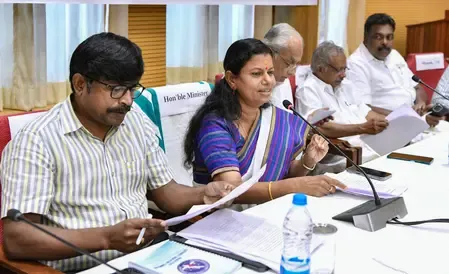
Kerala Labour Minister Bindu Krishna openly broke ranks with her own government on Thursday, 5 November 2026, declaring that the reconstituted Kerala State Planning Board needed women with domain expertise — not women ministers — just minutes before attending the Board's first meeting in Thiruvananthapuram. Her remarks have placed the V.D. Satheesan government in an uncomfortable spot, exposing a gap between the optics of inclusion and its substance.
What Triggered the Dissatisfaction
For nearly a week, Bindu Krishna had been publicly flagging the absence of women in the new Planning Board. She had written to Chief Minister V.D. Satheesan specifically pointing out that none of the four non-official expert members appointed to the Board was a woman. The new Board is headed by the Chief Minister, with former Union Cabinet Secretary K.M. Chandrasekhar as its Vice-Chairman, and also comprises Cabinet members and specialists from various fields.
The pattern drew additional attention because previous Left-led governments in Kerala had historically included women among both full-time and part-time Board members.
The Government's Response — and Its Limits
On Wednesday, the government moved to address the criticism by inducting Bindu Krishna and fellow minister K.A. Thulasi as members of the Board. Two new expert members — Dr S.S. Lal and C.H. Abdul Raheem — were also brought in. However, both newly inducted experts are men. The Board now has two women members, but both are ministers, not independent domain experts.
This distinction is precisely what Bindu Krishna objects to. Speaking to the media before the meeting, she said: 'We never asked for ministers to be made members. We wanted women experts.' She confirmed she would take the matter up with Chief Minister Satheesan.
Why the Distinction Matters
Planning boards derive credibility from the depth of expertise among their non-official members. Ministers bring political representation, but independent experts — economists, urban planners, environmental scientists, public health specialists — are expected to provide technocratic rigour to state development plans. Critics argue that adding ministers satisfies a numerical benchmark without addressing the structural underrepresentation of women professionals in advisory governance.
Notably, this episode underscores a wider national pattern: women's representation in expert and advisory bodies often lags behind their presence in elected or appointed political positions, even in states that otherwise champion gender equity in policy.
What Happens Next
Bindu Krishna's public statement — made just before the Board's inaugural meeting — signals that the issue is unlikely to be settled by the two ministerial appointments. The question the Satheesan government must now answer is whether it will go further and identify women with relevant expertise for induction into the Board. How the Chief Minister responds to her colleague's direct challenge will be closely watched, both within the ruling Left Democratic Front (LDF) and by opposition parties.
Point of View
Not in ministerial headcount. That a Cabinet colleague had to publicly rebuke the government minutes before its own Board's first meeting is itself a governance signal. If the LDF, which has long positioned itself as a progressive standard-bearer on gender policy, cannot ensure women's representation in expert appointments, it invites the charge of performative feminism. The Chief Minister's next move will be a test of whether this government treats technocratic gender equity as a priority or a press-cycle problem.
NationPress
5 Nov 2026
Frequently Asked Questions
Why is Kerala Minister Bindu Krishna unhappy with the Planning Board?
Bindu Krishna objects to the fact that while two women ministers — herself and K.A. Thulasi — were added to the reconstituted Kerala State Planning Board, all newly inducted non-official expert members are men. She argues the Board needs women with domain expertise, not ministerial representation.
What is the composition of the reconstituted Kerala State Planning Board?
The Board is headed by Chief Minister V.D. Satheesan, with former Union Cabinet Secretary K.M. Chandrasekhar as Vice-Chairman. It includes Cabinet ministers and expert members. After the latest additions, Bindu Krishna and K.A. Thulasi are its women members, while Dr S.S. Lal and C.H. Abdul Raheem join as expert members.
What action did Bindu Krishna take before the government responded?
She publicly raised the issue with the media for nearly a week and wrote formally to Chief Minister V.D. Satheesan, pointing out that none of the four initial non-official expert appointments was a woman. She reiterated her concerns on Thursday even after two women ministers were inducted.
How does this compare with past Kerala Planning Boards?
Previous Left-led governments in Kerala had included women among both full-time and part-time Board members. The current reconstitution's initial all-male expert appointments marked a departure from that practice, which is what drew criticism from within the ruling coalition.
What is likely to happen next?
Bindu Krishna has said she will take the matter up with Chief Minister Satheesan, suggesting the issue remains open. The government may come under further pressure to identify and appoint women with relevant technical or academic expertise to the Board's non-official expert positions.