What Challenges Will Kerala Face in the Upcoming Assembly Elections of 2026?
Synopsis
As Kerala gears up for the Assembly elections in 2026, the state faces an array of daunting challenges ranging from financial crises to social unrest. With political tensions rising, will the future government navigate these complex issues successfully?
Key Takeaways
Public Debt: Kerala's debt is projected to reach Rs 4.8 lakh crore.
Inflation: The state recorded an inflation rate of 8.6% in 2025.
Political Contest: The LDF seeks a historic third term amid rising anti-incumbency.
Welfare Programs: Welfare schemes are under financial strain.
Youth Migration: 2.5 lakh young professionals leave the state annually.
Thiruvananthapuram, Jan 3 (NationPress) As Kerala approaches a pivotal Assembly election scheduled for April–May 2026, the incoming government will confront not only political aspirations but also a severely strained economy alongside a plethora of unresolved social, environmental, and governance issues.
The challenges are immense, ranging from escalating public debt and inflation to climate-related disasters, agricultural distress, and youth outmigration.
A significant financial crisis looms for the new government post-elections.
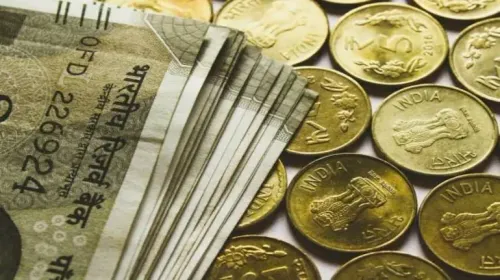
By mid-2025, Kerala's public debt has soared to approximately Rs 4.8 lakh crore, including off-budget borrowings, which puts immense pressure on the state's finances.
The annual debt repayment obligations nearing Rs 28,500 crore are forecasted to persist until 2033–34.
Alarmingly, nearly 98 percent of recent borrowings have been allocated to servicing existing debt, leaving scant fiscal capacity for generating new capital assets or broadening development initiatives.
The state has increasingly turned to entities such as the Kerala Infrastructure Investment Fund Board (KIIFB) for funding infrastructure projects.
While this strategy has helped to circumvent immediate fiscal limitations, it has resulted in cash-flow challenges, delayed payments, and periodic reductions in funding for large-scale projects.
Welfare programs, however, remain safeguarded, albeit under evident financial stress.
The debt-to-GSDP ratio is projected to stabilize around the mid-30 percent mark in 2025–26, coupled with a chronic revenue deficit.
With limited potential for increased central transfers, Kerala may have to resort to raising state taxes, user fees, and continued borrowing, maintaining a tight fiscal environment through 2026.
In this context, Kerala anticipates the Assembly elections in May 2026.
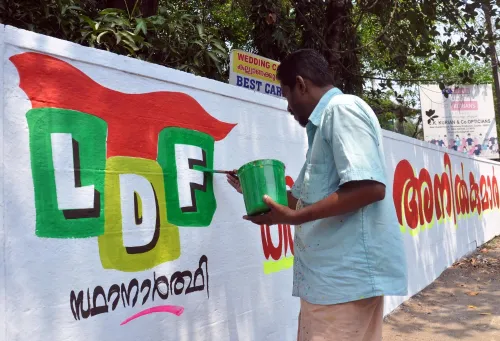
The political landscape is heating up, with the Communist Party of India (Marxist)-led Left Democratic Front (LDF) aiming for a historic third consecutive term, while the Congress-led United Democratic Front (UDF) seeks to rebound after a significant defeat in 2016, and the BJP-led National Democratic Alliance (NDA) is vying for influence.
Recent local body elections provided a significant boost to the UDF, which emerged victorious across various panchayats, municipalities, and most corporations, signaling a palpable anti-incumbency wave.
The LDF experienced notable setbacks and is now striving to reclaim lost ground by emphasizing governance successes and welfare projects.
The NDA, still a minor player in the state, gained attention by winning the Thiruvananthapuram Corporation, aiming to broaden its presence, which sets the stage for an exciting three-way contest.
Adding to the political tension is the sensitive Sabarimala gold theft case.
The Special Investigation Team has detained former Travancore Devaswom Board (TDB) member N. Vijayakumar, escalating the investigation.
Earlier arrests of former TDB presidents and senior CPI(M) leaders A. Padmakumar and N. Vasu have placed the ruling CPI-M-led LDF government in a precarious position.
The Kerala High Court has denied bail to the key suspect, criticized the investigation's delays and ineffectiveness, and mandated a broader, court-supervised inquiry.
While the Opposition claims the CPI(M) and LDF government are protecting party affiliates, the ruling party maintains that the law is being upheld.
The case is widely perceived as a critical factor influencing the LDF's poor local body election results and is likely to significantly affect its pursuit of a third consecutive term.
Kerala continues to face severe monsoon-related calamities.
The Southwest Monsoon consistently triggers floods and landslides, with 2018 marking a devastating year of widespread slope failures.
The flash floods and landslides in Chooralmala, Wayanad in July 2024 resulted in over 400 fatalities and decimated numerous homes, as relentless rainfall obliterated two villages.
More than a year later, survivors still await adequate rehabilitation, with relief efforts entangled in a struggle between the state and the Centre.
Climate change, quarrying, and alterations in land use have exacerbated risks, and forecasts for 2026 suggest ongoing extreme rainfall and persistent landslide threats, necessitating stricter zoning and relocation strategies.
The agricultural sector is under increasing pressure.
Declining prices for rubber and spices, delays in paddy procurement, and rising man-wildlife conflicts have pushed farmers into distress.
Despite the LDF's 2021 election promise to elevate rubber's minimum support price to Rs 250 per kg, it currently hovers around Rs 200 following a recent announcement, sparking protests over stagnant prices, imports, and alleged cartelization.
Paddy farmers are grappling with procurement delays and payment backlogs, forcing them into distress sales.
Man-wildlife conflicts, particularly involving elephants and wild boars, continue to wreak havoc on crops and livelihoods in high-range areas.
Inflation has compounded household difficulties.
In 2025, Kerala registered one of India's highest inflation rates, peaking at approximately 8.6 percent even as national inflation dipped below 1 percent at one point.
Structural factors, including high housing and service costs, indicate that Kerala may remain a high-inflation state through 2026.
Despite policy initiatives, Kerala has yet to emerge as a prominent investment hub.
While investment proposals worth Rs 1.53 lakh crore were unveiled at the Invest Kerala Global Summit 2025, actual investments remain modest.
Exorbitant land costs, stringent environmental regulations, high wages, and labor disputes continue to deter large-scale industrial investment.
Youth outmigration and unemployment present long-term challenges. In 2025, about 2.5 lakh students and young professionals left the state annually, exacerbating brain drain.
Unemployment persists at around 7–8 percent, with youth unemployment nearing 30 percent. While skilling initiatives may provide some relief, job creation remains the paramount challenge for Kerala's next administration.
Point of View
It's crucial to recognize the multifaceted challenges Kerala faces as it approaches the 2026 Assembly elections. The combination of economic strain, social issues, and political rivalry sets the stage for a significant election that could define the state's future trajectory. NationPress remains committed to delivering insightful coverage on these critical developments.
NationPress
30 Sept 2026
Frequently Asked Questions
What is the current public debt of Kerala?
As of mid-2025, Kerala's public debt has risen to approximately Rs 4.8 lakh crore.
What are the main challenges facing Kerala ahead of the elections?
Key challenges include escalating public debt, inflation, agricultural distress, and youth migration.
How is Kerala's political landscape shaping up for the 2026 elections?
The political contest is heating up, with the LDF aiming for a third consecutive term, while the UDF seeks a comeback.
What impact did the local body elections have on the UDF?
The UDF achieved significant victories in local body elections, indicating strong anti-incumbency sentiment against the LDF.
How is climate change affecting Kerala?
Climate change has increased the frequency of monsoon-related disasters, posing risks to agriculture and infrastructure.