Kharge slams BJP over Manipur killings, demands PM Modi act after 300 deaths
Synopsis
Congress President Mallikarjun Kharge has delivered his sharpest attack yet on the BJP over Manipur, as fresh militant fire in Kangpokpi killed three Meitei villagers collecting firewood. With 300-plus deaths, 24,530 people still in relief camps, and a Supreme Court-flagged death toll in those camps, the Manipur crisis is no longer just a political charge sheet — it is an accountability reckoning the Centre cannot defer indefinitely.
Key Takeaways
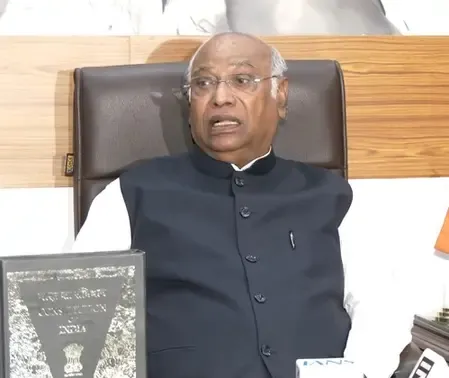
Congress President Mallikarjun Kharge posted on X on 21 October 2026 condemning fresh Manipur violence and demanding accountability from PM Modi and Home Minister Amit Shah .
Since May 2023 , more than 300 lives have been lost in Manipur and 24,530 people remain in relief camps, according to Kharge.
Suspected militants fired on 14 villagers at Khongbal Tangkhul, Kangpokpi district on 19 October ; 3 Meitei villagers were killed and 4 injured .
Three suspected militants were arrested; police recovered 12 firearms and 1,095 live rounds from the area.
Kharge raised questions about the fate of the Peace Committee formed by Amit Shah in June 2023 and action on the Supreme Court-appointed Justice Gita Mittal Committee recommendations.
The Supreme Court has flagged 31 unnatural deaths in Manipur relief camps, adding institutional pressure to the crisis.
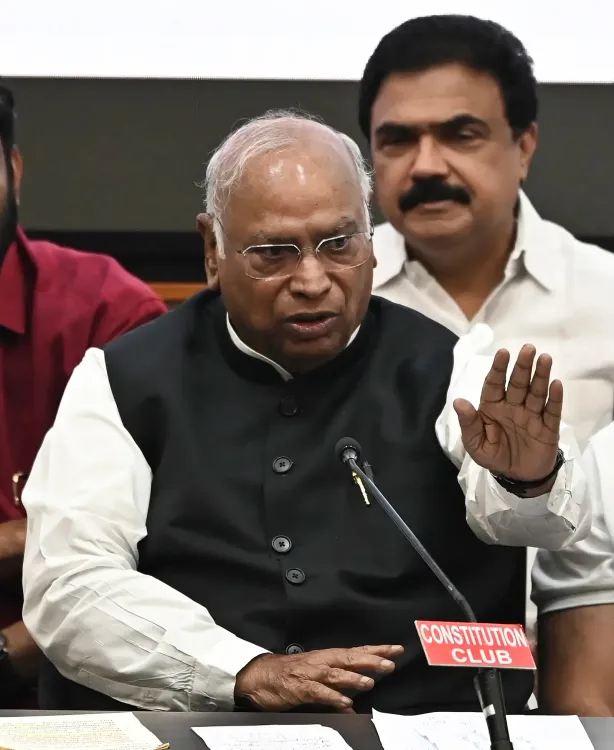
Congress President Mallikarjun Kharge on Wednesday, 21 October 2026, launched a sharp attack on the Bharatiya Janata Party (BJP) government over the deteriorating situation in violence-hit Manipur, demanding justice, dignity, constitutional rights, and lasting peace for the state. His remarks came days after fresh violence claimed four lives, deepening a crisis that has persisted since May 2023.
Kharge's Charges Against the BJP
In a post on X, Kharge stated that Manipur is bleeding again 'because of the BJP's incompetence,' calling the killing of four innocent civilians in the latest violence 'deeply condemnable' and extending condolences to the bereaved families. He cited grim statistics: since May 2023, more than 300 lives have been lost, and 24,530 people have been forced to live in relief camps in what he described as pathetic conditions.
Kharge directly targeted Prime Minister Narendra Modi, alleging that Modi 'did not even set foot in Manipur for nearly 29 months after violence erupted' and had 'abysmally failed' on assurances made in Parliament. He argued that the BJP's political interventions — including imposing President's Rule, replacing the Chief Minister, and reinstalling its own government — had yielded no peace.
Three Questions for PM Modi and Amit Shah
The Congress President posed three pointed questions to Prime Minister Narendra Modi and Home Minister Amit Shah. First, he asked what had happened to the Peace Committee constituted by Shah in June 2023. Second, he sought to know what action had been taken on the recommendations of the Supreme Court-appointed Justice Gita Mittal Committee. Third, he questioned why thousands of people remain displaced even as the Supreme Court had flagged 31 unnatural deaths in relief camps.
'After more than three years, over 300 deaths, President's Rule and a change of Chief Minister, who will take responsibility for this monumental failure of governance?' Kharge asked, adding: 'How many more innocent lives must be lost before the Prime Minister and Home Minister act?'
The Kangpokpi Firewood Attack
The political salvo came against the backdrop of fresh violence. According to a Manipur Police statement, suspected armed militants opened fire on a group of approximately 14 villagers who had gone to collect firewood at Khongbal Tangkhul, under Sagolmang police station in Kangpokpi district, on 19 October. Three villagers belonging to the Meitei community succumbed to bullet injuries, while four others were injured. Separately, one person was killed and several injured in clashes between members of two communities in Thoubal district on 18 October, prompting authorities to impose prohibitory orders in two affected areas.
Security Response and Arms Recovery
Manipur Police, in coordination with central security forces, have intensified joint search and intelligence-based operations in the aftermath, leading to the arrest of three suspected militants. Additional Director General of Police (Law and Order/Intelligence) Lhari Dorje told reporters that preliminary investigation revealed two of the three arrested persons reportedly admitted to being part of the assault team, with further investigation underway.
Based on disclosures by the accused, 12 firearms and 1,095 live rounds of various calibres were recovered from mountainous terrain. The arms haul included an INSAS rifle, an M16 rifle, an A1 rifle, an AK-47-type rifle, a 7.62 mm sniper rifle, a Heckler and Koch 5.56 mm rifle, three 12-bore single-barrel guns, a lethod gun, and a handmade rocket launcher, among others.
Broader Context and What's Next
This is the Nth chapter in a crisis that has made Manipur one of India's most prolonged internal security emergencies. The state's position as a strategically vital border territory — sharing frontiers with Myanmar, Nagaland, Assam, and Mizoram — adds a national security dimension to what critics argue is unresolved ethnic conflict between the Meitei and Kuki-Zo communities. The Supreme Court's continued monitoring and the unresolved status of the Justice Gita Mittal Committee's recommendations mean institutional pressure on the Centre is unlikely to ease. How quickly the arrested militants are prosecuted — and whether the Peace Committee process is revived — will signal whether this latest crackdown translates into durable calm.
Point of View
The Gita Mittal recommendations, the Supreme Court's unnatural-deaths flag) that the Centre has not publicly answered. The BJP's instinct to treat Manipur as a law-and-order problem, solved by President's Rule and a chief ministerial swap, has plainly not worked; the state is on its fourth season of killing. What is missing from both the government's response and the opposition's charge sheet is a credible ethnic reconciliation framework — without which each security operation merely pauses the next cycle of violence.
NationPress
21 Oct 2026
Frequently Asked Questions
Why has Congress President Kharge criticised the BJP over Manipur?
Kharge criticised the BJP following fresh militant violence in Kangpokpi district that killed four civilians, arguing the party's political manoeuvres — including President's Rule and a chief ministerial change — have failed to restore peace. He cited over 300 deaths and 24,530 people still displaced in relief camps since May 2023 as evidence of governance failure.
What happened in the Kangpokpi firewood attack on 19 October?
Suspected armed militants opened fire on a group of around 14 villagers collecting firewood at Khongbal Tangkhul under Sagolmang police station in Kangpokpi district on 19 October. Three Meitei community members died of bullet injuries and four others were wounded, according to a Manipur Police statement.
What is the Justice Gita Mittal Committee and why is it relevant?
The Justice Gita Mittal Committee was appointed by the Supreme Court to examine the situation in Manipur amid the ongoing ethnic conflict. Kharge questioned what action the government had taken on its recommendations, pointing to unresolved displacement and the Supreme Court's flagging of 31 unnatural deaths in relief camps.
What arms were recovered following the Kangpokpi attack?
Following the arrest of three suspected militants, police recovered 12 firearms and 1,095 live rounds from mountainous areas. The haul included an INSAS rifle, an M16 rifle, an AK-47-type rifle, a 7.62 mm sniper rifle, a Heckler and Koch 5.56 mm rifle, and a handmade rocket launcher, among others.
How long has the Manipur crisis been going on?
The current cycle of ethnic violence in Manipur began in May 2023. Since then, more than 300 people have reportedly been killed and over 24,500 have been displaced to relief camps, making it one of India's most prolonged internal security crises in recent years.