When the Door to Dialogue is Open, Is a Strike Necessary?
Synopsis
In Karnataka, the NFITU distances itself from the nationwide Bharat Bandh organized by trade unions and farmers. While the strike protests perceived anti-labour policies, NFITU's president advocates for dialogue and supports recent labour reforms. This article examines the implications of the strike and the responses from different stakeholders.
Key Takeaways
NFITU distances itself from the Bharat Bandh.
Emphasis on dialogue over strikes.
Support for recent labour reforms by the government.
Concerns raised about anti-labour policies.
Potential disruptions in key services during the strike.
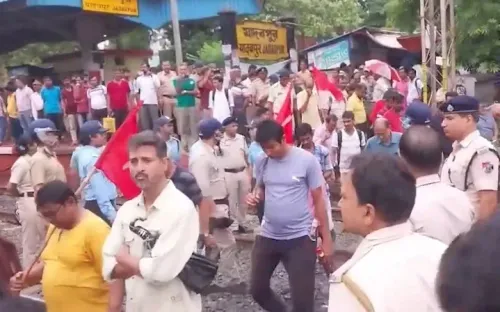
Bengaluru, Feb 12 (NationPress) As ten central trade unions and farmers' organizations participate in a nationwide strike and Bharat Bandh on Thursday to protest against what they label as the Centre’s “anti-labour” policies, the National Front of Indian Trade Unions (NFITU) in Karnataka has explicitly distanced itself from this movement.
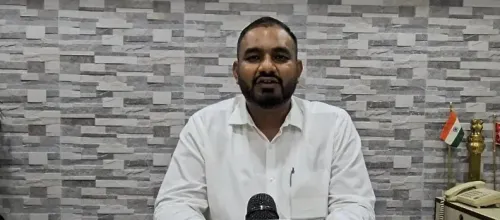
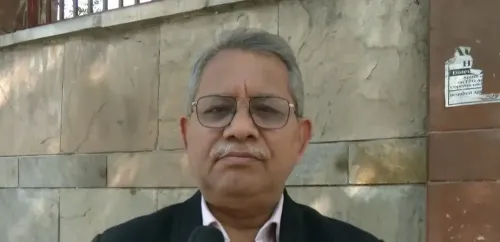
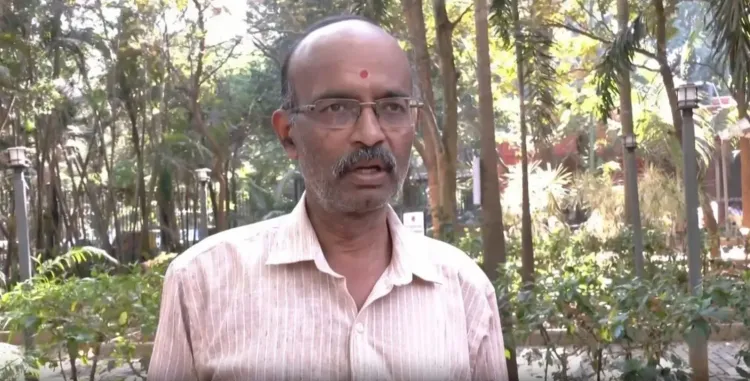
The state president of the organization, V. Venkatesh, claimed that the strike is politically driven and affirmed that his union would not participate.
This national Bharat Bandh aims to challenge policies that unions argue are detrimental to workers, farmers, and favor corporate interests.
Led by a coalition of ten central trade unions and supported by farmers’ organizations, student groups, and youth associations, the strike aims to draw attention to concerns regarding the four Labour Codes, the proposed Electricity Bill 2025, the Seed Bill 2025, and worries related to recent free trade agreements and the VB-G RAM G Act.
Key demands from the protesting groups include restoring the Old Pension Scheme and ensuring guaranteed minimum wages for workers across all sectors.
V. Venkatesh shared with IANS that the labour reforms introduced by the Union government are meant to benefit workers, not harm them.
“We have instructed all affiliated trade unions to refrain from participating in the strike. Unions that align with us will continue working on Thursday,” he stated, also accusing certain political factions, particularly Leftist parties, of politicizing labour issues.
The Karnataka NFITU president expressed strong endorsement for the four labour codes initiated by the Centre and praised Prime Minister Narendra Modi, Union Labour Minister Mansukh Mandaviya, and Labour Secretary Vandana Gurnani, asserting that the new codes are crafted with the welfare of workers in mind.
He pointed out the implementation of the Wage Code, which had been pending for years, emphasizing that its uniform application across the nation is a significant advancement.
Venkatesh also mentioned his meeting with Union Labour Minister Mansukh Mandaviya on January 16, where he requested an increase in the provident fund contribution limit.
Moreover, he expressed support for the fixed-term trainee employment system, explaining that previously, trainees often lost their jobs post-training.
Now, according to him, the Centre ensures that employees who complete their training period are entitled to gratuity benefits, which he described as a major advantage for workers.
Regarding the strike, Venkatesh questioned its necessity, stating, “Why should we engage in politics? The minister himself has stated that we should convene and discuss. If the door to dialogue is open, what is the reason for a strike?”
He further alleged that the Union Labour Minister had invited trade unions for discussions, but some unions opted to walk away from these talks.
Venkatesh also claimed that participation in the strike would not be widespread across sectors.
He indicated that many public sector undertakings and private enterprises are likely to remain operational. He noted that certain labour groups, particularly those associated with Left-wing political organizations, may take part, but the strike could lack broad support.
Meanwhile, the Joint Forum of Central Trade Unions has reiterated its call for the nationwide strike on Thursday, accusing the Centre of enacting policies that negatively impact workers' rights and livelihoods.
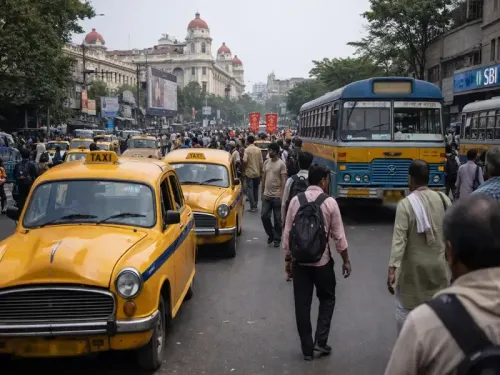
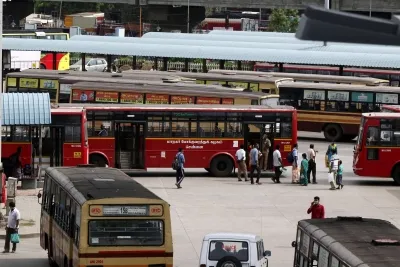
The Bharat Bandh is anticipated to cause partial disruptions across key services, including banking, insurance, electricity supply, transportation, healthcare, education, gas distribution, and water supply services in various regions.
Point of View
The events surrounding the Bharat Bandh highlight a critical juncture in labour relations in India. The NFITU's stance encourages constructive dialogue rather than confrontation, suggesting a need for collaborative approaches in addressing workers' concerns. This reflects a broader trend towards seeking resolution through communication within the labour landscape.
NationPress
20 Sept 2026
Frequently Asked Questions
What is the Bharat Bandh?
The Bharat Bandh is a nationwide strike called by trade unions and farmers' organizations to protest against government policies perceived as anti-labour.
Why is NFITU not participating in the strike?
NFITU's president, V. Venkatesh, claims the strike is politically motivated and emphasizes the importance of dialogue with the government.
What are the key demands of the protesting unions?
The unions are demanding the restoration of the Old Pension Scheme and the implementation of minimum wages for workers across various sectors.
What impact is the Bharat Bandh expected to have?
The Bharat Bandh is anticipated to cause partial disruptions in services like banking, transportation, and healthcare across different regions.
What are the four Labour Codes?
The four Labour Codes are a set of reforms aimed at simplifying and modernizing India's labour laws to benefit workers.