Do Delhi-NCR Trade Union Leaders Support Government Reforms or Is Bharat Bandh Politically Motivated?
Synopsis
As a Bharat Bandh unfolds nationwide against the Central government's policies, Delhi-NCR union leaders defend the government's reforms, calling the strike politically motivated. This article explores the contrasting viewpoints from union leaders and the implications of the ongoing protests.
Key Takeaways
Trade unions are facing internal conflicts regarding their role in political matters.
The Bharat Bandh highlights the ongoing tension between unions and government policies.
Supporters of reforms argue they will benefit millions of workers.
Critics claim the protests are not solely about worker rights.
Reforms are seen as necessary adaptations to a changing economy.
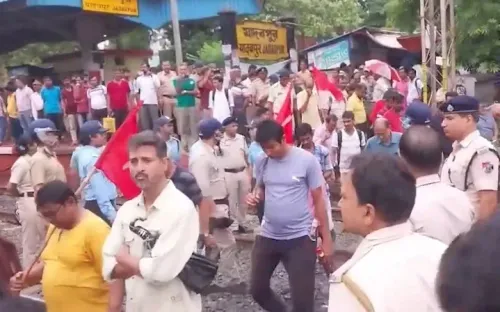
New Delhi, Feb 12 (NationPress) A nationwide Bharat Bandh is underway, led by various unions protesting against what they claim are anti-worker, anti-farmer, and pro-corporate policies of the Central government. However, leaders and legal advisors from several organizations in the Delhi-NCR region have expressed their backing for the government’s recently introduced laws, labeling the strike as misguided and politically driven.
The strike is spearheaded by a coalition of 10 central trade unions and has garnered support from farmers’ groups, students, and youth organizations. The focus of the protest includes issues surrounding the four Labour Codes, the Electricity Bill 2025, the Seed Bill 2025, and apprehensions regarding recent free trade agreements.
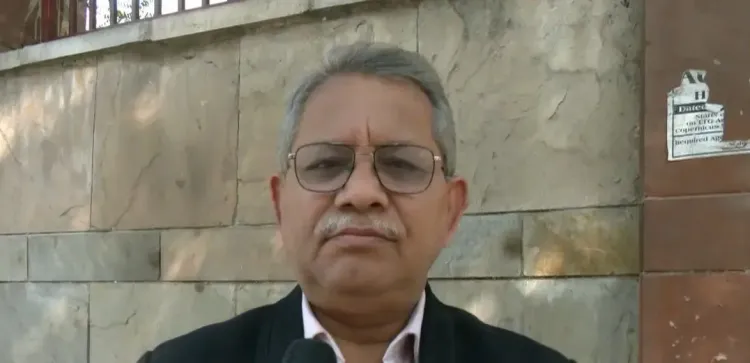
In an interview with IANS, Sheo Prasad Tiwari, the National General Secretary of the Trade Union Coordination Centre (TUCC), criticized the bandh, asserting that trade unions should prioritize the welfare and rights of workers rather than engaging in political disputes. “Trade unions are meant to advocate for the rights and facilities for workers. There has been a persistent demand for minimum wages and social security, which the government is addressing through new regulations; thus, this strike is misguided,” Tiwari stated.
He further claimed that the strike was motivated by political agendas, arguing that the government’s initiatives have been commendable and that only politically affiliated unions have raised opposition.
Tiwari also dismissed the allegations made by political parties as unfounded, adding that the frequent strikes over the past decade have adversely affected the working class. “The political parties have significantly harmed the working class through their numerous strikes in the last ten years,” he remarked.
In Ghaziabad, Uttar Pradesh, Girish Chandra Arya, the former All India Secretary and Financial Sector In-charge of the Bharatiya Mazdoor Sangh (BMS), echoed similar sentiments, stating that the labour codes were the result of extensive consultations and designed to benefit millions of workers. “The ongoing strike is called by those who oppose the benefits these codes bring. These laws were not enacted overnight; extensive discussions with industrialists and traders took place. They will benefit approximately 44 crore individuals,” Arya explained.
He emphasized the need for reforms in line with contemporary demands, arguing that opposition to the labour codes aims to hinder progress. “If we don’t adapt to changing times, we risk being left behind. It is unclear what the dissenters wish to achieve; their actions seem aimed at regressing the nation,” he asserted.
Arya highlighted that the previous 29 labour laws were antiquated, originating from colonial times, and were no longer suitable for today’s economy. “The 29 outdated laws were established during colonial rule and are now irrelevant. During that era, there were no gig workers like those in Ola and Uber, so who would address their issues? The new labour codes include provisions for them, ensuring social security for around 44 crore workers,” he concluded, reiterating that the strike is politically motivated.
Point of View
It is essential to present a balanced perspective on the ongoing protests. While many unions voice concerns over government policies, the support from leaders in Delhi-NCR showcases a divide in opinion. It is vital to explore all sides to foster understanding and dialogue, aligning with our commitment to fair reporting.
NationPress
23 Sept 2026
Frequently Asked Questions
What is the Bharat Bandh about?
The Bharat Bandh is a nationwide protest against policies that unions claim are anti-worker, anti-farmer, and pro-corporate.
Why do some leaders support the government's reforms?
Leaders argue that the government's laws, including the Labour Codes, are beneficial for workers and were developed after extensive consultations.
What do the protesting unions advocate for?
Protesting unions aim to highlight issues related to labour rights, minimum wages, and social security.
Is the Bharat Bandh politically motivated?
Some leaders claim the strike is politically driven and does not genuinely represent workers' interests.
How many workers could benefit from the new Labour Codes?
Approximately 44 crore workers are expected to benefit from the reforms introduced in the new Labour Codes.