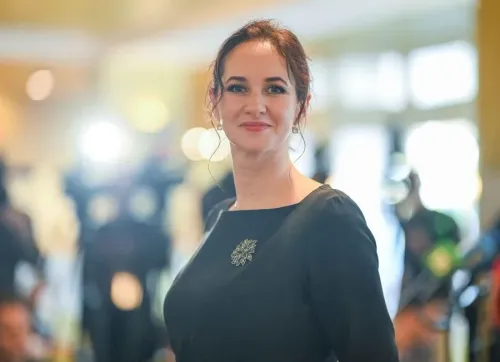
Inga Ruginiene resigns as Lithuania's PM after nine months in office
Synopsis
Lithuania's Prime Minister Inga Ruginiene stepped down after just nine months in office, with her cabinet unanimously backing the move. Rather than exit politics, she is expected to return as Labour Minister under the incoming Social Democrat-led coalition — a rare pivot that underscores how structured, rather than fractious, this transition actually is.
Key Takeaways
Inga Ruginiene resigned as Lithuania’s Prime Minister on 23 June after approximately nine months in office.
The outgoing cabinet unanimously approved the resignation resolution at its final meeting in Vilnius .
President Gitanas Nauseda must submit a PM candidate to parliament within 15 days ; the incoming premier then has 15 more days to present a cabinet.
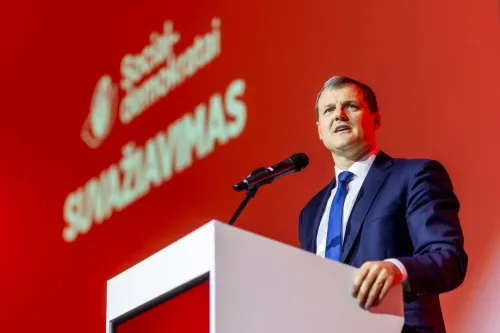
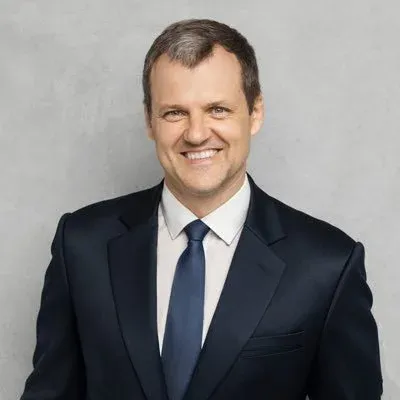
Social Democratic leader Mindaugas Sinkevicius has been nominated as the next Prime Minister.
The new coalition includes the Union of Democrats ‘For Lithuania’ , the Social Democrats , and the Lithuanian Farmers, Greens and Christian Families Union .
Ruginiene is expected to serve as Minister of Social Security and Labour in the incoming government.
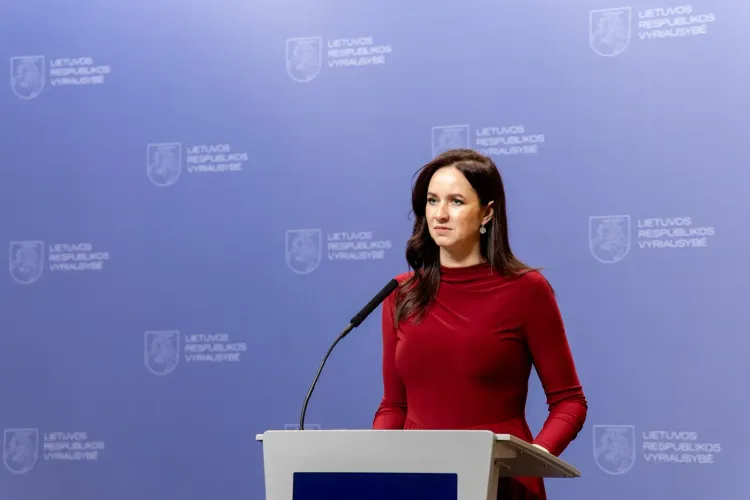
Inga Ruginiene stepped down as Lithuania's Prime Minister on Tuesday, 23 June, ending a tenure of just over nine months. The outgoing cabinet convened for its final meeting in Vilnius, during which ministers unanimously passed a resolution formalising their resignation. The decision marks the start of a structured transition under the country's coalition agreement.
Final Cabinet Meeting and Ruginiene's Remarks
At the concluding cabinet session, Ruginiene acknowledged the collective effort of her ministers. “Despite all the difficulties, we have much to be proud of, and each of you has made a significant contribution to the welfare of our state and the improving lives of our people,” she said. She added: “Today we take the decision to resign and return the government’s powers to the President of the Republic.”
Speaking to reporters after the meeting, Ruginiene offered a candid reflection on her time in office. “In politics you can learn many things – how to look good, how to speak fluently – but you cannot learn courage or humanity,” she said, according to Lithuanian public broadcaster Lithuanian Radio and Television (LRT). She credited empathy, the willingness to listen, and the courage to act as the qualities that guided her through difficult decisions.
Ruginiene also addressed perceptions that she did not conform to a conventional image of leadership, saying she had never believed a prime minister should be “built as per someone else’s ready-made template.” She rejected suggestions that she was being sacrificed by her own party, describing the transition as a normal part of the political process.
What Happens Next: The Transition Timeline
The resignation resolution was handed to President Gitanas Nauseda on Tuesday. Under constitutional procedure, Nauseda will ask the outgoing cabinet to continue in a caretaker capacity until a new government is formed. The President must submit a candidate for Prime Minister to parliament within 15 days.
Social Democratic leader Mindaugas Sinkevicius has been nominated for the Prime Minister’s post. Once parliament approves the nomination, the incoming prime minister will have up to 15 additional days to present a full cabinet and government programme for parliamentary endorsement.
Coalition Composition and Ministerial Changes
The incoming ruling majority comprises three parties: the Union of Democrats “For Lithuania”, the Social Democrats, and the Lithuanian Farmers, Greens and Christian Families Union. At least four ministerial portfolios are set to change hands under the coalition agreement. The Democrats will assume the agriculture, energy, and health ministries, while the Social Democrats will take the environment portfolio.
Notably, Ruginiene herself is expected to return to government in a different capacity — as Minister of Social Security and Labour in the incoming cabinet, a role she held before becoming Prime Minister.
Ruginiene’s Background and Path to Office
Ruginiene assumed the role of Prime Minister in September 2025, having previously served as Minister of Social Security and Labour in Lithuania’s 19th government. Her career spans senior trade union leadership, including stints as President of the Lithuanian Trade Union Confederation, Vice President of the European Trade Union Confederation (ETUC), and Vice President of the International Trade Union Confederation – European Region (ITUC-PERC). She has been a member of Lithuania’s Parliament (Seimas) since 2024.
With her resignation formalised and a successor already nominated, Lithuania’s political transition is expected to move swiftly within the constitutionally mandated timeframe.
Point of View
Not a liability to be shed. The more consequential question is whether Sinkevicius can hold together a three-party coalition in a security environment where the Baltic states face sustained pressure. Lithuania’s domestic politics rarely make global headlines, but its defence posture and NATO commitments mean the stability of its government carries weight well beyond Vilnius.
NationPress
22 Sept 2026
Frequently Asked Questions
Why did Inga Ruginiene resign as Lithuania's Prime Minister?
Ruginiene resigned on 23 June as part of a structured political transition under Lithuania's coalition agreement. She described the move as a normal part of the political process and rejected suggestions that she was being pushed out by her own party.
Who will succeed Inga Ruginiene as Lithuania's Prime Minister?
Social Democratic leader Mindaugas Sinkevicius has been nominated for the Prime Minister’s post. President Gitanas Nauseda must submit the nomination to parliament within 15 days of receiving the resignation resolution.
How long will Lithuania's caretaker government be in place?
President Nauseda will ask the outgoing cabinet to continue in a caretaker capacity until a new government is formed. Once parliament approves the PM nominee, the incoming prime minister has up to 15 days to present a full cabinet and government programme.
What is the composition of Lithuania's new ruling coalition?
The incoming majority comprises three parties: the Union of Democrats ‘For Lithuania’, the Social Democrats, and the Lithuanian Farmers, Greens and Christian Families Union. At least four ministerial portfolios will change hands under the coalition agreement.
What role will Ruginiene play in the new government?
Ruginiene is expected to serve as Lithuania’s Minister of Social Security and Labour in the incoming cabinet — the same portfolio she held before becoming Prime Minister in September 2025.