Lucknow court jails three 10 years for Alprazolam drug trafficking

Synopsis
A Lucknow court has sentenced three Barabanki residents to 10 years each for trafficking 500 grams of Alprazolam — a prescription anxiety drug increasingly misused in north India. The NCB's case, built by tracing the full supply chain from Mathura through Lucknow to Barabanki, signals the agency's sharper focus on pharmaceutical drug networks.
Key Takeaways
A Lucknow court convicted Mohd.
Raj , Mohammad Shafeek , and Jangli alias Haseen on Thursday, 16 October 2026 .
Each convict was sentenced to 10 years of imprisonment and fined ₹1 lakh .
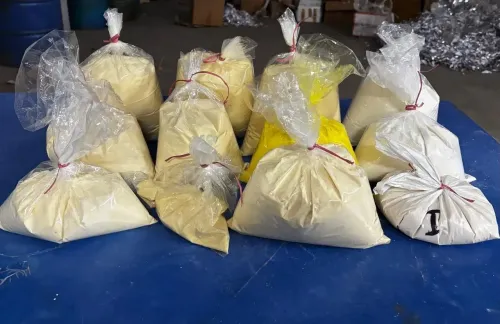
The case involved the seizure of 500 grams of Alprazolam , a psychotropic substance, by the NCB Lucknow Zonal Unit on 16 November 2022 .
The contraband was traced from Mathura , transported via Lucknow , and destined for Barabanki .
Citizens can report drug trafficking to the MANAS helpline at 1933 (toll-free); informer identity is kept confidential.
A Lucknow court on Thursday, 16 October 2026 convicted three men in a Narcotics Control Bureau (NCB) case involving the seizure of 500 grams of the psychotropic drug Alprazolam, sentencing each to 10 years of rigorous imprisonment and imposing a fine of ₹1 lakh per accused. The verdict, announced by the NCB on Friday, marks the culmination of an intelligence-led operation that first began in November 2022.
The Three Convicts
The convicted men — Mohd. Raj, Mohammad Shafeek, and Jangli alias Haseen — are all residents of Barabanki district in Uttar Pradesh. Their roles in the supply chain were distinct: Mohd. Raj was the carrier, Shafeek the intended receiver, and Jangli alias Haseen a co-receiver, according to the NCB's investigation findings.
How the Case Began
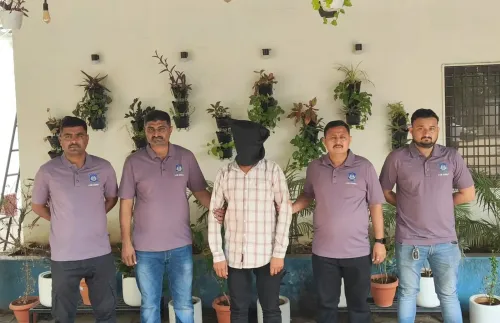
On 16 November 2022, the NCB Lucknow Zonal Unit, acting on specific intelligence, intercepted Mohd. Raj near Bhaisa Kund, Baikunth Dham in Lucknow shortly after he had alighted from a bus. A search of his bag led to the recovery of 500 grams of Alprazolam, a prescription benzodiazepine most commonly used for managing anxiety disorders including panic disorder and generalised anxiety disorder (GAD), but classified as a psychotropic substance under India's narcotics laws when trafficked without authorisation.
Uncovering the Supply Chain
Subsequent investigation established that the contraband had originated from Mathura and was being routed through Lucknow to Barabanki. The NCB built a case linking all three accused to different nodes of the same drug supply network. The court additionally found that the seized Alprazolam was intended for sale — a factor that weighed on the severity of the sentence. Notably, this is among the NCB Lucknow Zonal Unit's successful prosecutions involving commercial quantities of psychotropic substances, underlining the agency's sustained push against pharmaceutical drug trafficking, a segment that law enforcement has flagged as a growing concern in north India.
What the NCB Said
The NCB said the conviction 'underscores the importance of intelligence-led operations, sustained investigation and effective prosecution in bringing drug traffickers to justice.' The agency reiterated its commitment to dismantling drug trafficking networks by identifying all individuals involved across the supply chain. Citizens can report drug trafficking information to the MANAS National Narcotics Helpline at 1933 (toll-free); the NCB has assured that informer identities are kept strictly confidential.
What Happens Next
With the sentencing now delivered, legal observers will watch whether any of the three convicts file appeals in a higher court. The case also opens a lens on the trafficking of prescription psychotropics — a category that has seen increased NCB scrutiny in recent years. The agency's continued focus on supply-chain mapping, rather than just arresting street-level carriers, is likely to produce further prosecutions in the pipeline.
Point of View
From the Mathura source to the Barabanki receivers, reflects a strategic shift away from catching carriers and toward dismantling networks. Pharmaceutical drug trafficking, particularly of prescription psychotropics like Alprazolam, has grown in north India precisely because it is harder to detect than traditional narcotics. A successful chain-prosecution like this one, if replicated, could meaningfully disrupt that segment. The real test, however, is whether sentencing at this level deters traffickers or simply reshuffles the supply chain to new actors.
NationPress
16 Oct 2026
Frequently Asked Questions
What did the Lucknow court decide in the NCB Alprazolam trafficking case?
The Lucknow court convicted all three accused — Mohd. Raj, Mohammad Shafeek, and Jangli alias Haseen — sentencing each to 10 years of imprisonment and a fine of ₹1 lakh. The verdict came on Thursday, 16 October 2026, following a case that began with an NCB interception in November 2022.
What is Alprazolam and why is its trafficking illegal?
Alprazolam is a prescription benzodiazepine commonly used to manage anxiety disorders such as panic disorder and generalised anxiety disorder. When trafficked in commercial quantities without authorisation, it falls under India's psychotropic substances laws, making its distribution a serious criminal offence.
How did the NCB crack the Alprazolam supply chain?
The NCB Lucknow Zonal Unit intercepted Mohd. Raj near Bhaisa Kund in Lucknow on 16 November 2022 after he alighted from a bus. Investigation traced the drug from Mathura through Lucknow to Barabanki and established the distinct roles of all three accused in the network.
Who are the three men convicted in the Lucknow drug case?
The three convicts are Mohd. Raj, Mohammad Shafeek, and Jangli alias Haseen, all residents of Barabanki district in Uttar Pradesh. Mohd. Raj was the carrier, Shafeek the intended receiver, and Jangli alias Haseen a co-receiver in the supply chain.
How can citizens report drug trafficking to the NCB?
Citizens can report drug trafficking information to the MANAS National Narcotics Helpline at 1933, which is toll-free. The NCB has confirmed that the identity of all informers is kept strictly confidential.