Maharashtra to give govt jobs to wildlife attack victims' kin, plans rabbit farms

Synopsis
Maharashtra is offering permanent government jobs to families of wildlife attack victims — and setting up rabbit farms to keep tigers fed inside forests. With 55 fatalities recorded, 10 high-risk districts flagged, and a ₹260 crore action plan approved, the state's response to its escalating human-wildlife crisis is both unprecedented and unconventional.
Key Takeaways
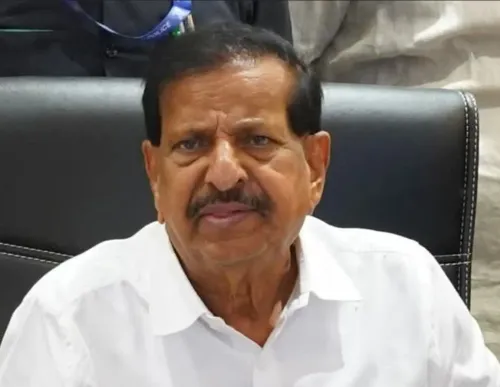
Maharashtra Forest Minister Ganesh Naik announced permanent government jobs for next of kin of citizens killed in wild animal attacks, pending state cabinet clearance.
Rabbit farms modelled on poultry farms will be set up to provide prey for carnivores within forest limits, alongside accelerated deer species breeding .
The state has recorded 55 wildlife-attack fatalities and identified 10 highly sensitive districts ; a ₹260 crore action plan has been approved.
A new Tadoba-style forest zone of 5,500 hectares will be developed in Nashik ; roughly 450 tigers to be redistributed over 42 months .
Emergency compensation will now be disbursed directly at the District Collector's level, bypassing Finance Department delays.
The announcements followed a tiger attack in Chandrapur district in which four women harvesting Tendu leaves were killed.
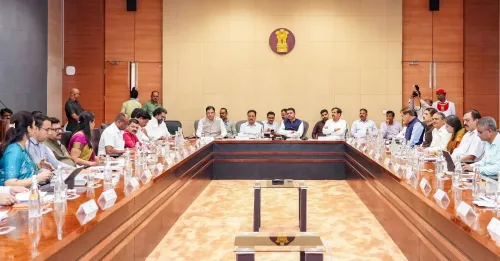
Maharashtra Forest Minister Ganesh Naik on Tuesday announced in the Legislative Assembly that the state government has drafted a proposal to provide permanent government jobs to the next of kin of citizens killed in wild animal attacks. The decision will take effect immediately upon receiving clearance from the state cabinet.
Key Announcements in the Assembly
In an unusual measure aimed at keeping carnivores within forest limits, Minister Naik also announced plans to set up rabbit farms modelled after poultry farms, alongside an aggressive fast-tracking of deer species breeding. The intent is to ensure predators find sufficient prey inside forest boundaries and do not stray into human settlements.
The announcements came during a discussion on a calling-attention motion raised by MLAs Atul Bhatkhalkar, Sudhir Mungantiwar, and others, triggered in part by a recent incident in Chandrapur district where four women harvesting Tendu leaves were killed by a tiger.
Scale of the Crisis
According to Minister Naik, 55 fatalities have been reported across the state due to wildlife attacks. The government has identified 10 highly sensitive districts and approved an action plan worth ₹260 crore to address the escalating conflict.
MLA Bhatkhalkar noted that human-wildlife conflict is no longer sporadic but has become an almost daily crisis across Maharashtra's forest-fringe communities.
Socio-Economic Dimension
Congress leader Vijay Wadettiwar highlighted the stark socio-economic divide, pointing out that while wealthy tourists pay thousands for a glimpse of tigers, poor residents living on forest fringes are losing their lives. Wadettiwar demanded that surplus tigers be relocated and that apex predator density be matched to each forest's actual carrying capacity.
Expansion of Forest Zones and Relocation Plan
In response, Minister Naik outlined a comprehensive expansion strategy. A new Tadoba-style forest zone spanning 5,500 hectares will be developed in Nashik to ease pressure on existing reserves. Over the next 42 months, several new sanctuaries will be established to systematically redistribute roughly 450 tigers.
Extensive bamboo plantations will serve as bio-fences to prevent animals from entering human settlements. Preparations are underway across Palghar, Thane, Raigad, Ratnagiri, Sindhudurg, Satara, Kolhapur, and parts of the Marathwada region.
Faster Compensation for Affected Families
Senior Bharatiya Janata Party (BJP) leader Sudhir Mungantiwar flagged bureaucratic delays in disbursing compensation, noting that families rarely receive relief within the mandated 30-day window due to slow fund releases from the Finance Department. He demanded the implementation of a Negative Authorisation system to bypass this bottleneck.
Minister Naik accepted the demand, announcing that emergency relief funds will henceforth be directly accessible at the District Collector's level — a structural change aimed at ensuring compensation reaches victimised families without administrative delays.
With the cabinet clearance pending and multiple policy shifts announced in a single session, the coming weeks will test whether Maharashtra can translate legislative intent into on-ground relief for its most vulnerable forest-fringe communities.
Point of View
While novel, sidesteps the harder question: why tiger density has been allowed to outpace forest carrying capacity in the first place. The ₹260 crore plan and the 42-month relocation timeline are credible on paper, but Maharashtra has a track record of announcing wildlife corridors that stall in land-acquisition disputes. The real test is whether District Collectors get the funds and authority they need before the next fatal attack makes headlines.
NationPress
22 Sept 2026
Frequently Asked Questions
What has the Maharashtra government announced for families of wildlife attack victims?
The Maharashtra government has drafted a proposal to provide permanent government jobs to the next of kin of citizens killed in wild animal attacks. The measure will be implemented immediately once cleared by the state cabinet.
Why is Maharashtra planning rabbit farms near forests?
The state plans to set up rabbit farms modelled on poultry farms to ensure carnivores such as tigers find sufficient prey within forest boundaries and do not stray into human settlements. Accelerated deer breeding is also part of the same prey-augmentation strategy.
How severe is the human-wildlife conflict in Maharashtra?
According to Forest Minister Ganesh Naik, 55 fatalities have been reported across the state due to wildlife attacks. The government has identified 10 highly sensitive districts and approved a ₹260 crore action plan to address the crisis.
What is the plan for managing Maharashtra's tiger population?
Over the next 42 months, the state will establish new sanctuaries to redistribute roughly 450 tigers. A new 5,500-hectare Tadoba-style forest zone will be developed in Nashik, and bamboo plantations will serve as bio-fences in districts including Palghar, Thane, Raigad, and parts of Marathwada.
How will compensation delays for wildlife attack victims be fixed?
Emergency relief funds will now be directly accessible at the District Collector's level, bypassing the Finance Department bottleneck that had caused families to miss the mandated 30-day compensation window. The change follows a demand by BJP leader Sudhir Mungantiwar for a Negative Authorisation system.