Maharashtra Cabinet mandates BEST prepaid meters, composite billing for Mumbai govt offices
Synopsis
The Fadnavis Cabinet's Tuesday decisions go well beyond a billing upgrade — mandating prepaid electricity for all Mumbai government offices by April 2026 while simultaneously expanding a key farm welfare scheme to cover all family members and new accident categories, sanctioning ₹200 crore, and creating new RTI and judicial posts statewide.
Key Takeaways
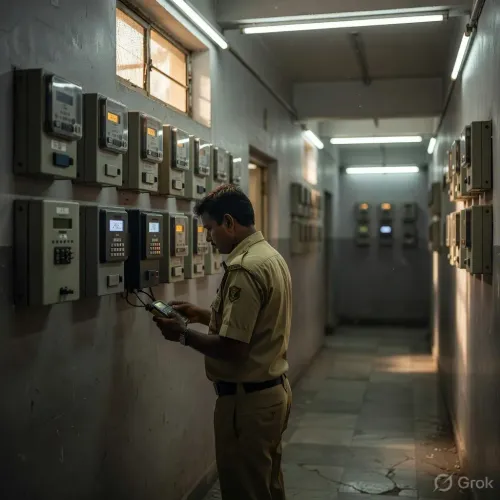
The Maharashtra Cabinet approved a BEST Composite Billing System with prepaid meters for all Mumbai state government and BMC offices, effective 1 April 2026 .
The system covers 10,017 BEST consumers across 322 groups and 869 state government consumers across 104 groups .
Auto-debit will eliminate interest penalties of 12–15 per cent currently levied on delayed payments.
The Gopinath Munde Shetkari Apghat Suraksha Sanugrah Anudan Yojana has been extended to 31 March 2031 with ₹200 crore sanctioned; coverage expanded to all family members aged 10–75 years .
Three temporary Additional State Information Commissioner posts created for three years to clear RTI second-appeal backlogs at Brihanmumbai, Nashik, and Amravati benches.
New courts and judicial posts sanctioned in Sillod, Chandwad, Kinwat, Kej , and Pimpri Chinchwad .
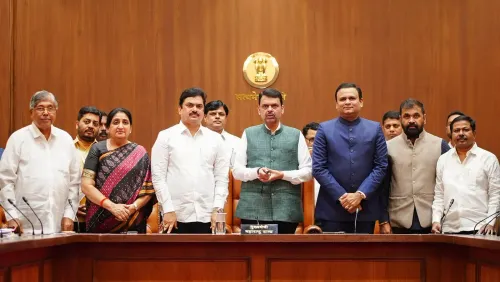
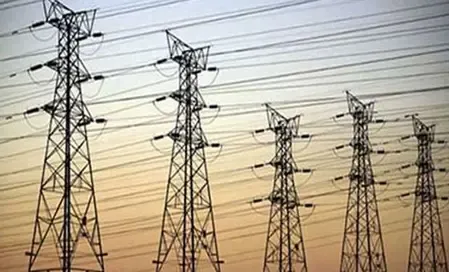
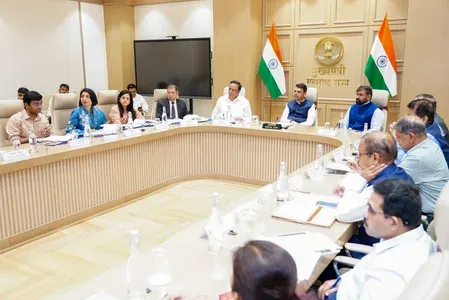
The Maharashtra Cabinet, chaired by Chief Minister Devendra Fadnavis, on Tuesday, 4 August approved the rollout of a Composite Billing System by the Brihanmumbai Electric Supply and Transport (BEST) Undertaking for all state government and Brihanmumbai Municipal Corporation (BMC) offices in Mumbai. All government electricity connections will transition to a prepaid mode starting 1 April 2026, in a move aimed at eliminating chronic payment delays and interest penalties.
How the Composite Billing System Works
All departments are required to complete registration on the composite billing portal and verify connection data within 30 days. The Finance Department will frame advance fund allocation procedures, while the Energy Department will conduct quarterly reconciliations to keep accounts current.
A single dashboard will provide Management Information Systems (MIS) data covering real-time consumption, outstanding dues, and transaction histories. The auto-debit facility is designed to eliminate payment delays, interest penalties currently running at 12–15 per cent, and late fees. Tariff discounts under the 'Go Green' initiative and prepaid usage schemes will also be applicable, according to the government release.
Scale of the Rollout
The system will immediately benefit 10,017 consumers across 322 groups under BEST's authorised code system, along with 869 state government consumers across 104 groups. Implementation will proceed in four phases: departmental registration, consumer verification, fund allocation, and system 'Go-Live'.
Farmers' Accident Scheme Extended and Expanded
The Cabinet also approved a three-year extension for the Gopinath Munde Shetkari Apghat Suraksha Sanugrah Anudan Yojana (Farmers' Accident Protection Scheme), extending its validity to 31 March 2031. The scheme's scope has been broadened to include landless agricultural labourers working directly on farms and women farmers holding a certificate under the Maharashtra Women Farmers Empowerment Act, 2026, along with their family members.
Previously capped at two members per household, coverage now extends to all family members aged 10 to 75 years. New causes of death or disability — including internal bleeding from accidents and heat strokes — have been added alongside existing coverage for lightning, floods, snakebites, scorpion bites, electric shock, and vehicular accidents. Financial aid ranges from ₹1 lakh to ₹2 lakh. An Integrated Online Portal will disburse assistance directly via Direct Benefit Transfer (DBT). The Cabinet sanctioned ₹200 crore for implementation of the expanded scheme.
RTI Backlog and New Courts
To address a growing backlog of second appeals under the Right to Information (RTI) Act, the Cabinet approved three temporary posts of Additional State Information Commissioners for a period of three years, to be posted at the Brihanmumbai, Nashik, and Amravati benches. A total of 18 support posts have been sanctioned across the three benches.
Additionally, to decentralise legal infrastructure and reduce case pendency, the Cabinet sanctioned new courts, public prosecutor offices, and judicial posts across multiple districts including Sillod (Chhatrapati Sambhajinagar District), Chandwad (Nashik District), Kinwat (Nanded District), Kej (Beed District), and Pimpri Chinchwad (Pune District).
Taken together, Tuesday's Cabinet decisions represent one of the more wide-ranging administrative overhauls the Fadnavis government has pushed through in a single sitting — with implications for utility governance, farm welfare, transparency, and judicial access.
Point of View
And a composite billing portal is only as effective as the fund allocation discipline behind it. The simultaneous expansion of the Gopinath Munde scheme is politically significant ahead of rural electoral cycles, but broadening eligibility without a proportional increase in administrative capacity risks turning the ₹200 crore outlay into a disbursement bottleneck. The RTI commissioner appointments address a genuine pendency crisis, yet three temporary posts across a state of 130 million people signals a structural fix is still being deferred.
NationPress
19 Sept 2026
Frequently Asked Questions
What is the BEST Composite Billing System approved by the Maharashtra Cabinet?
It is a unified electricity billing and payment platform mandated for all state government and BMC offices in Mumbai, approved on 4 August by the Maharashtra Cabinet. All connections will switch to prepaid mode from 1 April 2026, with a single dashboard for real-time consumption data, auto-debit payments, and quarterly reconciliations by the Energy Department.
How many government offices will be covered under the new BEST billing system?
The system will cover 10,017 BEST consumers across 322 groups and 869 state government consumers across 104 groups. Rollout will happen in four phases: departmental registration, consumer verification, fund allocation, and system Go-Live.
What changes have been made to the Gopinath Munde Farmers' Accident Protection Scheme?
The scheme has been extended by three years to 31 March 2031 and its eligibility broadened to include landless agricultural labourers and women farmers under the Maharashtra Women Farmers Empowerment Act, 2026. Coverage now extends to all family members aged 10–75 years — up from a previous cap of two members per household — and new causes such as internal bleeding and heat strokes have been added. The Cabinet sanctioned ₹200 crore for the expanded scheme.
Why has Maharashtra created new Additional State Information Commissioner posts?
The three temporary posts were created to clear a growing backlog of RTI second appeals, with one commissioner each at the Brihanmumbai, Nashik, and Amravati benches for a period of three years. A total of 18 support posts have also been sanctioned to assist the new commissioners.
Which districts will get new courts under the Maharashtra Cabinet's latest decisions?
New courts, public prosecutor offices, and judicial posts have been sanctioned in Sillod (Chhatrapati Sambhajinagar District), Chandwad (Nashik District), Kinwat (Nanded District), Kej (Beed District), and Pimpri Chinchwad (Pune District), aimed at decentralising legal infrastructure and reducing case pendency.