MSRTC land development: Maharashtra Cabinet exempts 213 sites from PPP policy
Synopsis
Maharashtra has quietly unlocked one of India's largest state-owned land banks. By exempting MSRTC from its own March 2026 PPP policy, the Fadnavis Cabinet has fast-tracked redevelopment of 213 prime sites across 3,500 acres — with a 49+49-year lease model that keeps ownership with the state while letting private capital build the infrastructure. The escrow ring-fence and multimodal hub vision signal this is more than a revenue play.
Key Takeaways
The Maharashtra Cabinet on 14 July exempted MSRTC from the state's March 2026 PPP policy to fast-track land redevelopment.
213 prime locations out of MSRTC's 850-site, 3,500-acre land bank are cleared for commercial and residential development.
A 49 + 49-year lease model ensures land ownership stays permanently with MSRTC.
A Transport Minister-led high-level committee will oversee all redevelopment decisions.
Revenues from viable projects will flow into an escrow account to fund other MSRTC development projects.
A separate Cabinet decision levies a ₹100 per metric ton fee on minor minerals entering Maharashtra from neighbouring states.
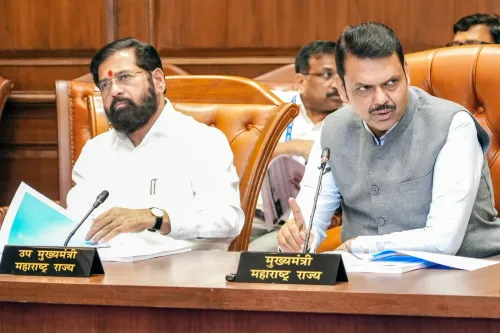
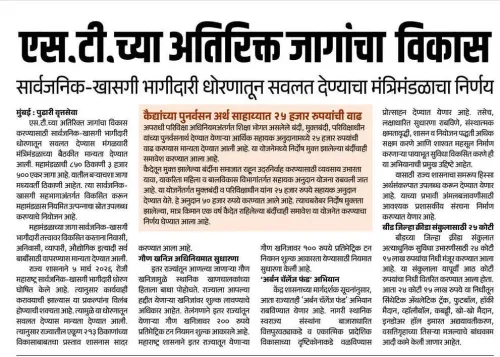
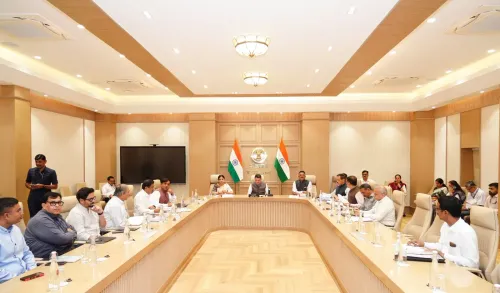
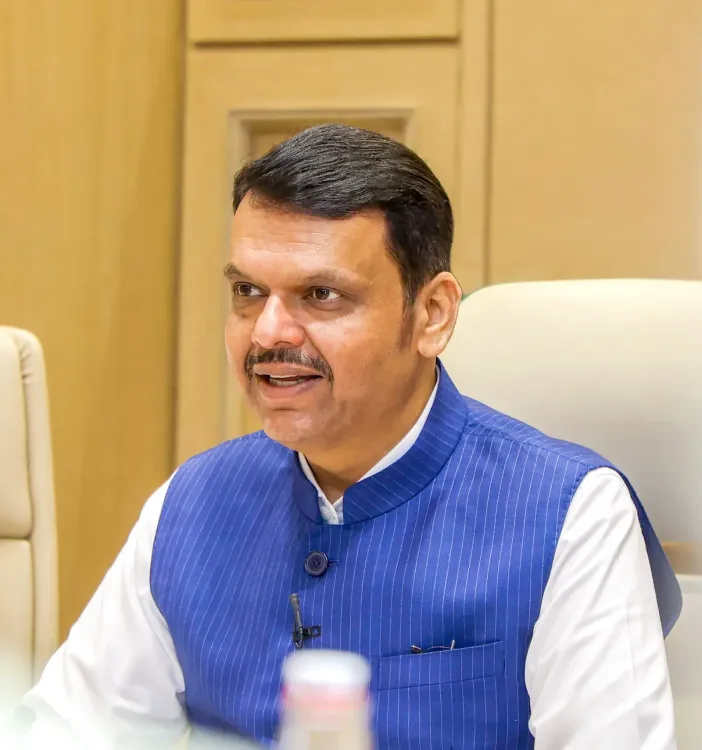
The Maharashtra Cabinet, chaired by Chief Minister Devendra Fadnavis on Tuesday, 14 July, exempted the Maharashtra State Road Transport Corporation (MSRTC) from the stringent provisions of the state's March 2026 PPP policy, clearing the path for commercial and residential development across 213 prime locations. The move is designed to eliminate administrative bottlenecks that had stalled monetisation of MSRTC's vast land bank — spanning 850 locations and 3,500 acres of prime real estate across Maharashtra.
What the Cabinet Decided
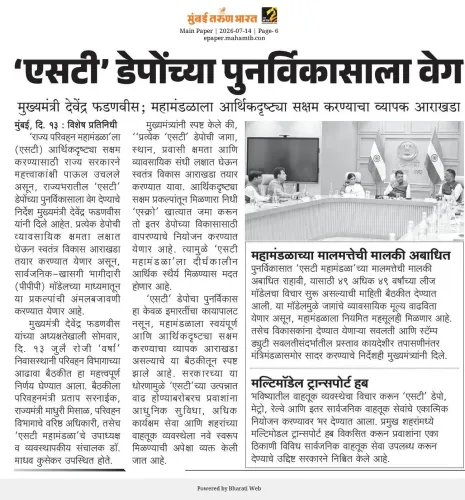
A high-level committee headed by the Transport Minister will now govern the redevelopment of the 213 shortlisted sites on a long-term lease structure of 49 + 49 years. Under this framework, land ownership remains permanently with the MSRTC while private developers are brought in to build multi-modal transit hubs and commercial complexes. The exemption from the PPP policy's standard provisions is intended to allow faster, depot-specific decisions rather than routing each project through a uniform approval pipeline.
Fadnavis's Blueprint for Depot Redevelopment
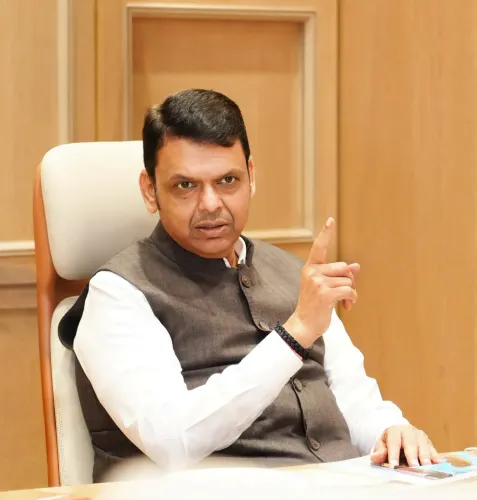
A day before the Cabinet decision, on Monday, 13 July, Fadnavis had directed officials to draw up a customised development blueprint for each ST bus depot, calibrated to its individual capacity and commercial potential. He explicitly ruled out a one-size-fits-all approach, insisting that planning must reflect the unique viability of every site.
The Chief Minister also instructed that revenues generated from financially viable projects be routed into an escrow account, ring-fencing those funds exclusively for cross-subsidising other development projects within the MSRTC portfolio. A comprehensive proposal detailing developer incentives under the PPP model is to be placed before the Cabinet for formal approval.
Multimodal Hubs and Seamless Transit
Fadnavis called for the development of Multimodal Transport Hubs by integrating ST bus depots with the Metro network and other public transit systems across the state. The objective is to transform commuter experience by ensuring seamless, uninterrupted connectivity — particularly in urban corridors where Metro expansion is already under way. Officials have also been asked to examine stamp duty exemption possibilities to attract premium developers to the programme.
Minor Minerals Fee: New Levy on Imports from Neighbouring States
In a separate but significant decision, the Cabinet approved amendments to the Maharashtra Minor Mineral Extraction (Development and Regulation) Rules, 2013. Following a model adopted by Telangana, Maharashtra will now impose a ₹100 per metric ton regulation and supervision fee on all minor minerals transported into the state from neighbouring states. The measure is aimed at protecting local quarry operators and curbing the inflow of illegally transported materials.
What Comes Next
With the Cabinet exemption now in place, the Transport Minister-led committee is expected to begin site-level assessments for the 213 priority locations. Detailed developer incentive proposals and stamp duty examination reports are likely to precede a formal tender rollout. The escrow mechanism and the 49 + 49-year lease model together signal that the state intends to monetise MSRTC's land holdings without relinquishing ownership — a template that, if successful, could be extended to other state transport undertakings.
Point of View
500-acre land bank has been an underutilised asset for decades, and the Cabinet exemption signals that the Fadnavis government is prioritising speed over procedural uniformity. The 49+49-year lease structure is fiscally prudent — it keeps public land off the privatisation table while unlocking private capital. But the real test will be execution: earlier state-level depot redevelopment schemes in Maharashtra and elsewhere have stalled at the tender stage. The escrow ring-fence is a sensible safeguard, yet without a transparent audit mechanism, there is a risk that revenues from high-value urban sites quietly subsidise projects with weaker commercial logic. The multimodal hub ambition is the right instinct, but it requires Metro and MSRTC timelines to be synchronised — something inter-agency coordination in India has historically struggled with.
NationPress
13 Oct 2026
Frequently Asked Questions
What did the Maharashtra Cabinet decide about MSRTC land development on 14 July?
The Maharashtra Cabinet, chaired by Chief Minister Devendra Fadnavis, exempted MSRTC's land development projects from the provisions of the state's March 2026 PPP policy. This allows a Transport Minister-led committee to fast-track redevelopment of 213 prime locations on a 49+49-year lease without going through standard PPP approval procedures.
How many sites and how much land does MSRTC hold?
MSRTC holds prime commercial real estate across 850 locations totalling 3,500 acres across Maharashtra. Of these, 213 sites have been prioritised for immediate commercial and residential development under the new framework.
What is the 49+49-year lease model for MSRTC land?
Under the 49+49-year lease structure, private developers are granted long-term development rights on MSRTC land, but ownership of the land remains permanently with MSRTC. The model is designed to attract premium developers while ensuring the public asset is not alienated.
What are the Multimodal Transport Hubs that Fadnavis has proposed?
Chief Minister Fadnavis has directed officials to integrate ST bus depots with the Metro network and other public transit systems to create Multimodal Transport Hubs. The aim is to provide passengers with seamless connectivity and transform the commuter experience across Maharashtra's urban corridors.
What is the new ₹100 per metric ton fee on minor minerals?
The Maharashtra Cabinet approved amendments to the Maharashtra Minor Mineral Extraction (Development and Regulation) Rules, 2013, introducing a ₹100 per metric ton regulation and supervision fee on minor minerals entering Maharashtra from neighbouring states. The levy, modelled on Telangana's approach, is intended to protect local quarry operators and check the inflow of illegally transported materials.