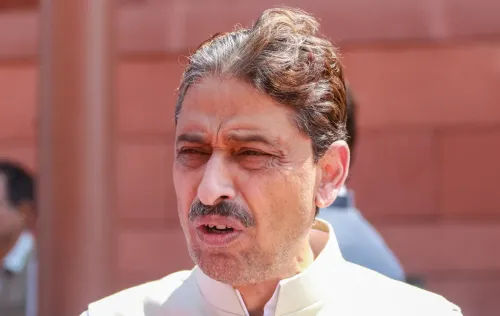
Imran Masood clarifies 'Diwali a human-induced disease' remark, says context was distorted
Synopsis
Congress MP Imran Masood's claim that pollution is a 'human-induced disease' — made in a sentence that also named Diwali — set off a BJP broadside accusing him of equating the Hindu festival with an illness. His clarification insists the sentence was wrenched from context, but the row illustrates how Delhi's annual smog season has become as much a political battleground as an environmental one.
Key Takeaways
Congress MP Imran Masood clarified on 11 November 2026 that his remark linking Diwali and pollution as 'human-induced diseases' was taken out of context.
Masood's original statement — 'Diwali ho ya pradushan jo hai, manav janit rog hai' — was criticised by the BJP as an insult to Hindu beliefs and Sanatan Dharma .
Masood clarified he was arguing that Diwali should not be singled out as the sole cause of pollution, and that pollution is a broader human-made problem.
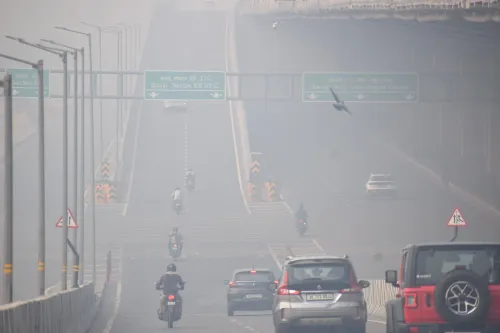
He pointed out that Delhi's AQI is already poor before the festival season, making post-Diwali spikes worse against an already degraded baseline.
The Congress MP stated he celebrates Diwali himself and called the questioning 'embarrassing.' The BJP accused the Opposition of pushing an 'anti-Hindu narrative' by linking the festival to pollution.
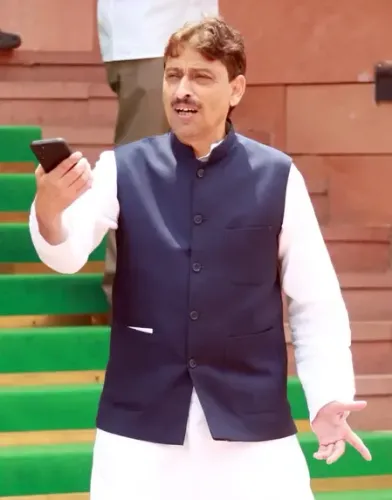
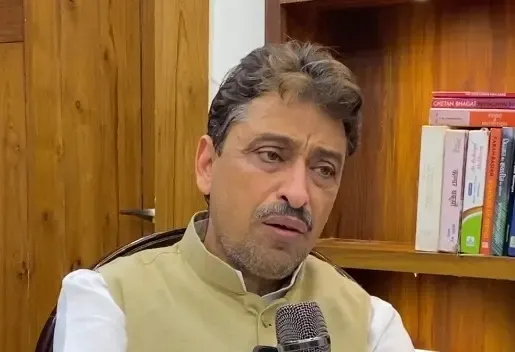
Congress MP Imran Masood on Wednesday, 11 November 2026, moved to clarify a remark he made linking Diwali and pollution as 'human-induced diseases', insisting that his words were taken out of context and that his actual point was that Diwali should not be singled out as the primary cause of air pollution in New Delhi. The clarification came a day after the statement triggered a sharp political row, with the Bharatiya Janata Party (BJP) accusing the Congress leader of insulting Hindu religious beliefs and Sanatan Dharma.
What Masood Actually Said
The controversy stems from a statement in which Masood said: 'Diwali ho ya pradushan jo hai, manav janit rog hai' — roughly translated as 'Whether it is Diwali or pollution, these are human-induced diseases.' Critics, particularly from the BJP, interpreted this as equating a major Hindu festival with a disease.
Masood, however, pushed back firmly. 'I had responded specifically in the context of Diwali, saying that these people are mentally disturbed for using festivals as an excuse. The entire context of my statement was distorted,' he said. He added: 'I had clearly said that Diwali should not be singled out as the cause of pollution. Pollution is a human-made problem. It is caused by human activities, not by nature. That was the point I was making.'
The Clarification and Its Context
Masood further noted that Delhi's Air Quality Index (AQI) is 'already poor' before the festival season begins, suggesting that the spike observed in the days after Diwali celebrations must be understood against a deteriorating baseline rather than attributed solely to the festival. 'Otherwise, is this the first time we are celebrating Diwali? We have been celebrating it for centuries. As far as I am concerned, I celebrate Diwali myself. So, being questioned on this issue is itself embarrassing for me,' the Congress MP said.
Notably, the broader debate over Diwali and pollution is a recurring flashpoint in Delhi's annual air-quality conversation. Each year, as the capital's AQI worsens in October and November, questions about firecrackers and their contribution to smog become politically charged — with positions hardening along communal and partisan lines.
BJP's Objection
The BJP strongly objected to Masood's original remarks, accusing him of equating a revered Hindu festival with a disease and of lending credence to what the party described as an 'anti-Hindu narrative.' This comes amid a broader political contest in which the BJP has repeatedly framed Opposition statements on religious customs as attacks on Hindu culture, particularly ahead of state elections.
Masood, in his earlier remarks, had turned the charge back on the BJP, saying: 'These (BJP) people are mentally disturbed. They only speak negatively.' He argued that public awareness — not partisan blame — is the right response to Delhi's pollution crisis, and that neither the ruling party nor the Opposition has done enough on the ground.
What Happens Next
The clarification is unlikely to fully defuse the controversy, given the high political temperature around religious symbolism in India. With Delhi's air quality deteriorating seasonally and state-level electoral calculations in play, the pollution-versus-festivals debate is expected to remain a live political flashpoint through the winter months. Whether Masood's clarification is accepted as genuine or dismissed as damage control will likely depend on the audience.
Point of View
The interpretive battle is already lost, regardless of intent. The BJP's response, however, is equally opportunistic: Delhi's air crisis is a documented, multi-source problem that successive governments have failed to solve, and conflating a critique of pollution politics with an attack on Hinduism avoids that accountability entirely. What is missing from both sides is any serious engagement with why Delhi's AQI hits hazardous levels every November — and what policy levers remain unused. The Diwali-pollution row is now a predictable seasonal script, and both parties play their parts without moving the needle on the underlying crisis.
NationPress
11 Nov 2026
Frequently Asked Questions
What did Congress MP Imran Masood say about Diwali and pollution?
Masood said 'Diwali ho ya pradushan jo hai, manav janit rog hai' — meaning whether it is Diwali or pollution, these are human-induced diseases. He later clarified he was not blaming Diwali for pollution but arguing that the festival should not be singled out as the sole cause of Delhi's air quality crisis.
Why did the BJP object to Imran Masood's remark?
The BJP accused Masood of equating a major Hindu festival with a disease, calling the remark an insult to Hindu religious beliefs and Sanatan Dharma. The party framed it as part of a broader Opposition 'anti-Hindu narrative.'
What was Masood's clarification?
Masood said the entire context of his statement was distorted. He maintained that pollution is a human-made problem caused by human activities broadly — not by any single festival — and that Diwali should not bear sole blame for Delhi's deteriorating air quality.
Does Imran Masood celebrate Diwali himself?
Yes, according to his own statement. Masood said, 'As far as I am concerned, I celebrate Diwali myself,' and described being questioned on the issue as 'embarrassing for me.'
Why does the Diwali-pollution debate recur every year in Delhi?
Delhi's Air Quality Index deteriorates sharply in October and November due to a combination of stubble burning in neighbouring states, vehicular emissions, construction dust, and firecrackers. Because the spike coincides with Diwali, the festival becomes a politically charged focal point, even though multiple sources contribute to the seasonal smog.