PM Modi Critiques Colonial Legacy During Jain Museum Opening in Gujarat
Synopsis
During the inauguration of the Samrat Samprati Museum, PM Modi criticized previous governments for neglecting India's manuscript heritage due to a colonial mindset, emphasizing the importance of preserving this cultural legacy for future generations.
Key Takeaways
PM Modi highlights the need to address the colonial mindset regarding India's manuscript heritage.
The Samrat Samprati Museum is a critical site for Jain worship and cultural preservation.
Over 2,000 artefacts and 300,000 manuscripts are housed within the museum.
The Gyan Bharatam Mission aims to digitize and conserve manuscripts.
Historical narratives of non-violence and dedication are preserved within the museum.
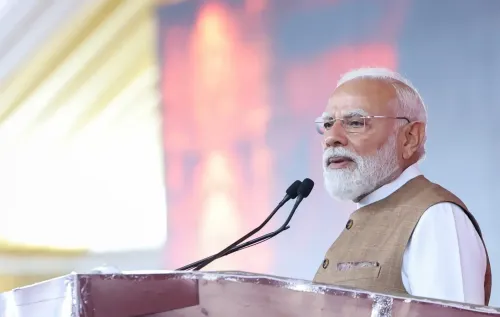
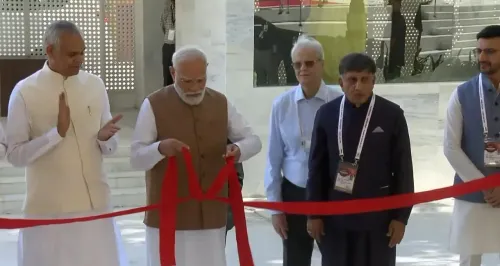
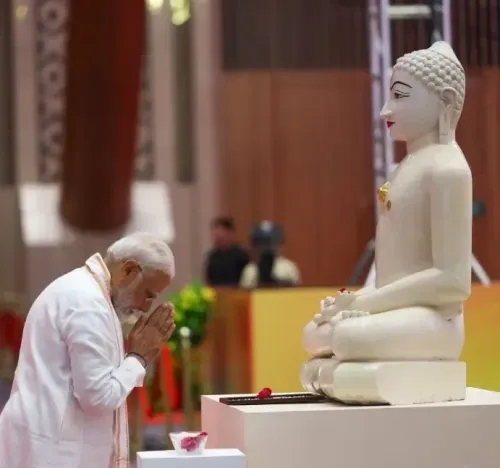
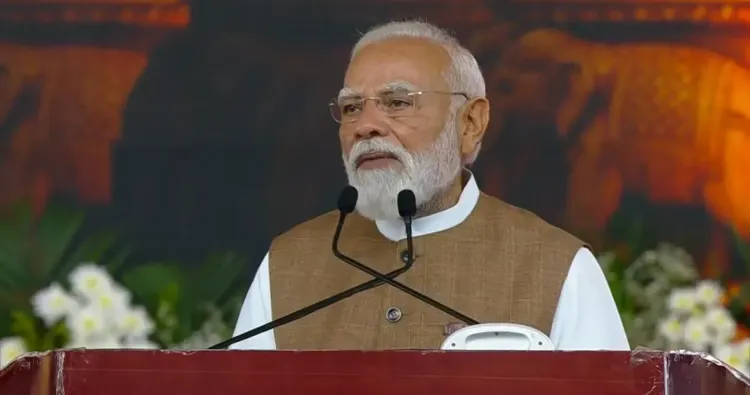
Gandhinagar, March 31 (NationPress) Prime Minister Narendra Modi remarked on Tuesday that previous administrations had disregarded India’s rich manuscript heritage because of a “colonial mindset.” This statement came during the inauguration of the Samrat Samprati Museum at Koba Tirth in Gandhinagar, coinciding with the celebration of Mahavir Jayanti.
In his address, PM Modi emphasized that it was the nation's duty post-Independence to recognize and safeguard ancient manuscripts, a responsibility that was largely overlooked.
“The colonial mindset resulted in a lack of focus in this area. The previous governments' oversight regarding manuscripts is now being rectified,” he articulated.
He highlighted the government's initiation of the Gyan Bharatam Mission, aimed at preserving manuscripts through digitization, chemical treatments, and scientific research. Additionally, he noted the public's involvement in uploading manuscripts as part of a national survey.
Situated within the Mahavir Jain Aradhana Kendra campus, the museum is poised to be a hub for Jain worship and the preservation of cultural heritage.
He added that artefacts from the Jain community, some with a history of nearly 1,000 years, have been preserved for the benefit of future generations.
“Koba Tirth symbolizes tranquility and the asceticism of saints. For ages, values of commitment, study, spiritual practice, and discipline have thrived here,” he remarked, describing the site as a nexus of Indian civilization through the conservation of values, cultural ethos, and the advancement of knowledge.
Reflecting on history, PM Modi remarked that while many civilizations fostered thinkers and ideals, numerous rulers neglected those principles when confronted with power.
“Some opted for violence, whereas Samrat Samprati championed non-violence during his reign,” he noted, emphasizing that the museum preserves such historical narratives.
He described the museum’s architecture as a representation of India's diversity and unity, incorporating traditions like the Vedas, Puranas, and Ayurveda, underlining its significance in today’s tumultuous global landscape.
The Prime Minister acknowledged Jain saints, including Acharya Padmasagarsurishwarji, for their lifelong dedication to the collection of manuscripts nationwide.
According to officials, the museum presents the historical, cultural, and spiritual legacy of Jainism, allowing visitors to comprehend its chronological evolution.
It comprises seven galleries featuring rare artefacts, such as stone and metal idols, Tirth Patta, Yantra Patta, miniature paintings, silver chariots, coins, and ancient manuscripts, all enhanced with digital and audio-visual displays for visitors and researchers.
With a collection exceeding 2,000 artefacts and over 300,000 manuscripts, the museum has been established as a significant repository of India’s cultural heritage.
PM Modi also mentioned other initiatives, including a maritime museum at Lothal and a museum at Vadnagar, stating that such projects are now being pursued beyond mere political narratives and electoral agendas.
Point of View
The emphasis on preserving India’s manuscript heritage reflects a broader commitment to reclaiming cultural identity. PM Modi's inauguration of the Samrat Samprati Museum symbolizes a crucial step towards rectifying historical oversights by previous governments and fostering a sense of national pride in our rich heritage.
NationPress
30 Sept 2026
Frequently Asked Questions
What is the significance of the Samrat Samprati Museum?
The Samrat Samprati Museum plays a vital role in preserving Jain cultural heritage and showcasing ancient manuscripts and artefacts, emphasizing the importance of India's historical legacy.
Who inaugurated the museum?
The museum was inaugurated by Prime Minister Narendra Modi on March 31, coinciding with Mahavir Jayanti.
What initiatives are being undertaken to preserve manuscripts?
The Gyan Bharatam Mission has been launched to conserve manuscripts through digitization, chemical treatments, and scientific research, with public participation encouraged.
How many artefacts does the museum house?
The museum features over 2,000 artefacts and more than 300,000 manuscripts, serving as a major repository of India's cultural heritage.
What does the museum reflect about Indian culture?
The museum's design reflects the diversity and unity of India, incorporating traditions like the Vedas, Puranas, and Ayurveda.