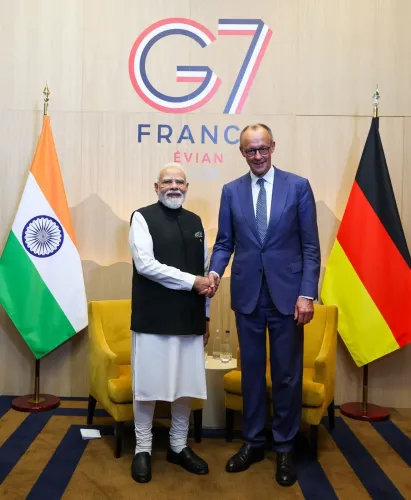
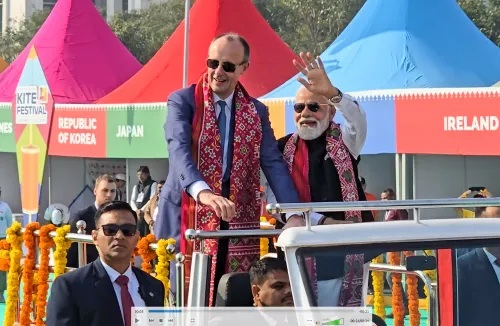
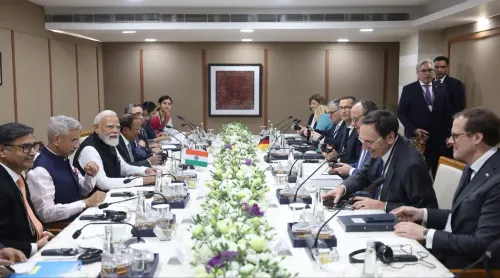
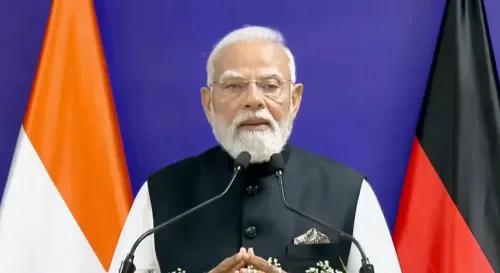
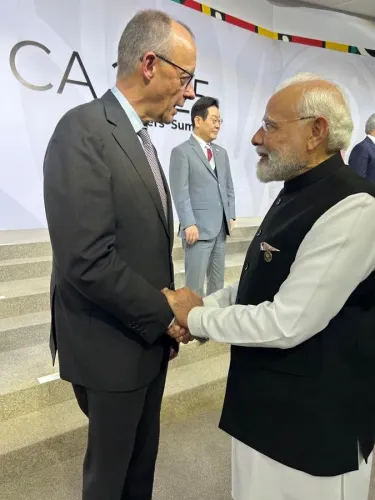
Modi, Merz review India-Germany ties in phone call
Synopsis
Modi and Merz discussed how an India-EU trade agreement could expand bilateral commerce, alongside defence and technology cooperation, as India and Germany marked 75 years of diplomatic ties.
Key Takeaways
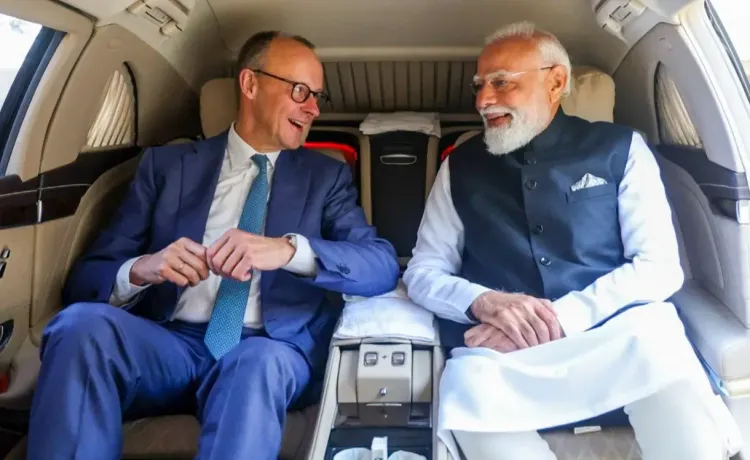
Prime Minister Narendra Modi and German Chancellor Friedrich Merz discussed the India-Germany strategic partnership by phone on 24 November .
The leaders reviewed opportunities in trade, investment, defence and advanced technologies.
The PMO said the leaders saw the India-EU Free Trade Agreement as an opportunity to expand bilateral trade and investment.
German Ambassador Jasper Wieck said on 4 November that the agreement was to be signed by year-end and was expected to take effect in the first half of the following year.
India and Germany are marking 75 years of diplomatic relations.
India-Germany strategic partnership was the focus of a phone call on 24 November between Prime Minister Narendra Modi and German Chancellor Friedrich Merz, as the leaders reviewed bilateral cooperation and discussed opportunities in trade, investment, defence and advanced technologies. The call came as India and Germany marked 75 years of diplomatic relations.
The Prime Minister's Office (PMO) said both leaders expressed satisfaction with the sustained momentum in bilateral engagements and reaffirmed their commitment to stronger cooperation across key sectors.
Trade and technology on the agenda
Modi said after the call that the leaders had examined ways to create new opportunities in trade and investment, defence and advanced technologies. In a post on X, he described the conversation with Merz as productive.
The PMO said the leaders also considered the potential of the India-EU Free Trade Agreement to expand bilateral commerce. “They noted that the India-EU Free Trade Agreement would unlock several new opportunities for expanding bilateral trade and investment,” the statement said.
Trade and investment were discussed alongside defence and advanced technologies, bringing economic and strategic cooperation into the same conversation. The announcement did not specify new agreements or projects arising from the call.
Ambassador's outlook on the trade agreement
On 4 November, German Ambassador to India Jasper Wieck said relations were entering a phase of deeper engagement, with cooperation expanding across trade, investment, energy and strategic sectors.
Wieck said the agreement was to be signed at the end of the year and was expected to enter into force in the first half of the following year. He described it as a potential “game changer” for bilateral trade and investment and said it would reduce tariffs on many industrial products and, partially, on agricultural products.
The ambassador also pointed to the potential to integrate supply chains. His remarks set out an anticipated timetable and potential benefits; the account of the leaders' call did not announce a signing or entry into force.
Regional issues and earlier engagement
The leaders also exchanged views on regional and global developments of mutual interest, according to the PMO. It said they emphasised continued cooperation at multilateral forums in addressing global challenges.
Modi said India and Germany would continue working together to promote peace, stability and a rules-based international order. The discussion followed an earlier telephone conversation in September, when Modi and Merz reaffirmed their commitment to deepen the strategic partnership across key sectors.
Marking 75 years of diplomatic relations, Modi had previously described Germany as an important pillar of India's engagement with Europe and a partner in advancing peace, stability and prosperity globally.
What comes next
The areas discussed have implications for businesses engaged in bilateral trade and investment, as well as for cooperation in defence and technology. Any tariff changes would depend on the terms and implementation of the trade agreement, rather than the telephone call itself.
Further details of the agreement's signing and entry into force will determine how the opportunities discussed by the leaders can be put into effect.
Point of View
But the call itself produced no announced projects or agreements. The distinction between an anticipated trade deal and one that has entered into force matters for businesses weighing future tariff benefits. The test will be whether diplomatic momentum translates into clear commitments and measurable outcomes.
NationPress
24 Nov 2026
Frequently Asked Questions
What did Modi and Merz discuss in their phone call?
Prime Minister Narendra Modi and German Chancellor Friedrich Merz discussed the India-Germany strategic partnership, including trade, investment, defence and advanced technologies. They also exchanged views on regional and global developments.
Why does the India-EU free trade agreement matter to India and Germany?
The leaders said it would create new opportunities to expand bilateral trade and investment. German Ambassador Jasper Wieck said it would reduce tariffs on many industrial products and, partially, on agricultural products.
When is the India-EU trade agreement expected to take effect?
On 4 November, Ambassador Jasper Wieck said it was expected to enter into force in the first half of the following year. He said it was to be signed at the end of the year.
Who could be affected by an India-EU trade agreement?
Businesses involved in India-Germany trade and investment could be affected by the agreement. The ambassador said potential changes included reduced tariffs on many industrial products and partial reductions on agricultural products.
Had Modi and Merz spoken before this call?
Yes, Modi and Merz also held a telephone conversation in September. At that time, they reaffirmed their commitment to deepen the India-Germany strategic partnership.