Modi inaugurates Pachpadra refinery, says India overcame West Asia energy crisis through diplomacy
Synopsis
Modi's Pachpadra refinery inauguration was the backdrop for a sweeping defence of India's energy crisis management — revealing that oil firms took a ₹75,000 crore hit on petrol and diesel, that India expanded its fuel sourcing from 26 to 40 countries, and that LPG prices could have hit ₹2,000 without government intervention. The numbers put scale to what was largely an invisible diplomatic and fiscal operation.
Key Takeaways
PM Modi inaugurated India's most modern integrated refinery-cum-petrochemical complex at Pachpadra, Balotra district, Rajasthan on 4 July 2025 .
Oil marketing companies incurred losses of ₹75,000 crore on petrol and diesel between April and June , covered by the government exchequer.
India expanded fuel sourcing from 25–26 countries to 40 during the West Asia conflict period.
Government intervention kept domestic LPG cylinder prices at around ₹950 , against a potential spike to ₹2,000 .
Around 54,000 youths in Rajasthan received government job appointment letters during Saturday's programme.
Modi also inaugurated the new Jodhpur Airport terminal and virtually laid the foundation stone for Jaipur Metro Phase-2 .
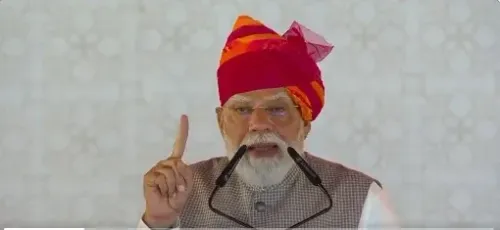
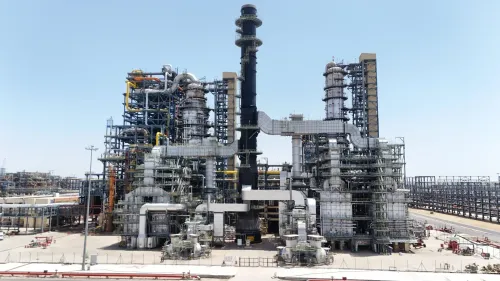
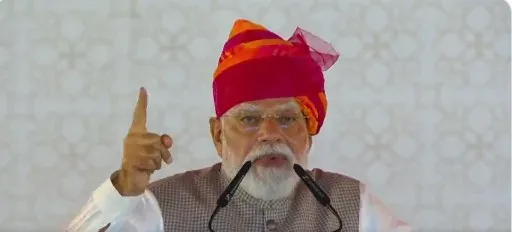
Prime Minister Narendra Modi on Saturday, 4 July inaugurated India's most modern integrated refinery-cum-petrochemical complex at Pachpadra in Rajasthan's Balotra district, declaring that India successfully navigated the energy crisis sparked by the West Asia conflict through timely decisions, effective diplomacy, and prudent resource management. The inauguration marked a significant milestone in India's push for energy self-reliance.
India's Energy Crisis Response
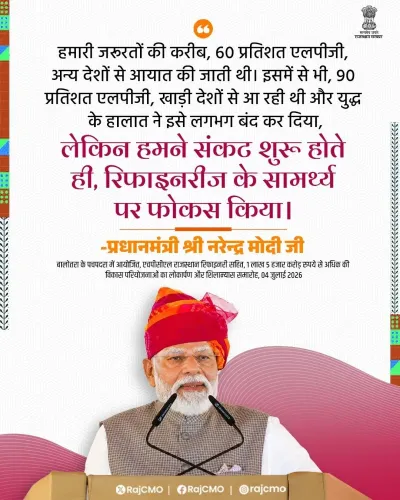
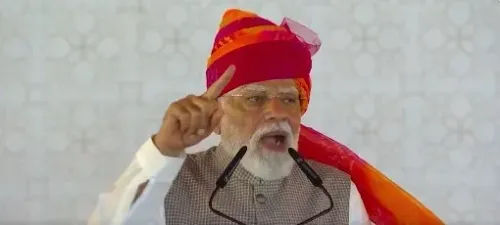
Addressing a public gathering at the refinery, Modi described the West Asia conflict as having triggered the 'biggest energy crisis of the 21st century,' with major nations struggling with fuel shortages. He said India's response was methodical — accurately assessing the crisis, formulating strategy, and deploying diplomatic leverage.
'India made the right decisions at every level. It assessed the crisis accurately in time, formulated an effective strategy, and ensured balanced use of India's resources. India used its diplomatic power positively, and only then was the country able to emerge from the crisis,' Modi said.
LPG Prices and Oil Company Losses
The Prime Minister said the Union government's intervention prevented domestic cooking gas prices from spiking sharply. 'The situation arising from the war could have pushed domestic gas prices up to Rs 2,000. The Union government managed the situation effectively, and as a result, cylinders are available for around Rs 950,' he said.
Modi also disclosed that oil marketing companies absorbed losses of ₹75,000 crore on petrol and diesel between April and June — an amount he described as sufficient to build an entirely new refinery — with the shortfall covered by the government exchequer.
Diplomatic Outreach and Fuel Sourcing
Crediting India's foreign policy, Modi said the number of countries from which India sourced fuel rose from 25–26 to 40 during the conflict period. 'India's friendships with other nations proved invaluable during the war. India's diplomatic prowess was evident during the conflict,' he said.
He added that behind-the-scenes crisis management at both the policy and diplomatic levels would, in his view, eventually be recorded in history.
Pachpadra Refinery: Key Details
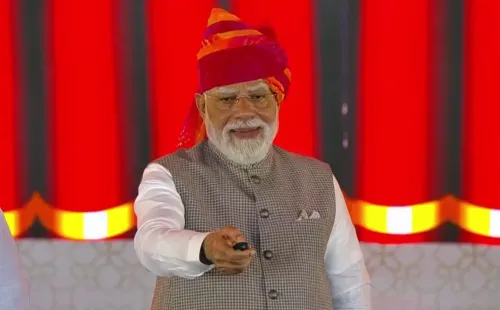
During his visit, Modi inspected the refinery's state-of-the-art control room, interacted with engineers and technical experts, viewed a documentary on the project, flagged off fuel tankers, and handed over appointment letters to five youths. He also virtually laid the foundation stone for Jaipur Metro Phase-2.
Praising engineers and workers who restored operations after an accident at the Pachpadra facility two months ago, Modi said the swift recovery demonstrated that 'New India neither retreats from its resolve nor slows its pace.'
Rajasthan Development Push
Modi's day-long Rajasthan visit also included the inauguration of the new terminal building at Jodhpur Airport and the launch of a new phase of the 'Ude Desh ka Aam Nagrik' (UDAN) scheme from Jodhpur to improve air connectivity to smaller cities. He noted that around 54,000 youths in Rajasthan received government job appointment letters as part of Saturday's programme.
He also referenced Rajasthan's longstanding water challenges, particularly in the Shekhawati region, saying the wait to resolve the water crisis there was 'nearing an end.' Criticising the previous Congress government, Modi said it made no effort to address Rajasthan's water crisis, contrasting it with what he described as the Bharatiya Janata Party's (BJP) 'Nation First' approach.
With the Pachpadra refinery now operational, attention will turn to how quickly it scales capacity and whether the employment gains Modi promised for Rajasthan's youth materialise on the ground.
Point of View
000 crore loss figure is the most consequential number in Modi's speech and the one that received the least scrutiny. If oil marketing companies absorbed that burden in just three months, the fiscal math for the full crisis period demands independent accounting — not just a headline. India's diversification from 26 to 40 fuel-source countries is a genuine foreign policy achievement, but the durability of those supply relationships beyond the crisis is untested. The Pachpadra refinery itself is a legitimate infrastructure win, yet the accident two months before inauguration — and the speed of recovery — raises questions about commissioning standards that the celebratory framing obscured.
NationPress
3 Oct 2026
Frequently Asked Questions
What is the Pachpadra refinery inaugurated by PM Modi?
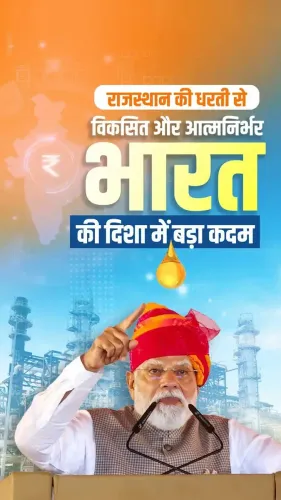
The Pachpadra refinery in Rajasthan's Balotra district is described as India's most modern integrated refinery-cum-petrochemical complex. PM Modi inaugurated it on 4 July 2025, calling it a major step towards a developed and self-reliant India.
How did India manage the energy crisis caused by the West Asia conflict?
According to PM Modi, India managed the crisis through timely decision-making, effective diplomacy, and prudent resource management. The government expanded fuel sourcing from 25–26 countries to 40 and intervened to prevent a sharp rise in domestic LPG prices.
How much did oil companies lose on petrol and diesel during the crisis?
Oil marketing companies incurred losses of ₹75,000 crore on petrol and diesel between April and June, according to PM Modi. He said this amount was covered by the government exchequer and was large enough to build a new refinery.
What kept LPG cylinder prices from rising sharply?
PM Modi said Union government intervention prevented domestic cooking gas prices from rising to around ₹2,000. As a result of that intervention, cylinders remained available at approximately ₹950.
What other projects did PM Modi inaugurate in Rajasthan on 4 July?
Besides the Pachpadra refinery, Modi inaugurated the new terminal building at Jodhpur Airport and launched a new phase of the UDAN scheme from Jodhpur. He also virtually laid the foundation stone for Jaipur Metro Phase-2 and presided over a job appointment letter distribution for around 54,000 Rajasthan youth.