Modi congratulates Armenian PM Pashinyan on poll win, thanks him for Iran evacuation aid
Synopsis
Beyond the congratulatory call, Modi's conversation with Pashinyan carried a pointed strategic signal — Armenia helped evacuate Indian nationals from Iran during the West Asia crisis, and New Delhi noticed. The call cements Armenia's growing role as a reliable partner for India in the Caucasus, a region that is quietly rising on India's diplomatic radar.
Key Takeaways
PM Narendra Modi spoke with Armenian PM Nikol Pashinyan on Wednesday, 24 June , congratulating him on his parliamentary election victory.
Modi expressed gratitude for Armenia's role in facilitating the evacuation of Indian nationals stranded in Iran amid West Asia tensions.
The leaders reaffirmed plans to expand cooperation in trade , defence , technology , and people-to-people exchanges .
India and Armenia have maintained diplomatic relations since 1992 , with defence and tech collaboration growing steadily.
Pashinyan has led Armenia since 2018 and is navigating complex ties with Russia , the EU , and regional neighbours.
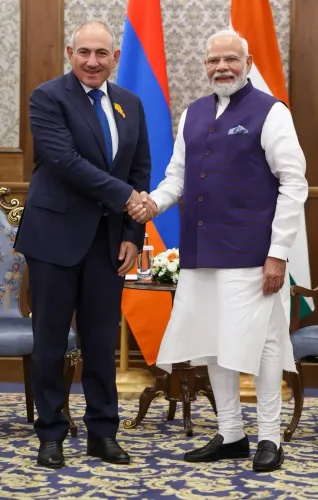
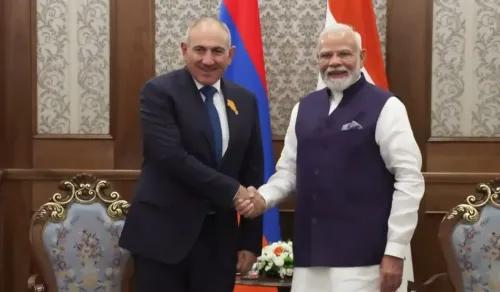
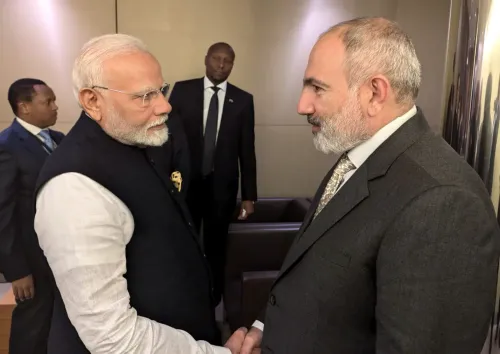
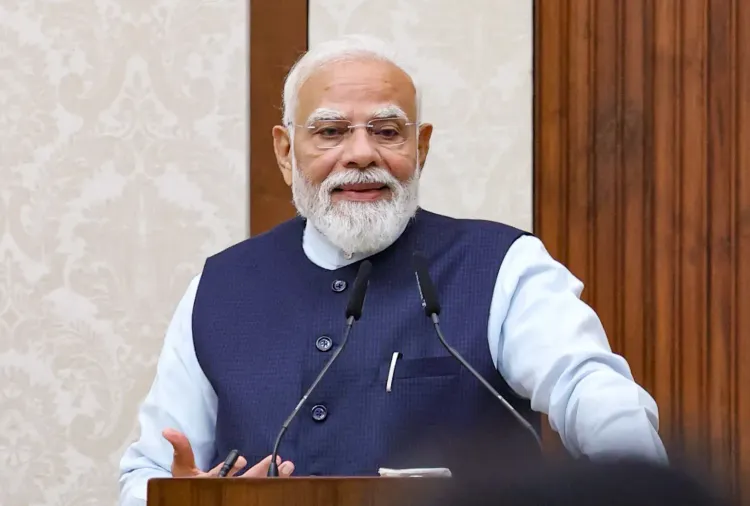
Prime Minister Narendra Modi on Wednesday, 24 June expressed delight at receiving a phone call from Armenian Prime Minister Nikol Pashinyan, during which the two leaders discussed bilateral ties, regional developments, and the deepening partnership between India and Armenia.
Key Developments from the Call
Modi congratulated Pashinyan and his party on their victory in Armenia's recently concluded parliamentary elections. Notably, he also conveyed India's gratitude for Armenia's role in facilitating the evacuation of Indian nationals stranded in Iran amid the ongoing turbulence in West Asia. The gesture was widely seen in New Delhi as a meaningful act of partnership during a period of regional crisis.
'We look forward to working closely together to take India-Armenia relations to new heights,' Modi wrote in a post on X, reaffirming the 'warm and multifaceted partnership' between the two nations.
What the Two Leaders Agreed On
The conversation covered plans to expand cooperation across trade, defence, technology, and people-to-people exchanges. Both leaders reaffirmed their shared commitment to elevating ties that were formally established when the two countries began diplomatic relations in 1992. Defence collaboration — particularly in training and technology — has emerged as a growing pillar of the relationship, alongside trade in pharmaceuticals, IT, and engineering.
Pashinyan's Political Context
Nikol Pashinyan, who has led Armenia since 2018, secured a fresh mandate despite significant political headwinds, including fallout from the Nagorno-Karabakh conflict and sustained domestic opposition. His government has been navigating a delicate balancing act — maintaining ties with Russia while simultaneously deepening engagement with the European Union and expanding partnerships with countries such as India.
Why Armenia's Evacuation Assistance Matters
With West Asia witnessing heightened tensions, India has been actively working to secure the safety of its citizens abroad. Armenia's assistance in facilitating the evacuation of stranded Indian nationals from Iran was received as a significant gesture of goodwill and reliability as a partner. This comes amid India's broader diplomatic push to diversify its crisis-response network beyond traditional corridors.
India's Strategic Outreach in the Caucasus
The reaffirmation of ties between the two leaders signals New Delhi's intent to broaden its footprint in the Caucasus region, where strategic interests in energy, connectivity, and security are growing in importance. This is consistent with India's wider foreign policy pattern of cultivating partnerships with smaller but strategically positioned nations that can serve as nodes in its expanding global network.
Point of View
Seeking to diversify away from Russia and court new partners, gains visible goodwill from a major Asian democracy. The Caucasus has rarely featured prominently in India's foreign policy calculus, but energy corridors, connectivity routes through Iran, and Armenia's EU pivot are converging to change that. This call is small in protocol terms, but it is part of a larger pattern of India building redundancy into its crisis-response partnerships.
NationPress
23 Sept 2026
Frequently Asked Questions
Why did PM Modi call Armenian PM Nikol Pashinyan?
PM Modi called to congratulate Pashinyan on his party's victory in Armenia's recently held parliamentary elections and to thank Armenia for facilitating the evacuation of Indian nationals stranded in Iran amid West Asia tensions. The two leaders also discussed expanding bilateral cooperation.
How did Armenia help India during the Iran crisis?
Armenia assisted in facilitating the evacuation of Indian nationals who were stranded in Iran during a period of heightened turbulence in West Asia. India acknowledged this as a significant act of goodwill from a reliable partner.
What areas of cooperation did India and Armenia discuss?
The two leaders discussed expanding ties in trade, defence, technology, and people-to-people exchanges. Defence collaboration — particularly in training and technology — alongside trade in pharmaceuticals, IT, and engineering are the primary growth areas.
When did India and Armenia establish diplomatic relations?
India and Armenia established diplomatic relations in 1992. Since then, the two countries have built cooperation across multiple sectors, with defence and technology collaboration growing in recent years.
Who is Nikol Pashinyan and what challenges does he face?
Nikol Pashinyan has been Armenia's Prime Minister since 2018. He secured a fresh mandate despite political challenges arising from the Nagorno-Karabakh conflict and domestic opposition, and is currently balancing ties with Russia, the European Union, and regional neighbours.