Did President Murmu Just Announce the Near Elimination of the Maoist Threat with Operation Sindoor?
Synopsis
President Droupadi Murmu's recent address to Parliament has set a strong tone for India's security landscape. With a focus on Operation Sindoor and the near-elimination of the Maoist threat, she emphasizes national strength, resilience, and the importance of moral clarity in confronting terrorism. Discover the insights from her impactful speech!
Key Takeaways
Operation Sindoor is a pivotal initiative against terrorism.
India has successfully reduced Maoist influence from 126 to 8 districts.
The suspension of the Indus Water Treaty signifies a strategic security approach.
2,000 individuals have surrendered, reflecting a successful reintegration strategy.
President Murmu's speech emphasizes moral clarity and national unity.
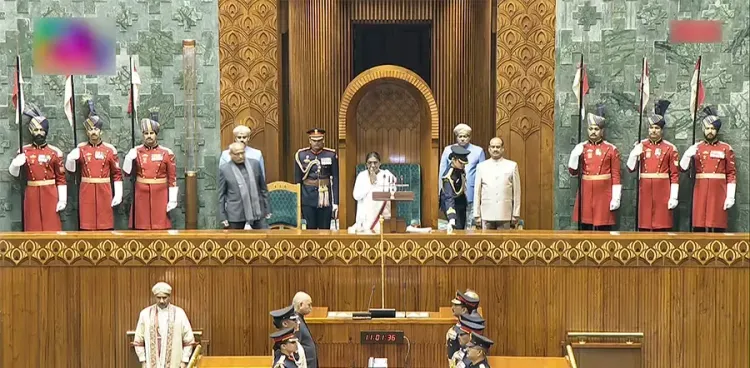
Bhopal, Jan 28 (NationPress) In her address to the joint session of Parliament on Wednesday, President Droupadi Murmu made significant claims about India’s security advancements and the government's effectiveness in addressing both internal and external dangers.
As she set the stage for the Budget session, she commended the diminishing influence of Maoist factions throughout much of the nation and acknowledged the Indian Armed Forces for their resolute actions against terrorism, particularly through Operation Sindoor, initiated following the Pahalgam terror incident in 2025.
President Murmu quoted Guru Tegh Bahadur -- “bhay kahun ko deit nehn nehn bhay manat aan (we should neither scare anyone nor be scared of anyone)” -- reminding the populace that India’s strength derives from its unyielding spirit, which neither intimidates nor succumbs to fear.
She asserted that with this guiding principle, India has fortified its security and demonstrated to the world its commitment to defending its sovereignty.
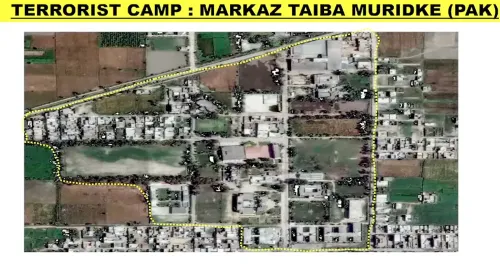
Declaring Operation Sindoor a pivotal moment, she showcased the bravery of the Armed Forces. “Using our own resources, we dismantled terror strongholds,” she informed Parliament, emphasizing that India took action independently to protect its citizens.
The President also pointed out the strategic decision to suspend the Indus Water Treaty as part of the counter-terrorism efforts, suggesting it symbolized India's readiness to reassess long-standing treaties when the nation's security is at risk.
By connecting water diplomacy to counter-terrorism, President Murmu illustrated that India’s strategy is both holistic and resolute.
She discussed internal security, noting the government’s accomplishments in reducing Maoist insurgency, which had long overshadowed extensive regions of the country.
“For years, fear and distrust permeated 126 districts. Maoist ideology jeopardized the future of many generations,” she reflected on the scale of the challenge. Nonetheless, she acknowledged that the issue has now been confined to just eight districts, a remarkable reduction indicative of effective counter-insurgency measures, developmental initiatives, and rehabilitation programs.
President Murmu disclosed that around 2,000 individuals associated with Maoist groups surrendered in the past year alone, a development she hailed as evidence of the government’s balanced approach of firmness and reconciliation.
By merging security operations with reintegration efforts for former insurgents, India has weakened Maoist networks and presented a pathway of dignity and opportunity for those previously marginalized.
Her speech contained a tone of victory but also a note of caution, reminding legislators that the battle against extremism necessitates ongoing vigilance and solidarity.
She stressed that India’s progress in diminishing Maoism and combating terrorism transcends military triumphs; it is about restoring trust, ensuring justice, and securing the futures of communities historically ensnared in violence.
President Murmu's remarks on Operation Sindoor were particularly impactful, as she portrayed the military campaign not merely as a tactical achievement but as a moral declaration.
By responding decisively after the Pahalgam attack, India illustrated its intolerance for aggression and showcased the Armed Forces' capability to dismantle terror infrastructures with precision and bravery. The operation, she noted, has become a representation of India’s self-sufficiency in defense and its determination to shield citizens from external threats.
Furthermore, her invocation of Guru Tegh Bahadur’s words added a philosophical layer to her address, tying modern security challenges to India’s historical principles of courage and righteousness. In doing this, she reminded Parliament and the nation that India’s strength resides not only in military might but also in moral clarity.
While centered on security, the President’s address hinted at broader implications for India’s developmental narrative. By underscoring the decrease in Maoist influence and the surrender of thousands of insurgents, she illustrated that peace and stability are vital for growth.
The government’s achievements in these areas, she argued, have paved the way for economic progress, social justice, and the empowerment of communities previously isolated by conflict.
As the Budget Session commenced, President Murmu’s statements framed a backdrop of resilience and assurance. Her emphasis on eradicating Maoism, tackling terrorism, and asserting India’s sovereignty through measures like Operation Sindoor and the suspension of the Indus Water Treaty reinforced the government’s assertion of having fortified the nation against both internal and external threats.
In a speech that intertwined history, philosophy, and current policies, President Murmu depicted India as a nation that has confronted its trials head-on and emerged more robust.
Point of View
It is essential to remain focused on national interests. President Murmu’s address underscores significant strides in national security. The reduction of Maoist influence reflects a robust strategy that combines military action with social reintegration, highlighting the necessity for unity in tackling extremism. This dual approach promises a more stable future for affected communities.
NationPress
25 Sept 2026
Frequently Asked Questions
What is Operation Sindoor?
Operation Sindoor is a counter-terrorism initiative launched by the Indian Armed Forces in response to the Pahalgam terror attack in 2025, aimed at dismantling terror infrastructure and reducing Maoist influence.
How has the Maoist threat been addressed?
The government has significantly reduced Maoist influence from 126 districts to just eight through effective counter-insurgency measures and development initiatives.
What role does the Indus Water Treaty play in India's security strategy?
The suspension of the Indus Water Treaty is part of India's strategic approach to counter-terrorism, reflecting its readiness to reassess long-standing agreements when national security is threatened.
What was the significance of President Murmu's speech?
President Murmu's speech highlighted India's achievements in security, emphasized the importance of moral clarity, and showcased the government's commitment to restoring trust and stability in affected communities.
How many individuals have surrendered to the government related to Maoist groups?
Approximately 2,000 individuals with links to Maoist groups have surrendered within the past year, demonstrating the effectiveness of the government's dual strategy of firmness and reconciliation.