President Murmu at MSU Baroda: Use education to create jobs, serve nation
Synopsis
At MSU Baroda's 75th convocation, President Droupadi Murmu told over 12,000 graduates that education is only meaningful when it benefits society — challenging doctors to serve, engineers to innovate for people, and entrepreneurs to create jobs, not just wealth. Her 'Live and let live' call connected personal ambition directly to India's 2047 development goal.
Key Takeaways
President Droupadi Murmu addressed the 75th convocation of Maharaja Sayajirao University of Baroda in Vadodara on 23 September 2026 .
She urged graduates to use their skills for national and social benefit, not personal gain alone, coining the phrase 'Live and let live' as her central message.
A total of 12,606 candidates — including 229 PhD , 2,857 Master's , 8,863 Bachelor's , and 657 PG Diploma graduates — were conferred degrees.
Entrepreneurs were specifically asked to focus on job creation and opportunity, not just wealth generation.
The President linked graduates' responsibilities to the Viksit Bharat 2047 vision, noting that 65% of India's population is young.
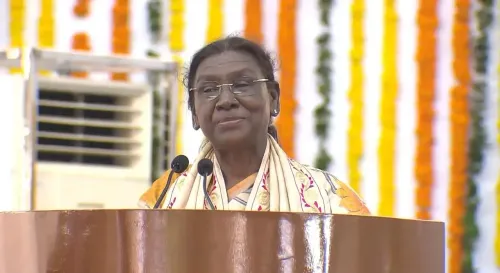
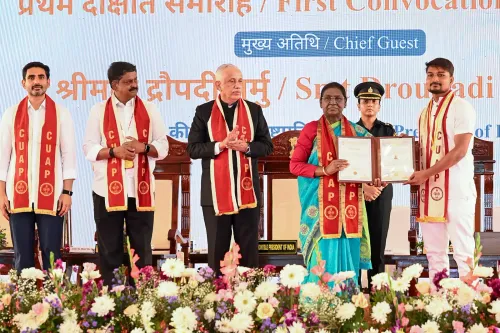
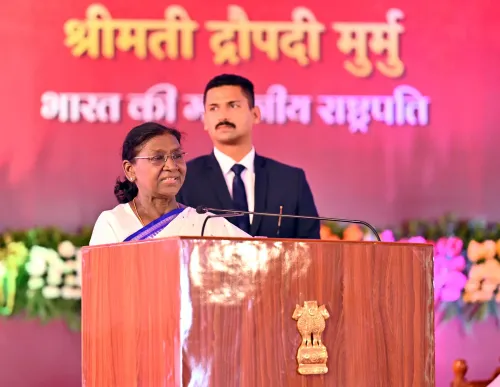
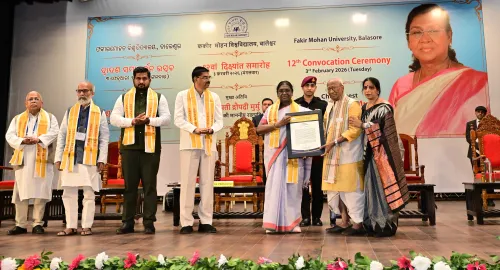
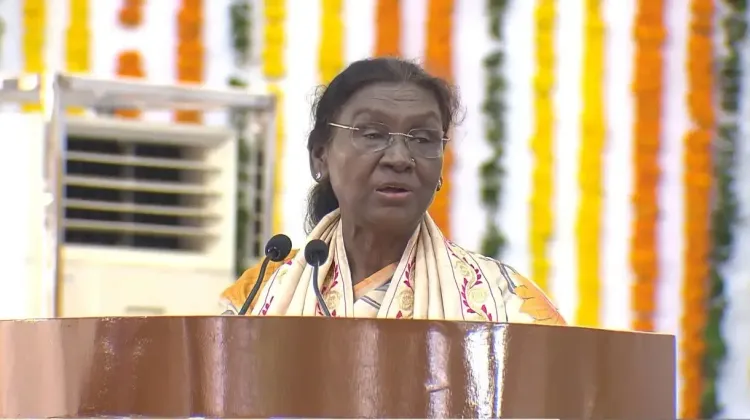
President Droupadi Murmu on Wednesday, 23 September 2026, called on graduating students at the Maharaja Sayajirao University of Baroda (MSU) in Vadodara, Gujarat, to channel their education and professional skills toward societal and national benefit — not personal gain alone. Addressing the university's 75th convocation, she said education becomes meaningful only when it translates into wider social good.
The Core Message: Beyond Personal Success
President Murmu challenged the graduating class with a direct question: 'What will you do with your education and knowledge? Only for yourself? For your family? Or for society and the nation as well?' She argued that students who kept national and social interests at the forefront of their careers would ultimately advance both collective and personal progress.
Her address drew a clear line between financial ambition and social purpose. 'Earning money is necessary for life but should not be regarded as everything,' she said, adding that 'service could provide satisfaction alongside financial success.'
Profession-by-Profession Call to Action
President Murmu tailored her appeal to graduates across disciplines. Engineers, she said, should develop technologies that tangibly improve people's lives. Doctors were urged to regard medicine not merely as a profession but as a service — 'In service lies reward, peace and satisfaction,' she said. Scientists were asked to direct their work toward solving problems for the benefit of humanity, while artists and writers were urged to enrich society's sensitivity through their creativity.
For entrepreneurs, she drew a pointed distinction: the goal should not be wealth creation alone, but the generation of employment and opportunity for others. 'Live and let live. Move forward with this thought,' she said, in what became the defining line of her address. Those entering teaching were asked to prepare a generation capable of carrying India's heritage and development forward together, while those entering public life were told to regard their positions as responsibilities rather than authority.
Gratitude, Roots, and Resilience
The President urged graduates not to lose sight of the people and communities that had supported them. 'When you are climbing the ladder of success, do not forget to look behind. Remember your parents, teachers and those leaders who stood by you during difficult times. Remember the society that gave you opportunities,' she said.
She described the 'most beautiful form of success' as one in which a person rises without becoming disconnected from their roots. On the question of failure, she urged students to respond with 'questions, reflection and experimentation' rather than treating setbacks as the end of their journey.
Viksit Bharat 2047 and the Role of Youth
President Murmu linked the graduates' responsibilities directly to the national goal of building a developed India by 2047. She said this objective encompassed access to quality education and healthcare, the application of science and technology for human welfare, equality of opportunity, and the empowerment of women and young people. 'An India where every citizen gets the opportunity to live a life with equal dignity,' she said.
Noting that 65 per cent of India's population is young, she said universities and youth had a critical role in realising these goals. The 75th convocation saw a total of 229 PhD, 2,857 Master's, 8,863 Bachelor's, and 657 Postgraduate Diploma candidates declared qualified for their respective degrees and diplomas.
The address comes at a moment when graduate employability and youth unemployment remain prominent national concerns, lending her remarks a topical urgency beyond the ceremonial setting.
Point of View
But her profession-specific framing is sharper than the usual platitudes. The 'Live and let live' line is essentially an entrepreneurship mandate wrapped in a philosophy lesson: a quiet acknowledgement that job-seekers must become job-creators. What her address doesn't engage with is the structural gap between university output and market demand — over 12,000 degrees conferred in a single ceremony, but the pathways from campus to meaningful employment remain uneven across disciplines. The Viksit Bharat 2047 linkage is politically deliberate, tethering graduation-day idealism to a national timeline that the current government has made its defining metric.
NationPress
23 Sept 2026
Frequently Asked Questions
What did President Droupadi Murmu say at the MSU Baroda convocation?
President Murmu urged graduates to use their education for societal and national benefit, not personal success alone. Speaking at the 75th convocation of Maharaja Sayajirao University of Baroda on 23 September 2026, she asked engineers, doctors, scientists, artists, and entrepreneurs to each connect their work to public welfare, summarising her message as 'Live and let live.'
What is the significance of MSU Baroda's 75th convocation?
The 75th convocation marked a major milestone for one of India's prominent central universities, with over 12,600 candidates across PhD, Master's, Bachelor's, and PG Diploma programmes receiving their degrees. It also drew national attention as the venue for a substantive presidential address on education and social responsibility.
How did President Murmu connect the convocation to Viksit Bharat 2047?
President Murmu directly linked the graduating class's responsibilities to India's national goal of becoming a developed nation by 2047. She said this vision required quality education, healthcare access, scientific advancement, and equal opportunity — and that youth, who make up 65% of India's population, had a critical role in achieving it.
What advice did President Murmu give to entrepreneurs?
She told entrepreneurs to focus not only on creating wealth but on generating employment and opportunities for others. Her phrase 'Live and let live' encapsulated this call for wealth creation to be paired with a responsibility to uplift the broader community.
How many students graduated at the MSU Baroda 75th convocation?
A total of 12,606 candidates were declared qualified at the 75th convocation — comprising 229 PhD, 2,857 Master's, 8,863 Bachelor's, and 657 Postgraduate Diploma recipients.