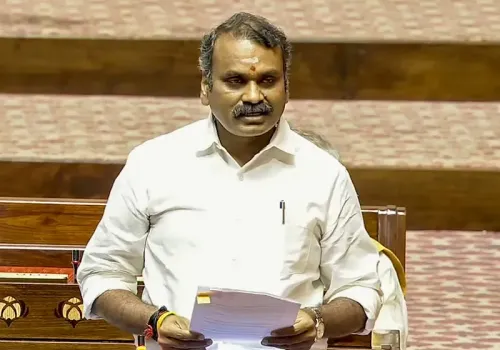
L Murugan resigns from Union Cabinet to strengthen BJP in Tamil Nadu
Synopsis
A sitting Union minister gave up his cabinet post and Rajya Sabha seat not because of scandal or pressure, but by choice — to go back to the streets of Tamil Nadu and build the BJP from the ground up before 2029. Murugan's voluntary exit is a rare act of political sacrifice, and a clear signal that the BJP is treating Tamil Nadu as a serious long-game battleground.
Key Takeaways
President Droupadi Murmu accepted L.
Murugan's resignation from the Union Council of Ministers on 15 October 2026 with immediate effect.
Murugan served as MoS for Information and Broadcasting and Parliamentary Affairs before stepping down.
He also intends to vacate his Rajya Sabha membership to focus entirely on state-level party work.
His stated goal is to strengthen the BJP's organisational base in Tamil Nadu ahead of the 2029 Lok Sabha elections .
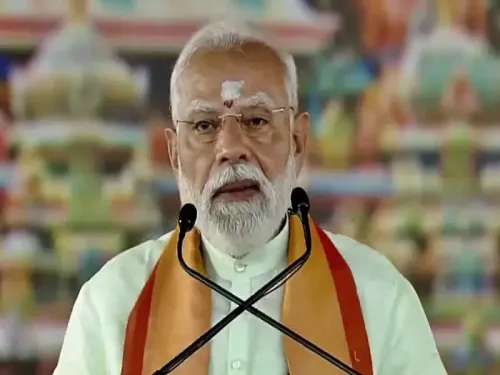
Murugan cited PM Modi's recent visit to Tamil Nadu and public enthusiasm there as reinforcing his decision.
He invoked nearly three decades of work in the ABVP and BJP, and his humble origins in Konur village , in framing the move.
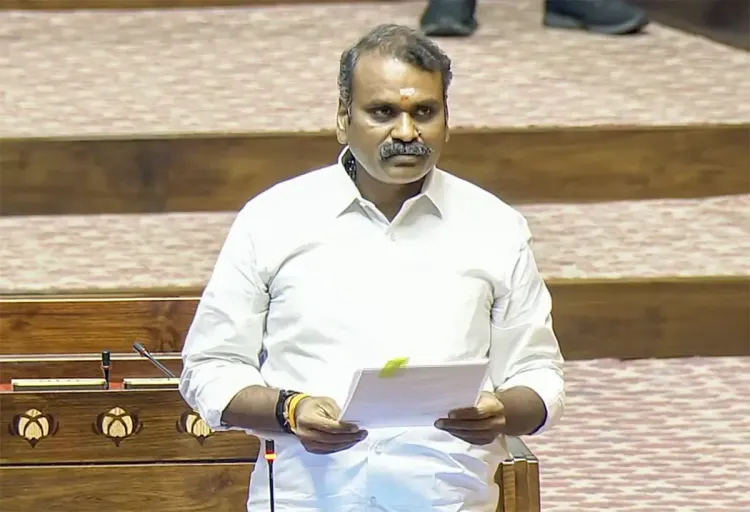
President Droupadi Murmu, on the advice of Prime Minister Narendra Modi, accepted the resignation of L. Murugan from the Union Council of Ministers with immediate effect on 15 October 2026, under clause (2) of Article 75 of the Constitution of India, an official at the President's Secretariat confirmed on Thursday. Murugan had served as Minister of State (MoS) for Information and Broadcasting and Parliamentary Affairs.
Why Murugan Stepped Down
Murugan formally requested Prime Minister Modi to relieve him of his ministerial responsibilities and to permit him to vacate his Rajya Sabha membership. His stated purpose: to return to grassroots politics and dedicate himself full-time to building the Bharatiya Janata Party (BJP) in Tamil Nadu ahead of the 2029 Lok Sabha elections. In a letter to the Prime Minister — shared publicly on his official X account — he wrote, 'Now, I wish to return to the grassroots, stand with our karyakartas and dedicate myself full-time to strengthening the BJP in Tamil Nadu ahead of the 2029 Lok Sabha elections.'
Modi's Tamil Nadu Visit as a Turning Point
Murugan cited Prime Minister Modi's recent visit to Tamil Nadu as a moment that reinforced his conviction. He said the public enthusiasm and affection he witnessed during that visit convinced him that the BJP could achieve substantially more in the state. He pledged to visit every village and street, meet ordinary citizens, and help expand the party's organisational footprint across Tamil Nadu.
A Personal Journey Behind the Decision
Murugan described his tenure in the Union government as the greatest honour of his life, recalling his origins as the son of daily wage labourers who also worked as cattle grazers in Konur village and who, he noted, continued to lead a simple life. He framed his decision in ideological terms, invoking a guiding principle he said had shaped nearly three decades of his work in the Akhil Bharatiya Vidyarthi Parishad (ABVP) and the BJP: 'Nation First. Party Next. Self Last.'
What This Means for BJP in Tamil Nadu
The BJP has historically struggled to establish a strong independent presence in Tamil Nadu, a state dominated by Dravidian politics and regional parties. Murugan's return to state-level politics signals a deliberate strategic push to prepare the organisation for 2029 — an unusually early mobilisation that underscores the party's intent to treat Tamil Nadu as a priority battleground. His willingness to surrender a cabinet post and a Rajya Sabha seat is a notable signal of personal commitment, though the structural challenges facing the BJP in the state remain formidable.
The development sets the stage for a reorganisation of the Union Cabinet and raises questions about who will take charge of the Information and Broadcasting and Parliamentary Affairs portfolios.
Point of View
And Murugan's move stands out precisely because it is not driven by crisis. The BJP has repeatedly tried and failed to crack Tamil Nadu's Dravidian electoral fortress — fielding Murugan himself as a high-profile face in previous election cycles with limited returns. The question is whether an organisational rebuild, however earnest, can overcome the structural dominance of the DMK and the AIADMK without a compelling local narrative. Surrendering a Rajya Sabha seat is a credible signal of commitment; translating that commitment into seats in 2029 is a different challenge entirely. Mainstream coverage has focused on the resignation; what it misses is the longer BJP calculus — Tamil Nadu's 39 Lok Sabha seats make it one of the biggest untapped prizes in Indian national politics.
NationPress
15 Oct 2026
Frequently Asked Questions
Why did L. Murugan resign from the Union Cabinet?
L. Murugan resigned to return to grassroots politics and strengthen the BJP in Tamil Nadu ahead of the 2029 Lok Sabha elections. He requested Prime Minister Modi to relieve him of his ministerial post and also intends to vacate his Rajya Sabha seat to commit fully to state-level party work.
Who accepted L. Murugan's resignation?
President Droupadi Murmu accepted the resignation on 15 October 2026, acting on the advice of Prime Minister Narendra Modi, under clause (2) of Article 75 of the Constitution of India.
What portfolios did L. Murugan hold before resigning?
Murugan served as Minister of State for Information and Broadcasting and Parliamentary Affairs in the Union government before tendering his resignation.
What did Murugan say in his resignation letter?
In his letter to Prime Minister Modi, Murugan said he wanted to visit every village and street in Tamil Nadu, work alongside party workers, and take PM Modi's message of inclusive development to every citizen. He wrote: 'Nation First. Party Next. Self Last,' describing it as the guiding principle of his nearly three-decade political journey.
What is the significance of Murugan's exit for BJP's Tamil Nadu strategy?
Murugan's resignation signals a deliberate, early effort by the BJP to build organisational strength in Tamil Nadu — a state where the party has historically struggled against Dravidian political dominance. His willingness to give up a cabinet post and a Rajya Sabha seat is seen as a strong personal commitment to the party's 2029 Lok Sabha campaign in the state.